
Grapevine beetle
Pelidnota punctata · Shining leaf chafer (a type of scarab beetle)
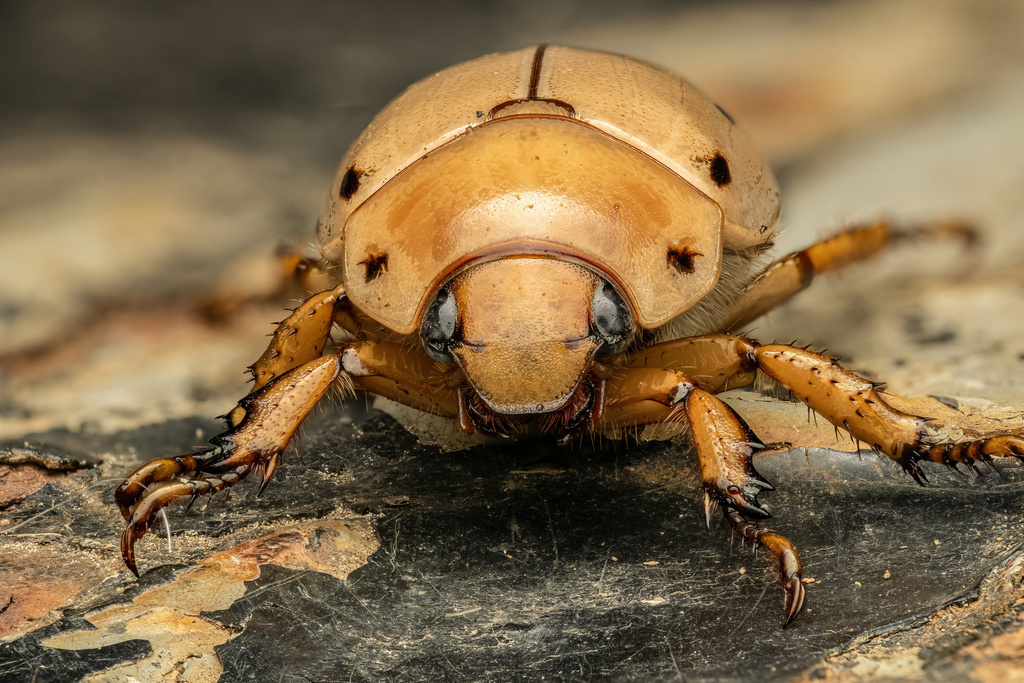
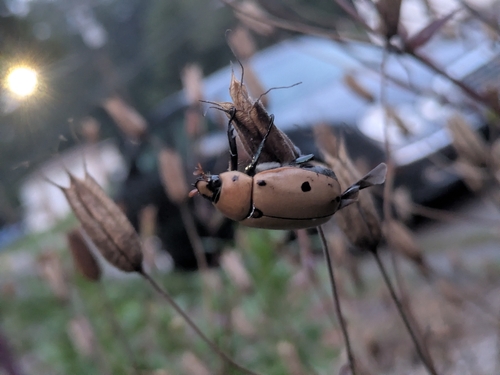
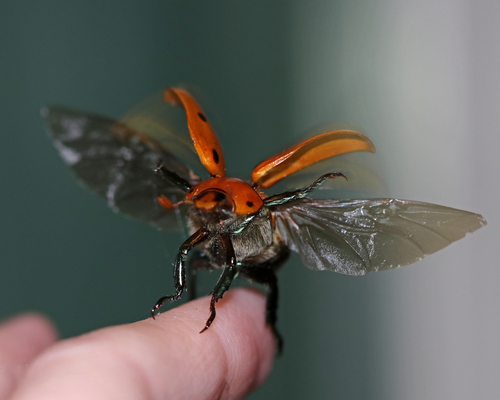
A 20-25 mm tan to orange scarab with four black spots on each side of its body; adults feed on grape leaves and are common in eastern North America in summer.
!Is the grapevine beetle dangerous?
No. Grapevine beetles do not bite or sting and are not poisonous. Handling may startle the beetle but it poses no medical threat. If you are allergic to insect parts, avoid direct contact and wash hands after handling.
Pets
Not known to be toxic to pets. Large numbers feeding on fruit could create messes that attract pets, but individual beetles are harmless if a pet eats one.
📖Overview
Pelidnota punctata is a medium-sized scarab beetle found across much of eastern North America. Adults are most visible in summer when they feed on the foliage of grapes and Virginia creeper. Larvae are typical scarab grubs that develop in rotting stumps and logs. Grapevine beetles are noticeable but generally not highly damaging to healthy vineyards; heavy local feeding on foliage can occur in some years.
Adults are active in warm months and are attracted to lights. They are not dangerous to people: they do not sting or transmit disease. Control is usually simple physical removal or common garden hygiene rather than chemical measures for most home gardeners.
🔍How to identify a grapevine beetle
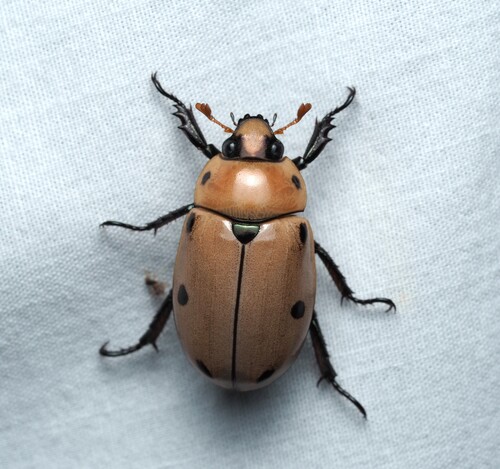
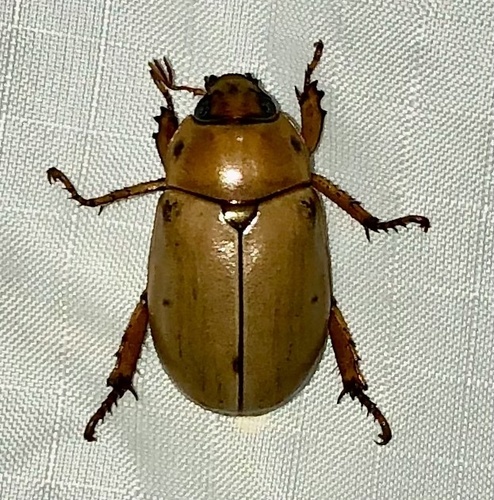
Adults are oval, convex scarab beetles about 20-25 mm long. Elytra (wing covers) are yellowish-tan to orange with three distinct black spots on each wing cover; the pronotum is the same colour with one black spot on each side. The underside and legs are dark, often with a metallic greenish or bronze sheen. The black spots and overall pale-orange/tan colour give the beetle a distinctive spotted appearance among summer scarabs.
- Pale tan to orange wing covers with three black spots on each, plus a black spot on each side of the pronotum
- Size about 20-25 mm and oval, convex scarab shape
- Dark, often metallic greenish underside and legs
- Often found on grapevines or ripe fruit in summer and attracted to lights at night
Lookalikes
Green June beetle Cotinis nitida
Similar in size (15-22 mm) but velvety green with bronze-orange edges rather than tan with black spots
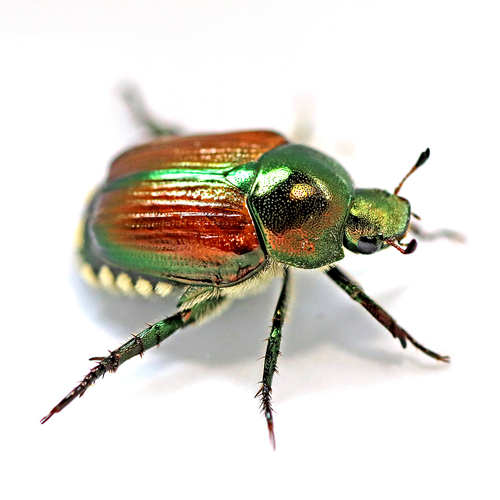
Japanese beetle Popillia japonica
Smaller (around 8-11 mm), metallic green and copper, with white tufts along abdomen; not spotted tan/orange
Other Pelidnota species Pelidnota spp.
Related species are similar in shape but differ in spot pattern and shades; Pelidnota punctata has a characteristic pattern of rounded black spots on pale elytra
↻Life cycle
Egg
Females lay eggs in or near rotting stumps, logs and decaying wood; eggs hatch after a short period depending on temperature.
Larva (grub)
White C-shaped scarab grubs develop in rotting wood and stumps, feeding on decaying wood; this stage lasts one to two years as they grow through several instars.
Pupa
Larvae pupate in soil in a cell; pupation lasts days to weeks before adults emerge.
Adult
Adults emerge in summer, feed on foliage, fruit and sap, mate and are active for several weeks.
🍃Diet and predators
Young eat
Decaying wood of rotting stumps, logs and roots
Adults eat
Leaves (and occasionally fruit) of wild and cultivated grapes and Virginia creeper
Predators of the young
Soil predators such as beetle larvae predators, birds that dig in soil, and small mammals
Predators of adults
Birds, bats, predatory insects and spiders; they are also taken opportunistically by small mammals
🌱Effect on plants and gardens
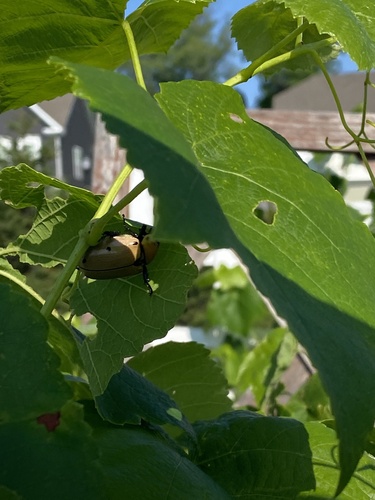
Adults feed on the leaves of wild and cultivated grapes and Virginia creeper. Damage is usually minor and rarely significant on healthy vines. Larvae develop in rotting stumps, logs and roots of dead trees and do not harm living plants.
How to get rid of grapevine beetles
For small numbers handpick adults and drop into soapy water. Remove and destroy badly damaged fruit. Reduce outdoor lighting that attracts adults at night. In vineyards, maintain good canopy management and clean up fallen fruit. Insecticide use is rarely needed for home gardens; consult local extension services for registered options for larger commercial infestations.
📍Where and when to find it
Look for adults on grapevines, orchards, fruit trees, sap flows and porch lights in summer; check soil and decaying wood for grubs.
Best time
Mid to late summer (July-August), daytime and early evening; they are also attracted to lights at night.
Observation tips
Photograph the dorsal side to show the spot pattern for identification; wearing gloves makes handpicking easier if controlling numbers.
✨Fun facts
- Grapevine beetles are attracted to lights and are commonly noticed by homeowners in summer evenings.
- Its grubs develop in rotting stumps and logs, not in grape roots, so the beetle does not harm vine roots.
?Frequently asked questions
Do grapevine beetles bite or sting?
No. They do not sting or have venom, and they are not known to bite people.
Are grapevine beetles harmful to my grapevines?
They chew grape leaves; small numbers usually cause only cosmetic damage, and serious harm to healthy vines is rare.
Why is a grapevine beetle in my house?
Adults are attracted to lights and may wander indoors on warm summer evenings; also they may follow ripe fruit or fermenting fruit smells.
How do I get rid of grapevine beetles?
Handpick adults into soapy water, remove damaged fruit, reduce outdoor lighting at night, and maintain vineyard hygiene; chemical control is rarely necessary for home gardens.
When will I see grapevine beetles?
Most commonly in mid to late summer (July and August) during warm days and evenings.
📷Photos of the grapevine beetle
More beetles
This guide was written with AI assistance and fact-checked, last updated 2026-10-10. Identification from photos is never certain: don't handle insects you can't identify, and get medical advice for bites, stings or allergic reactions. More about the grapevine beetle: iNaturalist, Wikipedia.