
Cockchafer
Melolontha melolontha · Scarab beetles
Large European scarab beetle whose grub stage feeds on plant roots and whose adults eat tree and shrub foliage, most visible in late spring.
!Is the cockchafer dangerous?
No. Cockchafers are not venomous and do not pose a toxic risk. Adults can pinch with their mandibles if handled roughly but they do not bite in a medically significant way. Handle gently or avoid handling to prevent minor pinches or accidental dropping.
Pets
Not poisonous to pets. A pet that eats large numbers of adults or grubs could experience mild stomach upset; grubs in soil may attract animals that dig (dogs, foxes).
📖Overview
Melolontha melolontha, the European cockchafer, is a common large scarab beetle found across much of Europe and parts of western Asia. Adults emerge in spring (often May-June) and are strong fliers, attracted to lights and tree canopies where they feed on leaves. The species has a multi-year lifecycle: larvae (white grubs) live in soil for 3-4 years feeding on roots, then pupate and emerge as adults that live only a few weeks to mate and lay eggs. Cockchafers can occur in outbreaks and cause noticeable defoliation of trees and damage to lawns and crops because of grub feeding.
🔍How to identify a cockchafer
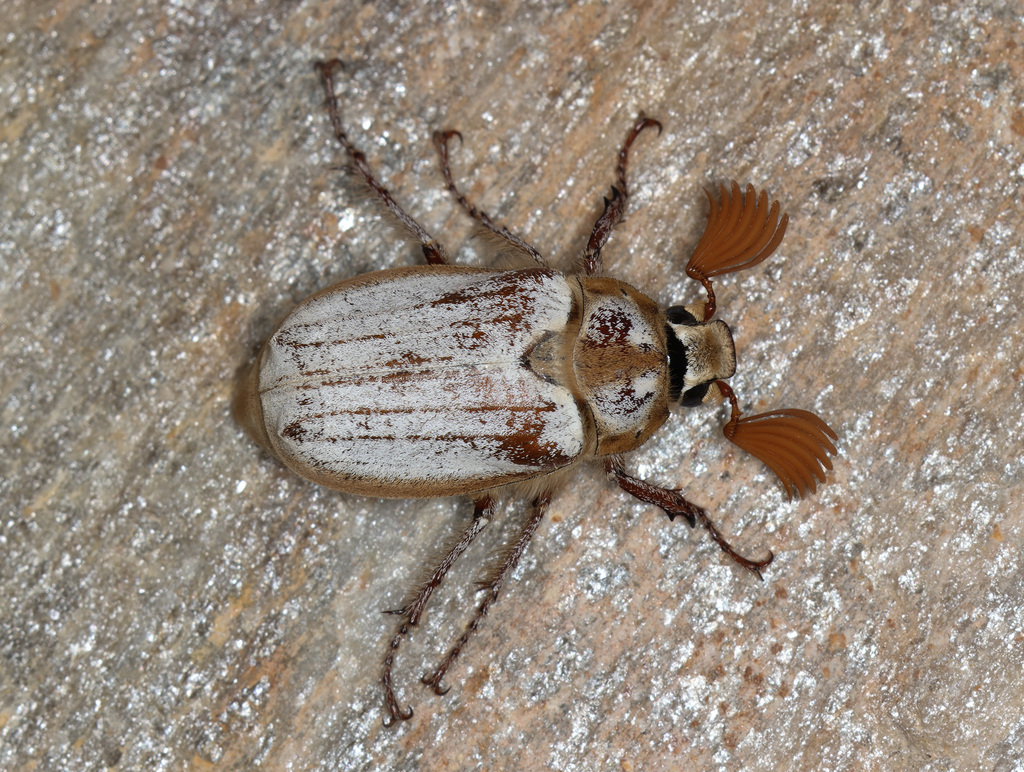
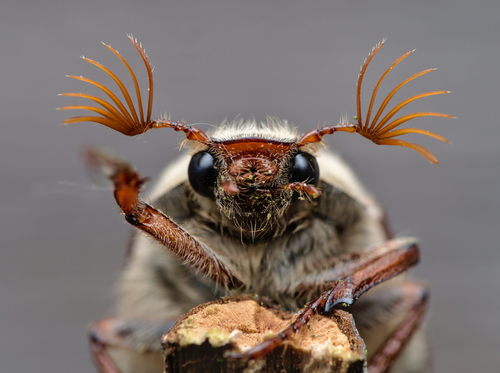
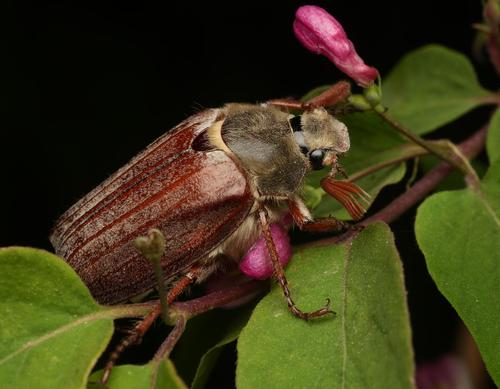
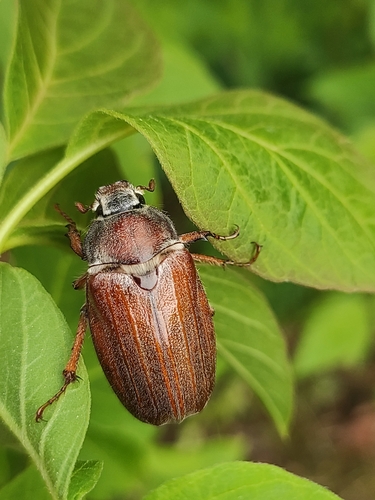
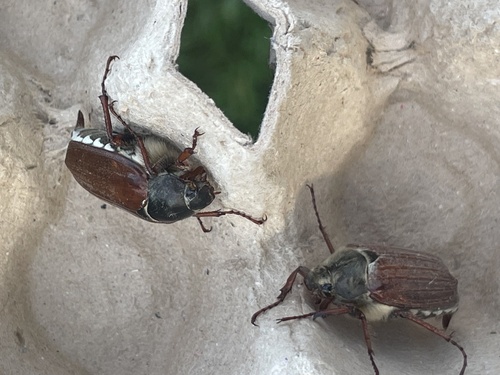
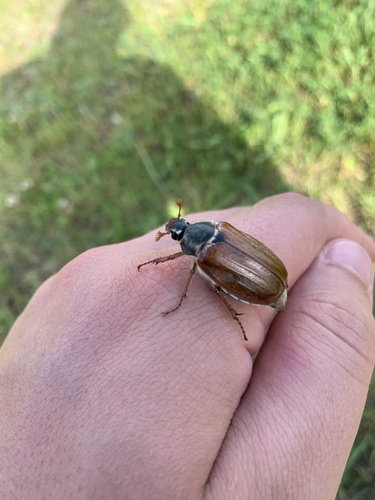
Adults are robust, oval beetles about 25-30 mm long with a rounded, slightly humped profile. The dorsal surface is brownish to reddish-brown with a darker head and pronotum; elytra (wing covers) are smooth. The underside is darker. Males are distinguished by fan-like lamellate antennae with seven leaf-like plates; females have slightly shorter antennae with fewer plates. Larvae are C-shaped, creamy-white grubs with a brown head, well-developed legs on the thorax and a hardened rear end; they reach several centimetres long before pupation.
- Size about 25-30 mm, stout oval beetle with brown to reddish-brown elytra.
- Males have distinctive fan-like (lamellate) antennae with multiple leaf-like plates; females have shorter plates.
- C-shaped creamy-white grubs with a brown head found in soil and under turf are cockchafer larvae.
- Adults fly in late spring and are active at dusk and night, often around tree canopies and lights.
Lookalikes
Forest cockchafer Melolontha hippocastani
Very similar in size and habit; M. hippocastani prefers woodland, while M. melolontha is more associated with open farmland and orchards. The most reliable field feature is the pointed tail tip (pygidium): long and gradually tapering in M. melolontha, shorter with a knob-like end in M. hippocastani.
Common June beetle Phyllophaga spp.
North American June beetles are similar in habit but are a different genus; Cockchafers (Melolontha) have larger, more conspicuous lamellate antennae and a different pattern of elytral coloration.
↻Life cycle
Egg
Laid by females in soil in late spring to early summer; eggs hatch in a few weeks depending on temperature.
Larva (grub)
White C-shaped grub lives in soil for 3-4 years, feeding on grass and plant roots and growing through several instars.
Pupa
Larvae pupate in soil the season before adult emergence; pupal stage lasts weeks to months depending on climate.
Adult (beetle)
Adults emerge in spring, feed on foliage for a few weeks, mate and females lay eggs, after which adults die.
🍃Diet and predators
Young eat
Soil organic matter and plant roots (grass roots, crop seedlings).
Adults eat
Leaves of deciduous trees and shrubs (oak, fruit trees, willows and others); they may feed at night and rest in tree foliage by day.
Predators of the young
Soil predators such as ground beetles, birds, mammals (moles, hedgehogs) and parasitic nematodes or fungi.
Predators of adults
Birds (starlings, crows), bats, and predatory insects; humans sometimes hand-collect during outbreaks.
🌱Effect on plants and gardens
Larvae feed on grass and crop roots, damaging lawns, pastures and young crops. Adults feed on leaves of deciduous trees and shrubs (oak, fruit trees, etc.) and can cause defoliation during outbreaks; healthy mature trees normally tolerate some leaf loss.
How to get rid of cockchafers
Use integrated, least-toxic methods: maintain healthy turf and soil to reduce grub survival; remove larvae by hand in small areas; cultivate or till soil where feasible to expose larvae to predators; biological control using approved entomopathogenic nematodes (e.g. Heterorhabditis species) can reduce grub numbers in lawns; encourage natural predators (birds, hedgehogs). Chemical insecticides for soil grubs exist but check local regulations and consider environmental impacts. Pheromone traps for adults may attract more beetles into local areas and are generally not recommended as a sole control.
📍Where and when to find it
Adults: in tree canopies at dusk and night, around lights, and on flowers in late spring. Larvae: in soil, under turf, and among plant roots; dig small test patches in suspected areas.
Best time
Mainly May and early June at dusk and night for adults; dig for grubs in late summer and autumn when larvae are feeding near the surface.
Observation tips
Use a flashlight at dusk to spot adults on trees; to find grubs, cut a small plug of turf and inspect the soil several centimetres deep. Wear gloves when handling beetles or soil.
✨Fun facts
- Cockchafers are commonly called 'Maybugs' because adults are most conspicuous in May and early June.
- Although adults live only a few weeks, the grub stage lasts years and causes most of the economic damage.
- Large outbreaks were historically common in Europe; many regions now manage populations to reduce damage but occasional peaks still occur.
?Frequently asked questions
Do cockchafers bite?
They are not aggressive; adults can give a minor pinch with their mandibles if handled but they do not bite humans in a harmful way.
Are cockchafers poisonous or dangerous?
No. Cockchafers are not venomous or poisonous to people or pets. The main concern is plant damage from larvae and adult feeding.
Why are cockchafers in my garden?
Trees and shrubs provide food for adults at night, and lawns or cultivated soil provide suitable habitat for egg-laying and grub development. Warm springs and reduced natural enemies can lead to higher numbers.
How can I get rid of cockchafers?
Reduce grub populations by encouraging predators, hand-remove visible larvae, use approved entomopathogenic nematodes for lawn treatments, and maintain healthy turf. Avoid sole reliance on pheromone traps; chemical controls exist but check local rules and environmental effects.
Do cockchafers damage trees?
Adults feed on leaves and can cause defoliation during outbreaks; healthy mature trees usually recover, but repeated heavy defoliation can stress young or weakened trees.
📷Photos of the cockchafer
More beetles
This guide was written with AI assistance and fact-checked, last updated 2026-10-10. Identification from photos is never certain: don't handle insects you can't identify, and get medical advice for bites, stings or allergic reactions. More about the cockchafer: iNaturalist, Wikipedia.