
Figeater beetle
Cotinis mutabilis · Fruit beetles
A large, metallic green fruit-feeding beetle common in the southwestern United States and Mexico that visits ripe fruit, compost and flowering plants.
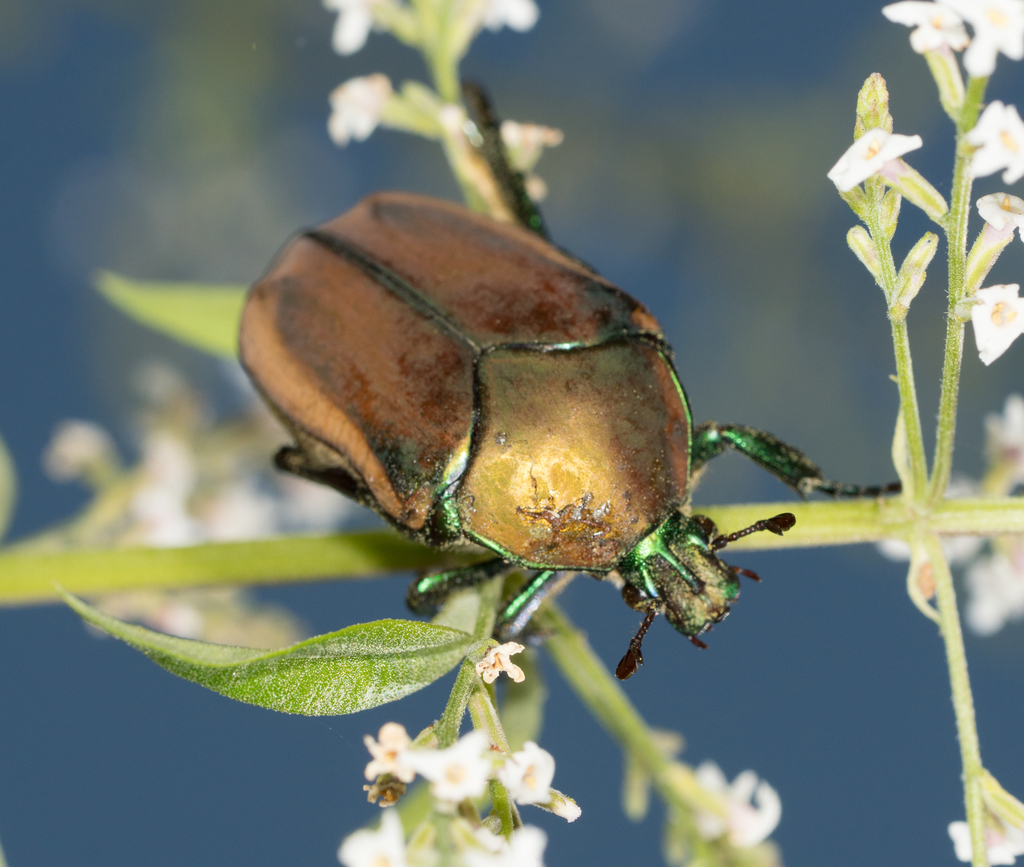
!Is the figeater beetle dangerous?
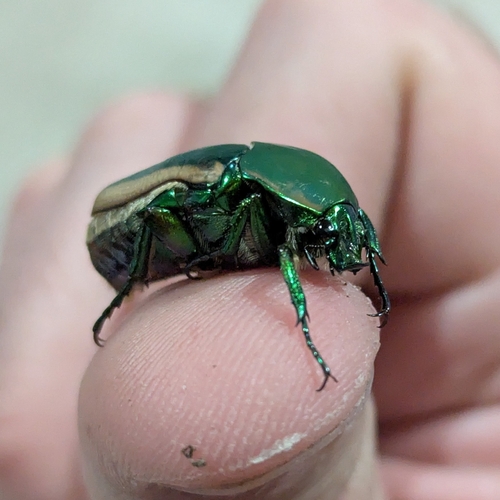
No. Figeater beetles are not venomous, do not sting and do not bite people. Their spiny legs can feel prickly if one lands on you or is handled. They can startle people due to their size and buzzing flight. Wash hands after handling to remove fruit residue.
Pets
Not poisonous to pets. If a pet eats many beetles or beetle-damaged fruit the main risk is mild stomach upset from indigestible parts or fermented fruit.
📖Overview
Cotinis mutabilis (figeater beetle) is a large, day-active scarab beetle that feeds on ripe and overripe fruit, plant sap and flowers. Adults are most common in warm summer months and are strong but clumsy, noisy fliers. Larvae are C-shaped white grubs that develop in rich, decaying organic matter or soil and feed on compost and rotting roots. The species is widespread in the southwestern United States through Mexico and often occurs around orchards, gardens and compost piles.
🔍How to identify a figeater beetle
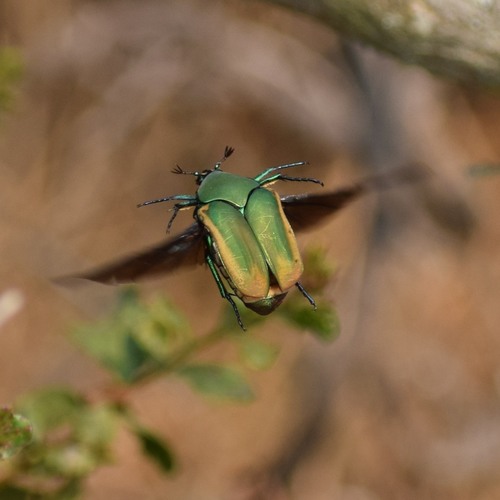
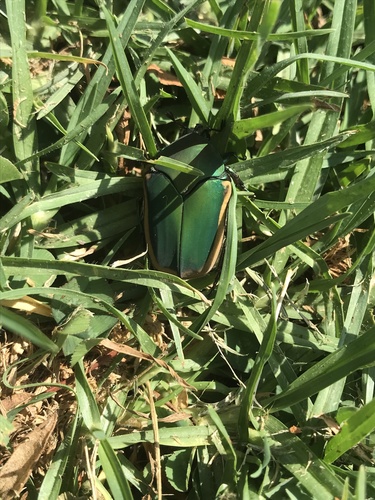
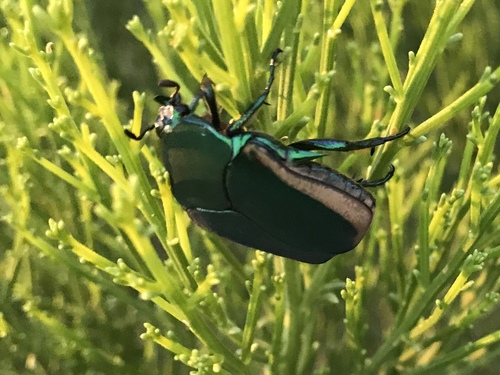
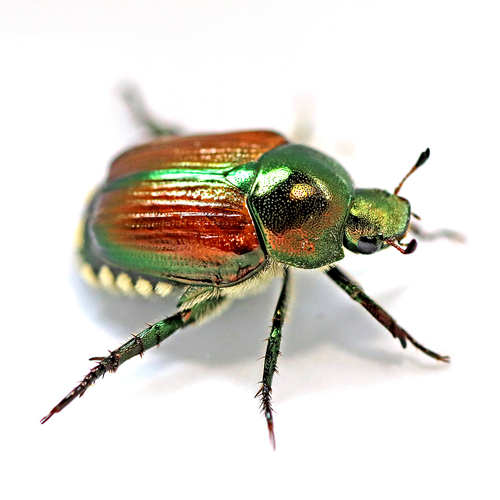
Adults are robust, oval and somewhat flattened. The upper surface is a dull, velvety green, often with tan to brownish edges on the wing covers (elytra), while the underside and legs are shiny metallic green to bronze-gold. Colour is variable and some individuals are mostly brown. Adults are large and broad for beetles and fly with a loud buzzing sound. Larvae are typical scarab grubs: whitish, C-shaped, with a brown head and short legs; they crawl on their backs.
- Large, broad scarab beetle about 25-32 mm long with a dull velvety green upper side, often with tan or brownish elytral margins.
- Day-active: often seen feeding on exposed ripe fruit or flying clumsily near trees with a loud buzz.
- Underside and legs shiny metallic green to bronze; body oval and somewhat flattened.
Lookalikes
Green June beetle Cotinis nitida
Cotinis nitida (eastern United States) is smaller (about 15-22 mm) with a more uniform darker green upper side and often bronze-yellow stripes or margins; ranges barely overlap, so location is the quickest clue.
Other Cotinis species Cotinis spp.
Related Cotinis species share metallic green colouring; use locality, size and subtle colour tones (bronze vs golden margins) to separate them.
↻Life cycle
Egg
Females lay eggs in rich, decaying organic matter, compost or soil with plenty of organic material.
Larva (white grub)
Larvae are C-shaped white grubs that feed on decaying plant material and sometimes roots; they develop in soil or compost for several months.
Pupa
Pupation occurs in the soil; metamorphosis takes place inside a pupal cell before the adult emerges.
Adult
Adults emerge in warm months, fly to feed on ripe fruit and flowers, mate and the cycle repeats.
🍃Diet and predators
Young eat
Decaying organic matter in soil and compost; sometimes tender roots.
Adults eat
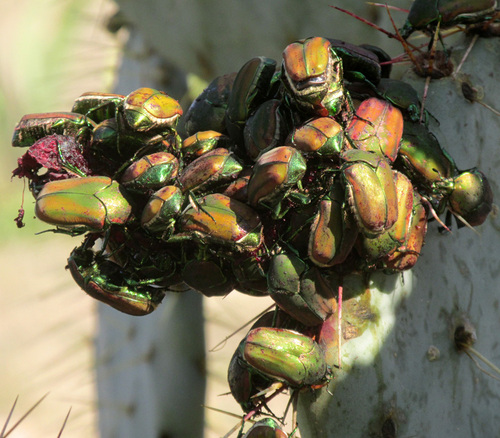
Ripe and overripe fruit, flower nectar, sap and occasionally fermenting juices.
Predators of the young
Soil predators and parasitoids: beetle-eating birds, small mammals that dig for grubs, predatory nematodes and entomopathogenic fungi.
Predators of adults
Birds, bats, wasps, spiders and small mammals; they are also trapped by fruit and visually attracted traps.
🌱Effect on plants and gardens
Adults feed on ripe and overripe fruit (figs, peaches, grapes, berries, tomatoes, etc.), flower nectar and sap; larvae consume decaying organic matter and sometimes tender roots in rich soil. Adults can damage fruit and reduce marketability but are not generally lethal to mature plants.
How to get rid of figeater beetles
Remove or quickly harvest ripe fruit; pick up and dispose of fallen fruit. Use fine mesh netting or fruit bags over small crops and backyard trees. Handpick adults into soapy water in the morning when they are sluggish. Reduce breeding by managing compost and removing deep layers of rotting organic matter where larvae develop. For grub control in soil, beneficial nematodes (Heterorhabditis spp.) applied according to product instructions can reduce larval populations. Avoid broad-spectrum insecticides when possible; use targeted methods and follow local regulations.
📍Where and when to find it
Adults: on ripe and overripe fruit, flowers, sap flows and near outdoor lights. Larvae: in garden compost, rich soil and under decaying organic layers.
Best time
Summer months; daytime (late morning to afternoon) when temperatures are warm.
Observation tips
Look at backyard fruit trees, compost piles and flowering shrubs. Photograph adults from above to show the metallic green and bronze margins; approach slowly as they may fly off with a loud buzz.
✨Fun facts
- The common name comes from their frequent feeding on figs, although they eat many kinds of ripe fruit.
- Figeater grubs crawl on their backs, moving along with their legs in the air.
- Adults are attracted to bright colours and ripe scents; they often arrive at orchards in noticeable numbers during warm spells.
?Frequently asked questions
Do figeater beetles bite or sting?
No. They do not sting, bite or carry venom. Their spiny legs can feel prickly when one is handled, but they are harmless.
Are figeater beetles dangerous to people or pets?
No. They are non-toxic and generally harmless. The main issue is damage to ripe fruit, not danger to health.
Why are figeater beetles in my house or garden?
They are attracted to ripe or fermenting fruit, sweet plant sap and lights. Fruit left on trees or fallen fruit on the ground, plus nearby compost, will draw them.
How can I get rid of figeater beetles?
Practical steps: pick ripe fruit quickly, remove or bag fallen fruit, use fine mesh netting over fruit, handpick into soapy water, reduce compost layers and apply beneficial nematodes to soil if grubs are a problem.
Where do figeater beetle grubs live and how do I find them?
Larvae develop in rich soil, compost and decaying organic matter. Look for C-shaped white grubs when turning compost or digging near areas with heavy organic buildup.
When are figeater beetles most active?
They are most active in warm summer months and fly during the day, often in late morning and afternoon.
📷Photos of the figeater beetle
More beetles
This guide was written with AI assistance and fact-checked, last updated 2026-10-10. Identification from photos is never certain: don't handle insects you can't identify, and get medical advice for bites, stings or allergic reactions. More about the figeater beetle: iNaturalist, Wikipedia.