
Reddish-brown stag beetle
Lucanus capreolus · Stag beetles
A medium-sized stag beetle of eastern North America; males have curved antler-like mandibles and both sexes help break down dead wood.
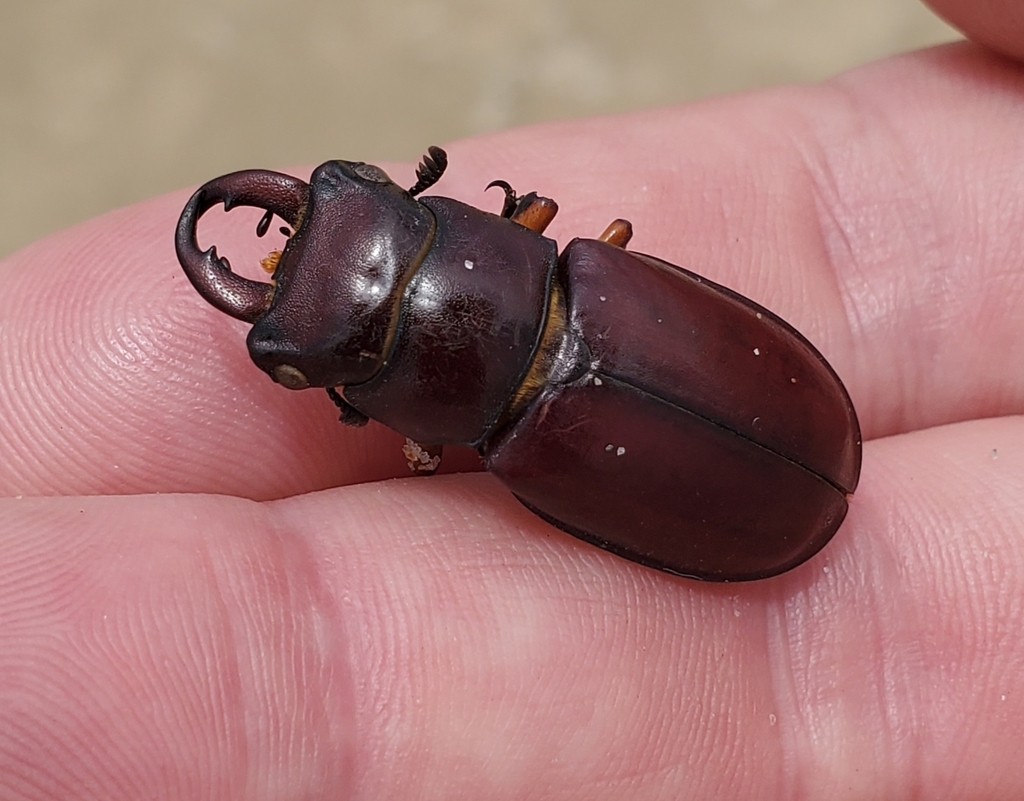
!Is the reddish-brown stag beetle dangerous?
No. Not dangerous. Adults can pinch with their mandibles if handled roughly, but bites are not venomous and usually cause only minor pain or no injury. No disease risk from the beetle itself. Handle gently or observe without touching.
Pets
Generally harmless to pets. Large dogs may crush and eat a beetle, which could cause minor stomach upset; the beetle is not poisonous.
📖Overview
Lucanus capreolus is a medium-sized stag beetle native to eastern North America. Larvae develop for one to several years in decaying hardwood logs and stumps, helping recycle nutrients in forests. Adults are most often seen in late spring and summer; males use their enlarged mandibles to wrestle other males for mates and territory. They are not aggressive toward people and are considered ecologically beneficial decomposers.
🔍How to identify a reddish-brown stag beetle
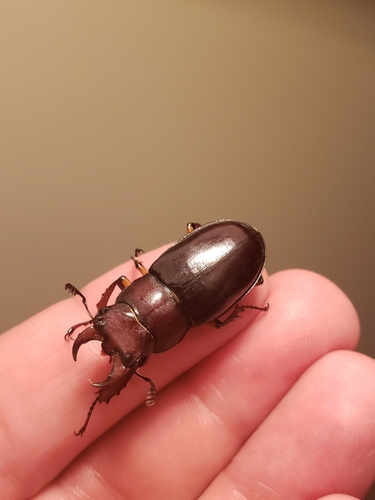
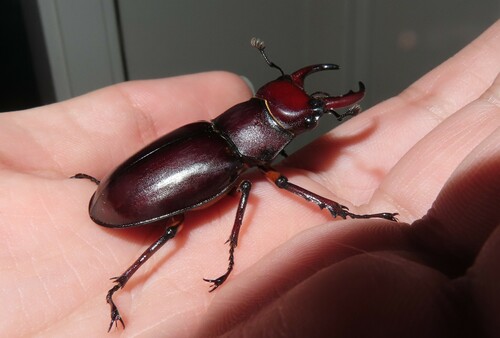
Adult reddish-brown stag beetles are robust, glossy beetles with a pronounced head and thorax. Males have enlarged, curved mandibles that resemble small antlers; females have smaller, more functional mandibles. The body is generally reddish to dark brown and the elytra (wing covers) are smooth and shiny. Legs and antennae are stout; antennae end in a small club. Size and mandible shape are the main sexual differences.
- Males have curved, antler-like mandibles; females have smaller mandibles
- Body glossy reddish to dark brown with smooth elytra
- Size 22-38 mm; robust beetle shape typical of stag beetles
- Found on or near rotting hardwood, at dusk or attracted to lights
Lookalikes
Giant stag beetle Lucanus elaphus
Generally larger and darker; L. elaphus males have proportionally bigger mandibles and often a darker, more blackish body compared with the reddish-brown L. capreolus.
Lucanus placidus Lucanus placidus
Occurs in much of the same range; usually darker brown to blackish with shorter, less curved male mandibles and duller elytra than the glossy reddish-brown L. capreolus.
↻Life cycle
Egg
Females lay eggs in rotting wood or soil near decaying hardwood. Eggs are small and white; incubation lasts a few weeks.
Larva (grub)
White C-shaped grubs tunnel through decaying hardwood, feeding for 1-3 years as they grow through several instars.
Pupa
Larvae pupate inside an earthen cell or in decayed wood; pupation lasts several weeks before the adult emerges.
Adult
Adults emerge in late spring to summer, mate, and the females lay eggs. Adults may live a few weeks to a few months and are often active at dusk and night.
🍃Diet and predators
Young eat
Decaying hardwood (dead logs, stumps) and the decayed organic matter within
Adults eat
Tree sap, fermenting or overripe fruit; adults do not feed on live healthy wood
Predators of the young
Woodpeckers, small mammals, parasitic flies and wasps that attack larvae
Predators of adults
Birds, small mammals, amphibians and larger predatory insects
🌱Effect on plants and gardens
Larvae feed on decaying hardwood; adults feed on tree sap and occasionally overripe fruit. They do not damage healthy living trees and are not agricultural pests.
📍Where and when to find it
Look on or near rotting logs, stumps and fallen branches for larvae; adults at dusk on tree trunks, near sap flows, in gardens with fruit, or attracted to porch lights.
Best time
Late spring through summer, at dusk and during warm evenings.
Observation tips
Search at dusk with a flashlight along woodland edges and old stumps. Photograph on a neutral background; avoid handling with bare hands to prevent stressing the beetle.
✨Fun facts
- Stag beetle male mandibles are used for wrestling rivals, not for feeding.
- Larvae are important recyclers of dead hardwood and can take several years to mature.
- Despite their fearsome appearance, these beetles are harmless to people and are interesting to observe at night.
?Frequently asked questions
Do reddish-brown stag beetles bite?
They can pinch with their jaws if grasped, but they are not venomous and bites are usually harmless and cause little or no injury.
Are reddish-brown stag beetles dangerous to my trees?
No. Larvae feed only on decaying wood; they do not attack healthy living trees and are beneficial for breaking down deadwood.
Why is a stag beetle in my house?
They are attracted to lights or may wander indoors while seeking mates in summer. They may also be following fermenting fruit or tree sap scents.
How can I get rid of stag beetles humanely?
Gently catch and release them outside (use a jar and a piece of cardboard). Removing outdoor artificial lights at night and sealing easy entry points helps reduce indoor visitors.
Where does Lucanus capreolus live?
In deciduous forests, woodlots, parks and gardens across eastern North America where decaying hardwood is available for larval development.
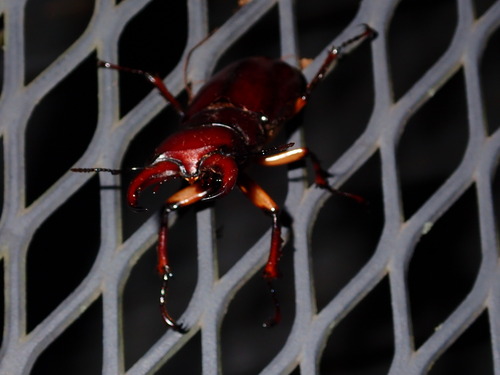
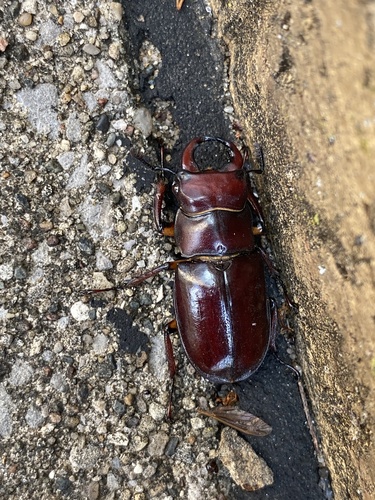
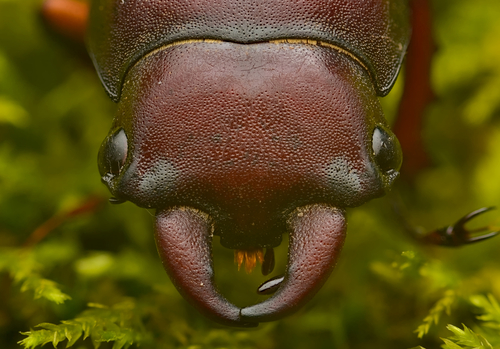
📷Photos of the reddish-brown stag beetle
More beetles
This guide was written with AI assistance and fact-checked, last updated 2026-10-10. Identification from photos is never certain: don't handle insects you can't identify, and get medical advice for bites, stings or allergic reactions. More about the reddish-brown stag beetle: iNaturalist, Wikipedia.