
Common glow-worm
Lampyris noctiluca · Glow-worms and fireflies
A nocturnal beetle whose flightless glowing females and winged males are familiar in summer meadows across much of Europe.
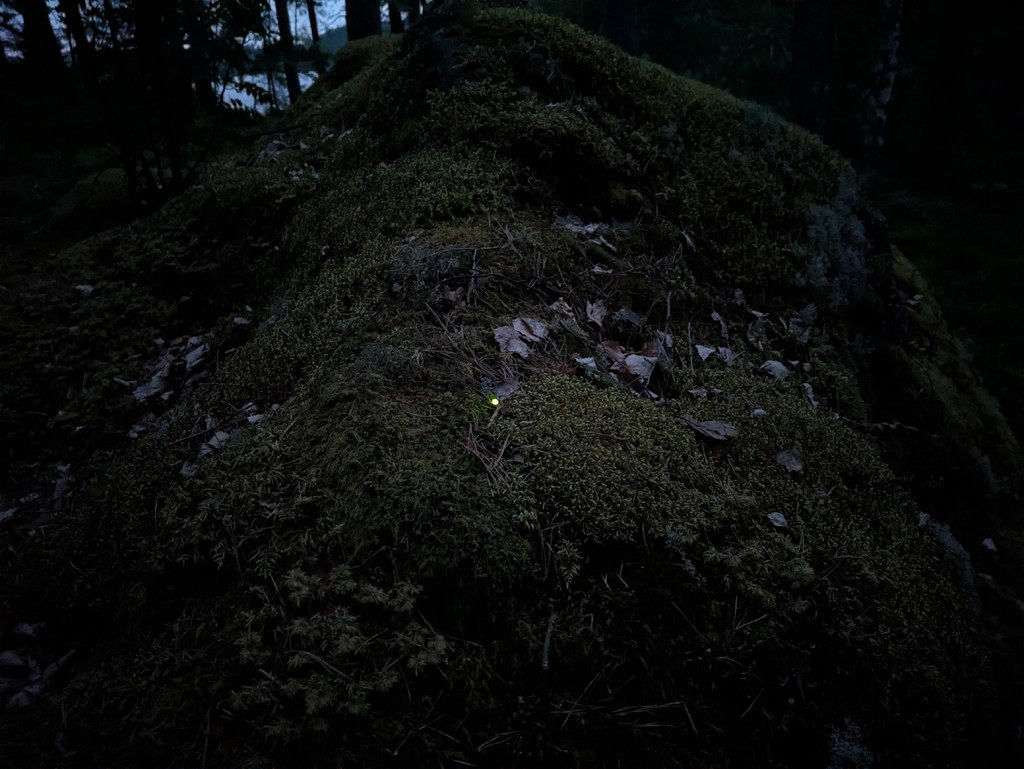
!Is the common glow-worm dangerous?
No. Not dangerous to people. Glow-worms do not bite or sting; they are harmless if handled gently. Avoid crushing them as their bodies are delicate.
Pets
Not toxic to pets. Large numbers could be a curiosity but are not a poisoning risk; still, avoid letting pets eat many insects.
📖Overview
Lampyris noctiluca is a species of firefly (family Lampyridae) known for its bioluminescent, flightless females that glow at night to attract flying males. Females remain close to the ground on grass and low vegetation; males are winged and fly to locate glowing females. Larvae are predatory and live in soil litter, hunting soft-bodied invertebrates. Adults are short-lived and the species is most conspicuous on warm calm evenings in summer.
🔍How to identify a common glow-worm
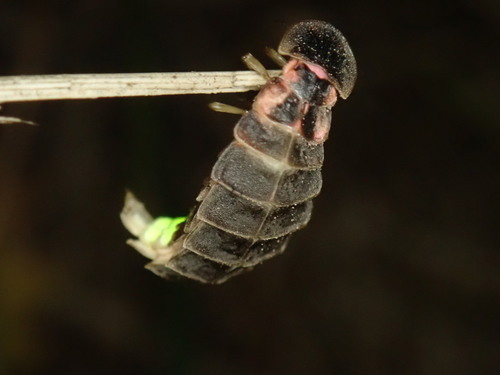
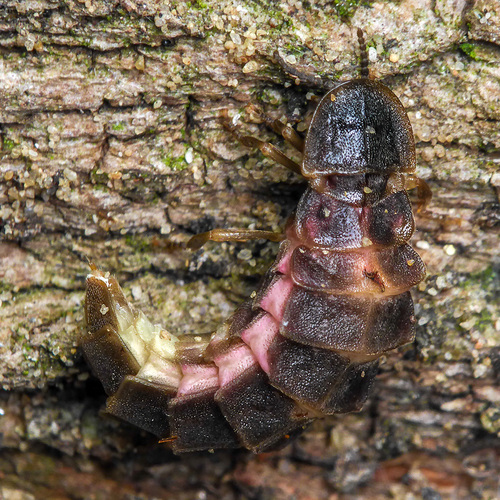
Sexes are strongly dimorphic. Females are elongated, wingless, and beetle-like with a soft, rounded abdomen that bears pale light-emitting segments. They are often mistaken for larvae until glowing. Winged males resemble typical beetles with hard wing covers (elytra) and a more tapered abdomen; males have a visible glowing segment on the lower abdomen. Colouring of the body is generally brown to dark brown with paler margins on the pronotum.
- Glowing, stationary, soft-bodied female on grass or low vegetation at night.
- Winged males are brown beetles with a broad shield-like pronotum covering the head and large eyes; they are attracted to lights and glow only faintly.
- Female lacks wings and often has a distinctive rounded, soft abdomen that emits a steady greenish-yellow light.
Lookalikes
Lesser glow-worm Phosphaenus hemipterus
Much smaller (under about 10 mm); both sexes are flightless with very short wing covers, and the glow is weaker. Local distribution and close examination help confirm identification.
Iberian glow-worm Lampyris iberica
Occurs mainly on the Iberian Peninsula and parts of southern Europe; distinguishing from L. noctiluca often needs geographic and anatomical study.
↻Life cycle
Egg
Females lay small batches of eggs in soil or leaf litter; eggs hatch in days to weeks depending on temperature.
Larva (glowworm-like)
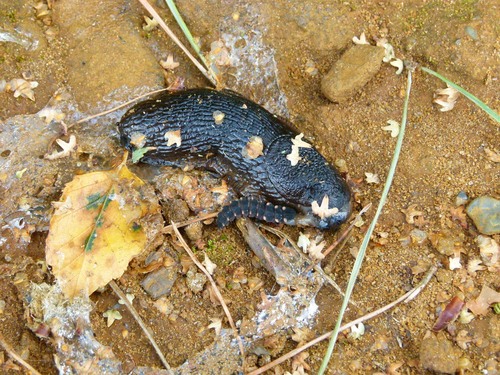
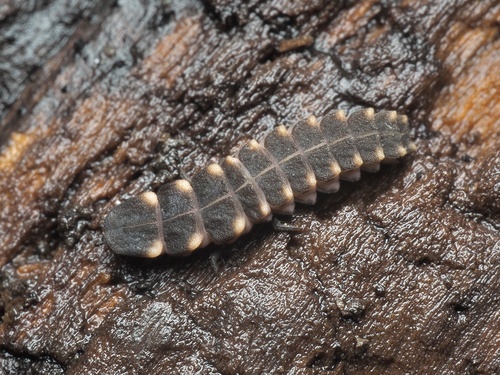
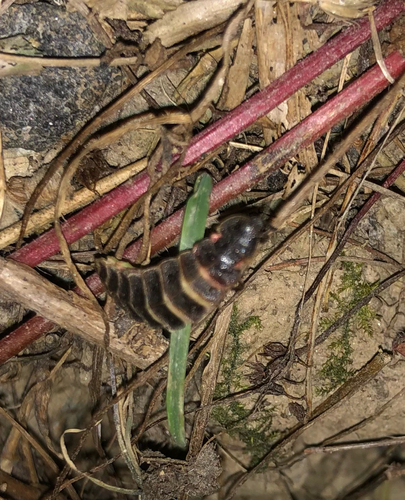
Larvae are elongated, segmented and dark with pale corners on each segment; they glow faintly and are active predators feeding mainly on snails, also slugs. Larval development takes 1-3 years with several molts.
Pupa
Larvae pupate in soil or sheltered litter; the pupal stage lasts a few weeks before the adult emerges.
Adult (imago)
Adults are short-lived (a few weeks). Females usually stay on or near the ground and glow to attract males; mating and egg-laying complete the cycle.
🍃Diet and predators
Young eat
Predatory: mainly snails, also slugs and other soft-bodied invertebrates.
Adults eat
Adults feed little or not at all; some may take nectar or not feed before reproducing.
Predators of the young
Ground beetles, birds, small mammals and parasitic wasps can prey on larvae.
Predators of adults
Birds, bats and nocturnal predators; eggs and pupae are vulnerable to ground predators.
🌱Effect on plants and gardens
Does not feed on living plants; adults mostly focus on reproduction and larvae are predators of soft-bodied invertebrates, so they do not damage gardens and can help reduce slug and snail numbers.
📍Where and when to find it
Look for glowing females on long grasses, hedgerows, road verges and meadow vegetation; larvae are found in leaf litter and soil where snails are present.
Best time
June to August, at dusk and during the night on warm, still evenings.
Observation tips
Walk quietly on nights without strong wind or rain. Use low red light or a dim torch to avoid disturbing them; do not touch or pick up many individuals and avoid using bright white light which can inhibit their signalling.
✨Fun facts
- Only the female glows brightly in this species; males glow much less and use flight to find females.
- The light is produced by a chemical reaction (bioluminescence) in the last abdominal segments and gives off very little heat.
- Larvae can glow faintly too; the glow may help deter predators or aid in communication.
?Frequently asked questions
Are common glow-worms dangerous?
No. They are harmless to people and do not bite or sting.
Do glow-worms bite?
No—adults do not bite people. Larvae feed on snails and slugs, not humans.
Why is there a glowing beetle in my garden?
You likely have a female glow-worm on low vegetation calling for a mate. Gardens with long grass, leaf litter and nearby meadows are attractive habitat.
How can I encourage glow-worms in my garden?
Maintain areas of long grass, native wildflowers, undisturbed leaf litter and a supply of snails/slugs. Avoid heavy pesticide use and bright artificial night lighting.
How do I get rid of glow-worms?
They are beneficial and protected in some areas—avoid removing them. If necessary, gently relocate individuals to nearby suitable habitat rather than killing them.
When can I see glow-worms?
Warm, calm evenings in mid-summer (often June to August) after dusk are the best times to see them.
📷Photos of the common glow-worm
More beetles
This guide was written with AI assistance and fact-checked, last updated 2026-10-10. Identification from photos is never certain: don't handle insects you can't identify, and get medical advice for bites, stings or allergic reactions. More about the common glow-worm: iNaturalist, Wikipedia.