
Cardinal beetle
Pyrochroa coccinea · Fire-coloured beetles
A bright red, soft-bodied beetle found on flowers and foliage in spring and early summer across much of Europe.
!Is the cardinal beetle dangerous?
No. Cardinal beetles are not dangerous to people. They do not have venom and do not sting. They may nip with their mandibles if handled roughly, producing a minor, harmless pinch but no lasting injury. Clean any broken skin as usual.
Pets
Not toxic to dogs or cats. Large numbers are unlikely; if a pet eats one, effects are generally negligible though mild stomach upset is possible.
📖Overview
Pyrochroa coccinea, commonly called the cardinal beetle, is a conspicuous red beetle found mainly in Europe. Adults are most often seen sitting on leaves and flowers where they hunt small insects and feed on nectar or pollen. Larvae live in and under decaying wood and feed on other insect larvae and organic matter.
They are most active in late spring and early summer. The beetle's bright red coloration is a warning signal to predators, though these beetles are not dangerous to humans. They are not considered agricultural pests and can be beneficial by preying on small herbivorous insects.
🔍How to identify a cardinal beetle
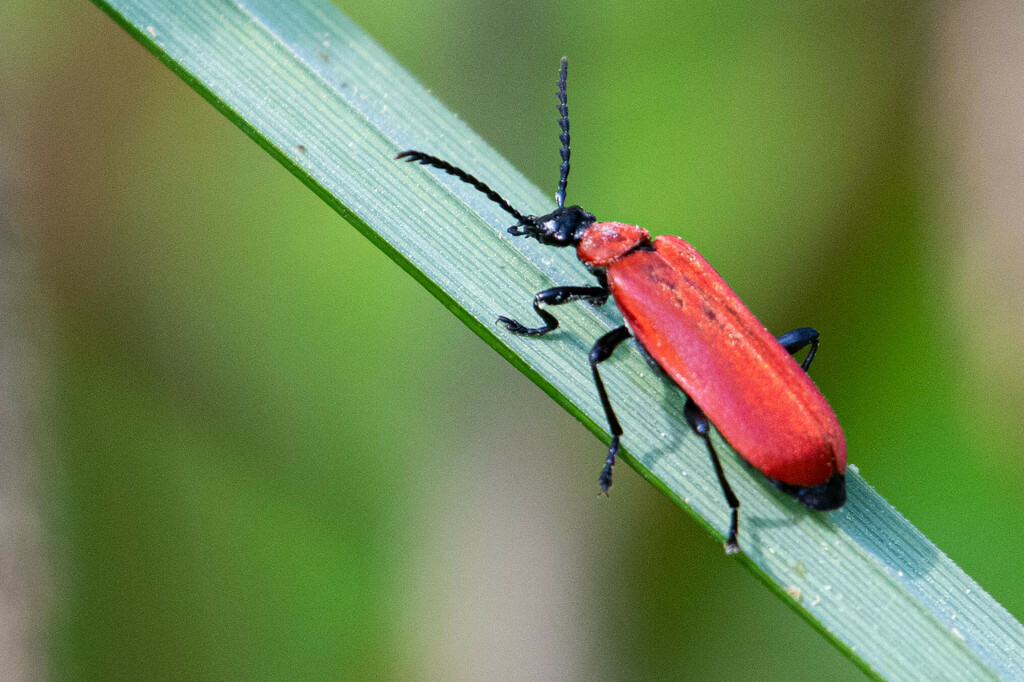
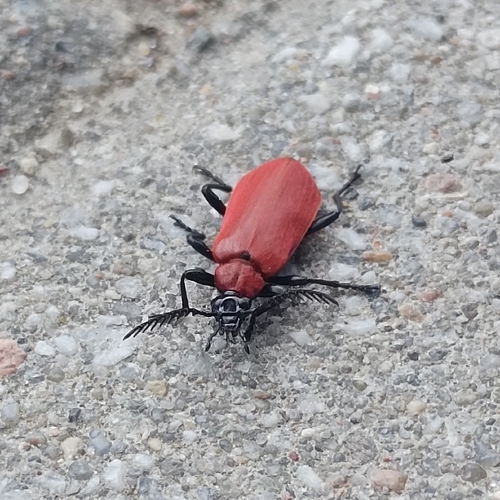
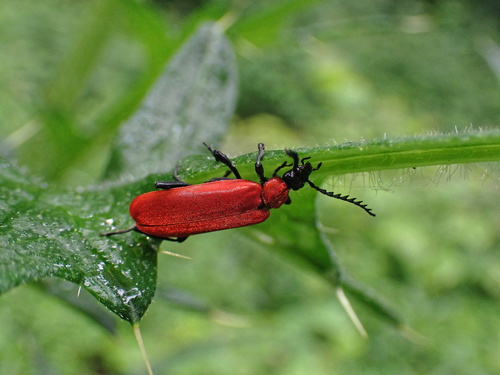
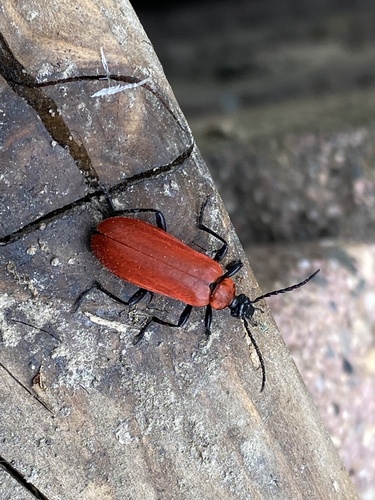
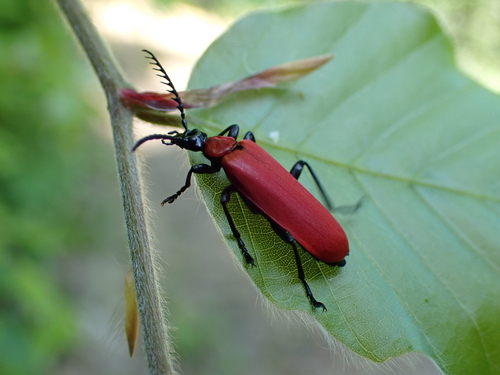
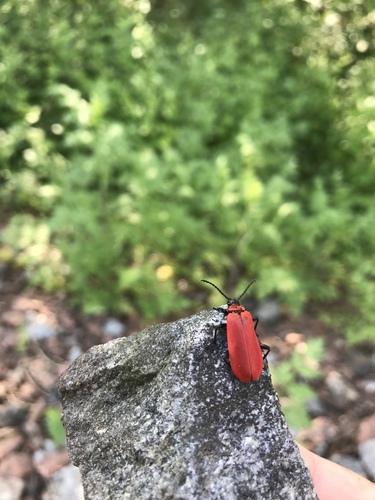
Adults are elongate, slightly flattened and somewhat soft-bodied. The head is black, while the pronotum and the elytra (wing covers) are a vivid scarlet-red; the elytra cover the abdomen completely. The legs and antennae are black. The pronotum is narrower than the elytra, and the antennae are strongly serrate to comb-like (pectinate), especially in males. Sexual dimorphism is subtle; males have more elaborately branched antennae.
- Bright scarlet-red elytra and pronotum with a black head
- Black legs and black, saw-toothed to comb-like antennae (most branched in males)
- Soft-bodied, slightly flattened beetle 14-18 mm long often sitting on flowers, leaves or tree trunks
- Usually seen in late spring and early summer near decaying wood
Lookalikes
Red soldier beetle Rhagonycha fulva
Rhagonycha fulva is more orange than deep scarlet, has a slimmer shape and the head is more visible from above; soldier beetles are also softer-bodied and have different pronotum shape.
Red-headed cardinal beetle Pyrochroa serraticornis
Very similar and slightly smaller, but the head is red like the rest of the body, whereas Pyrochroa coccinea has a black head.
↻Life cycle
Egg
Laid in crevices in bark or in decaying wood; details on egg number and incubation time are not well documented for this species.
Larva
Wood-associated, elongate and grub-like; feed in decaying wood and on other insect larvae, developing slowly over one or more years.
Pupa
Pupation occurs within the wood or soil near the larval feeding site; pupal stage lasts several weeks.
Adult
Emerges in spring to early summer, mate and are active on foliage and flowers for a few weeks to months.
🍃Diet and predators
Young eat
Predatory on other insect larvae and detritus within decaying wood
Adults eat
Adults feed on small insects and visit flowers for nectar and pollen
Predators of the young
Woodpeckers, predatory beetles, parasitic wasps and other wood-dwelling predators
Predators of adults
Birds and larger predatory insects; bright coloration likely warns predators and reduces attack
🌱Effect on plants and gardens
Adults visit flowers for nectar and pollen but are not significant pollinators or pests. Larvae live in decaying wood and do not harm healthy trees.
📍Where and when to find it
Look for adults on flowerheads, foliage and tree trunks near decaying wood. Search under loose bark and in rotten logs for larvae.
Best time
Late spring to early summer; daytime (warm, sunny days)
Observation tips
Use a shallow net or gently cup the beetle on a leaf to photograph; low-angle shots on flowers show the vivid red elytra. Check hedgerow flowers like umbellifers on warm afternoons.
✨Fun facts
- The common name 'cardinal beetle' comes from the bright red colour reminiscent of a cardinal's robes.
- Their red coloration acts as an aposematic signal — it advertises that they are unpalatable or unpleasant to predators.
- Adults are often seen sunning on leaves and flowerheads, where they hunt small insects as well as feed on nectar.
?Frequently asked questions
Are cardinal beetles dangerous?
No. They are not venomous and do not sting. They may give a minor nip if handled roughly, but they are harmless to people.
Do cardinal beetles bite?
They can pinch with their mandibles if provoked, but bites are rare and not harmful beyond minor discomfort.
Why is a cardinal beetle in my house?
Adults are active in late spring and may be attracted indoors by open windows or lights, or they may wander in from nearby vegetation. They do not infest houses or breed indoors.
How can I get rid of cardinal beetles?
They are harmless—simply gently catch and release them outside. Seal gaps in windows and doors to reduce indoor wandering. No pesticides are necessary.
Where do cardinal beetles live?
They live in and near woodlands, hedgerows and meadows. Larvae develop in decaying wood; adults are found on foliage and flowers in spring and early summer.
📷Photos of the cardinal beetle
More beetles
This guide was written with AI assistance and fact-checked, last updated 2026-10-10. Identification from photos is never certain: don't handle insects you can't identify, and get medical advice for bites, stings or allergic reactions. More about the cardinal beetle: iNaturalist, Wikipedia.