
Large spotted ladybird
Harmonia conformis · Ladybirds
A fairly large, orange ladybird with about 20 black spots, native to Australia, that preys on aphids and psyllids and gathers in sheltered spots to overwinter.
!Is the large spotted ladybird dangerous?
No. Not dangerous or venomous. They do not bite in a way that breaks skin under normal circumstances. If handled roughly or crushed, they can exude a yellow defensive fluid that may stain clothing and sometimes causes mild skin irritation in sensitive people or trigger allergic reactions in rare cases. Wash skin with soap and water if contact occurs.
Pets
Generally harmless to cats and dogs. Tasting or eating many ladybirds can cause mild gastrointestinal upset because of their bitter defensive chemicals; if a pet eats a large number, monitor and consult a veterinarian if symptoms occur.
📖Overview
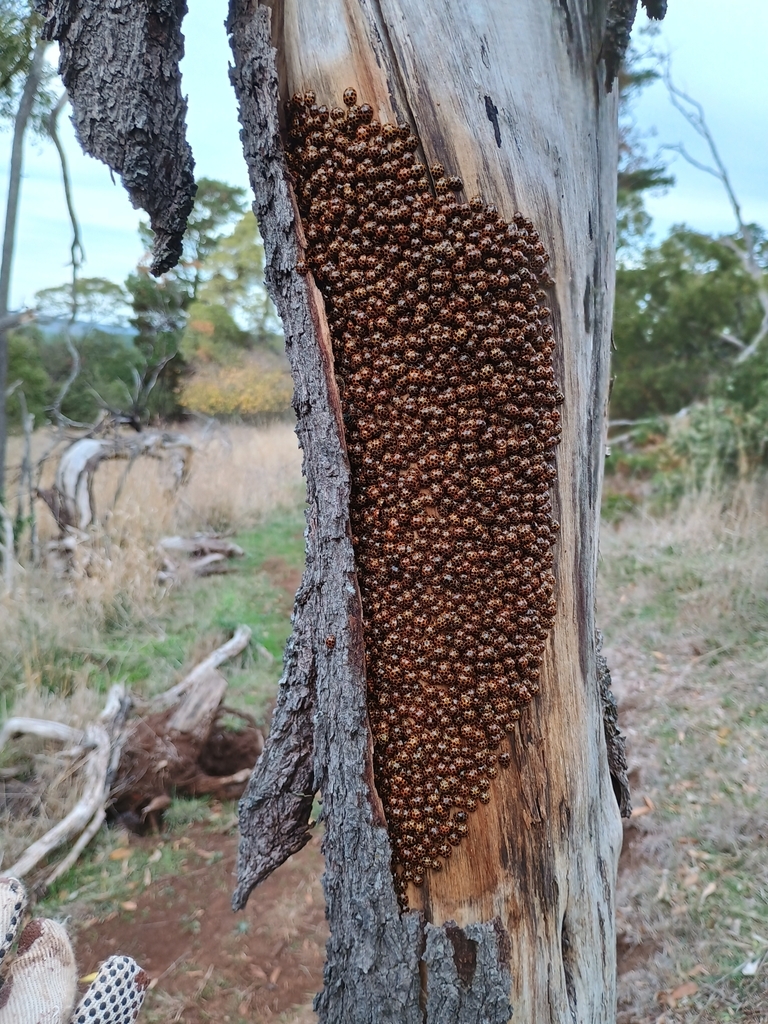
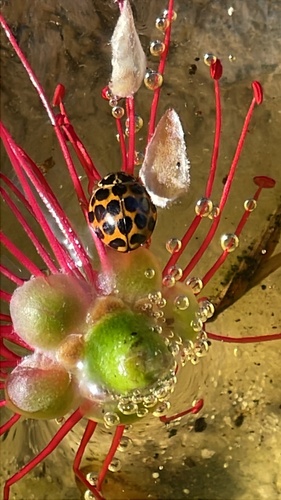
Harmonia conformis is a member of the ladybird family (Coccinellidae). Adults are larger than many native ladybirds and are typically orange with around 20 black spots (about 10 on each wing cover), some of which may merge; the pronotum is pale with black markings. They are predators of soft-bodied plant pests such as aphids and psyllids and are commonly found in gardens, orchards and woodlands. Adults gather in sheltered places such as under bark to overwinter and occasionally turn up in or on buildings, but they are beneficial in pest control.
🔍How to identify a large spotted ladybird
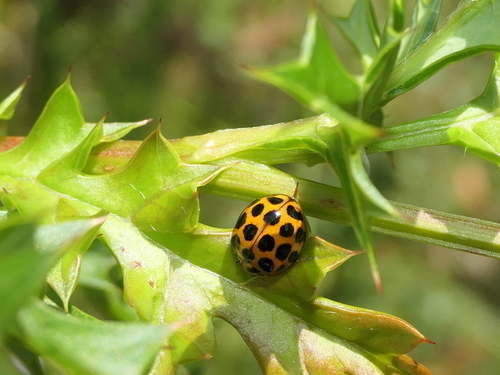
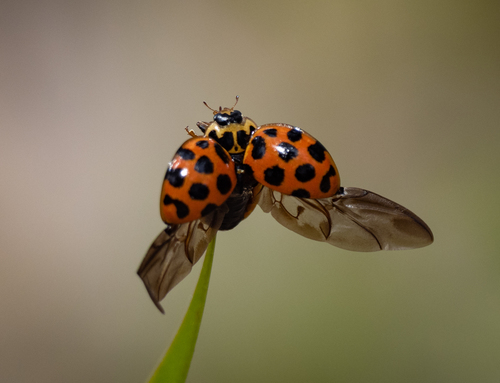
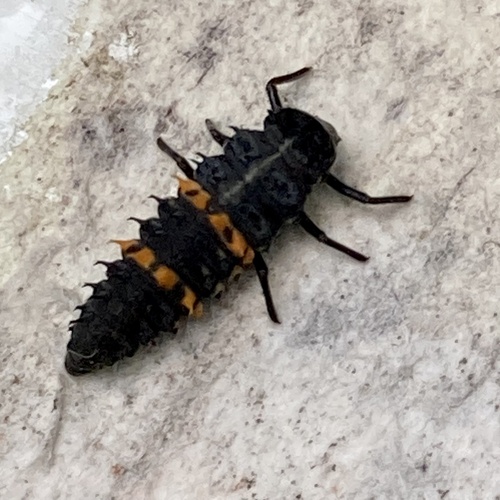
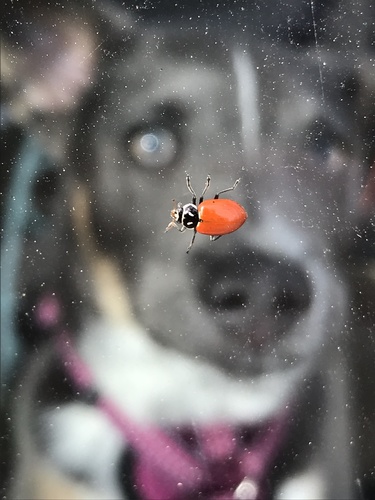
Adults are relatively large for ladybirds with an oval, domed shape. Elytra (wing covers) are orange to orange-red and typically bear about 20 black spots (around 10 on each side); some spots may merge in places. The pronotum (area behind the head) is white or cream with distinct black markings. Legs and underside are darker, often brown-black. Larvae are elongated, slightly flattened and alligator-like in appearance, usually dark with lighter markings and spines.
- Relatively large ladybird with oval, domed body 5-7 mm long.
- Orange elytra with about 20 black spots (around 10 per wing cover), some occasionally merged.
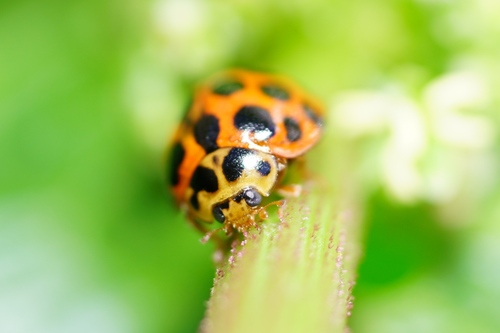
- Pronotum pale with distinctive black markings forming central dark patches or comma-like marks.
- Larvae are dark, elongated and alligator-like, commonly found on plants with aphids.
Lookalikes
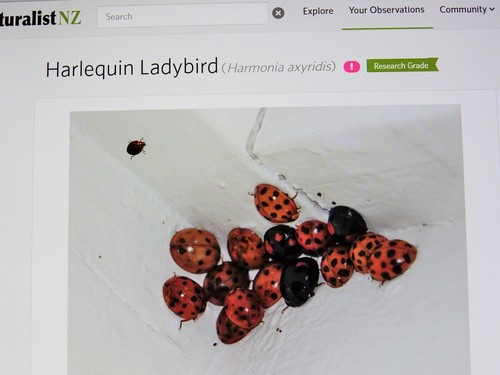
Asian lady beetle Harmonia axyridis
H. axyridis is very variable (orange with 0-19 spots, or black with red spots) and often has an M- or W-shaped mark on the pronotum; H. conformis is consistently orange with about 20 spots. Locality also helps.
Two-spotted ladybird Adalia bipunctata
Smaller and usually shows two distinct black spots on red elytra; body shape and spot count help distinguish it from H. conformis.
↻Life cycle
Egg
Females lay clusters of small, yellowish eggs on leaves near aphid colonies; eggs hatch in a few days to a week depending on temperature.
Larva
Active, alligator-like larvae that voraciously feed on aphids and other pests for several weeks while growing through multiple instars.
Pupa
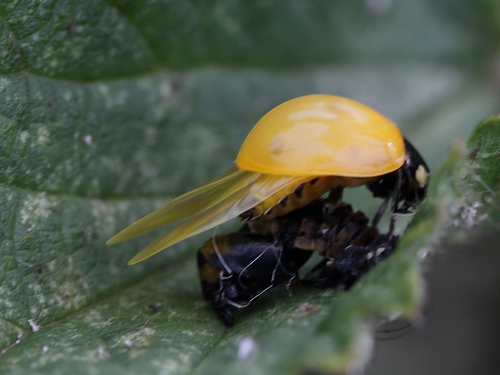
Larvae attach to a leaf or stem and pupate for several days to two weeks before the adult emerges.
Adult
Mobile, reproductive stage; adults continue to hunt pests and may disperse or aggregate to overwinter.
🍃Diet and predators
Young eat
Aphids, scale insects, mites and other soft-bodied arthropods
Adults eat
Same as larvae: primarily aphids and other soft-bodied plant pests; may also feed on pollen and nectar occasionally
Predators of the young
Birds, predatory insects (e.g., assassin bugs), parasitic wasps and spiders
Predators of adults
Birds, spiders, larger predatory insects; they rely on conspicuous coloration and reflex bleeding as chemical defenses
🌱Effect on plants and gardens
Adults and larvae feed on aphids, scale insects and other soft-bodied pests, helping control outbreaks on ornamental plants, fruit trees and crops.
📍Where and when to find it
Look on aphid-infested plants, undersides of leaves, flower heads and new growth. In autumn and winter check sunny walls, window frames and sheltered roof spaces for overwintering adults.
Best time
Spring and summer for active feeding and larvae; autumn for aggregation behaviour. Daytime on warm, sunny days is best for photographing adults.
Observation tips
Search plants with visible aphid colonies; a hand lens helps to see larval details. Photograph from above to capture elytral spot patterns and include the pronotum for identification.
✨Fun facts
- Despite their small size, a single larva can eat hundreds of aphids before pupating.
- Like many ladybirds, H. conformis can 'reflex bleed'—exuding a yellow fluid from leg joints that tastes bad to predators.
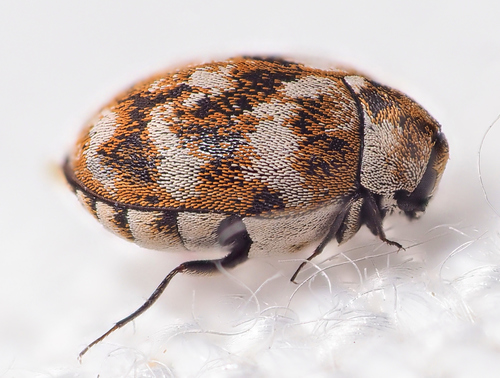
- It is sometimes confused with the 28-spotted ladybird, a leaf-eating pest, but that species is duller, hairy and has many more spots.
?Frequently asked questions
Do large spotted ladybirds bite?
They are not known to bite people in a way that breaks skin. They may nibble if trapped against skin, but this is uncommon and not harmful.
Are large spotted ladybirds harmful to my houseplants?
No. They are beneficial predators that help control aphids and other pests on houseplants and garden plants.
Why are there lots of ladybirds in my house?
Adults seek sheltered places such as under bark, in wall gaps or around window frames to overwinter, and sometimes gather in small groups on or inside buildings.
How can I get rid of ladybirds in my home?
Seal entry points (gaps around windows, doors, vents), use screens, and remove indoor aggregations by gently sweeping or vacuuming them into a container and releasing them outdoors. Avoid crushing them; they can stain and produce an unpleasant smell.
Do they help in the garden?
Yes. Both larvae and adults are effective predators of aphids, scale and other soft-bodied pests and are considered beneficial in gardens and orchards.
📷Photos of the large spotted ladybird
More beetles
This guide was written with AI assistance and fact-checked, last updated 2026-10-10. Identification from photos is never certain: don't handle insects you can't identify, and get medical advice for bites, stings or allergic reactions. More about the large spotted ladybird: iNaturalist, Wikipedia.