
Two-spotted lady beetle
Adalia bipunctata · Lady beetles
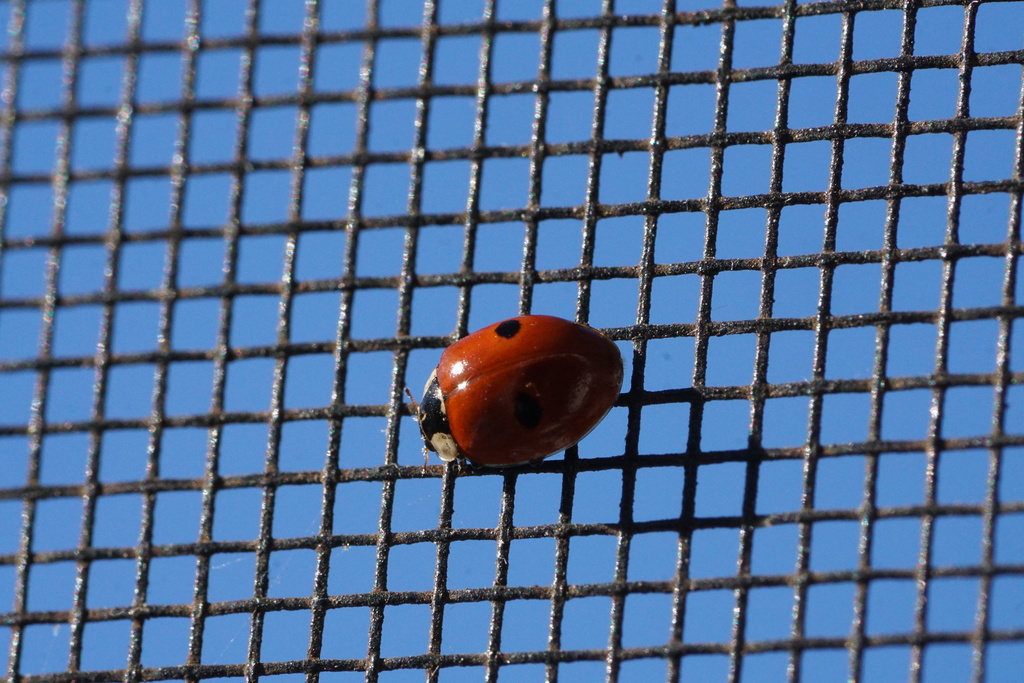
A small, common aphid-eating lady beetle with variable colour forms, often red or orange with one large spot on each elytron.
!Is the two-spotted lady beetle dangerous?
No. Not dangerous. Adults can reflexively release a small amount of haemolymph ('reflex bleeding') when disturbed which may smell or cause minor skin staining; rare mild skin irritation or allergic reaction is possible in sensitive people. No medically significant venom or bite.
Pets
Generally harmless to pets. Swallowing many lady beetles could cause mild stomach upset in a pet but serious effects are unlikely.
📖Overview
Adalia bipunctata is a small coccinellid beetle widely known as a beneficial predator of aphids and other soft-bodied pests. It shows strong colour polymorphism: classic adults are red or orange with one distinct black spot on each elytron (two spots total), but black morphs with red or orange spots also occur. They occur across much of Europe and Asia and are also native to North America.
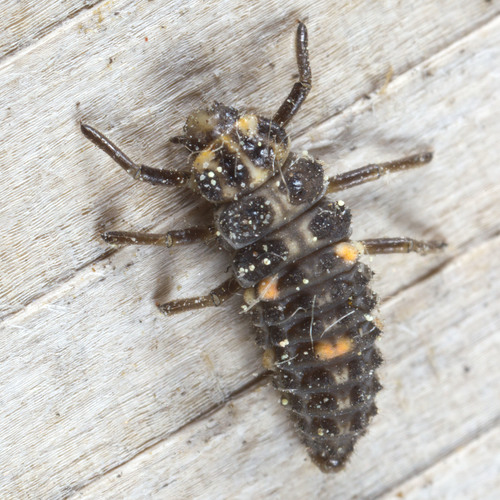
These beetles are active in spring through autumn, feeding on aphids, scale insects and sometimes pollen. Females lay clusters of small yellow eggs near aphid colonies. Larvae are elongate, alligator-like and voracious feeders before pupating and emerging as adults. Adalia bipunctata is considered a valuable biological control agent in gardens and orchards.
🔍How to identify a two-spotted lady beetle
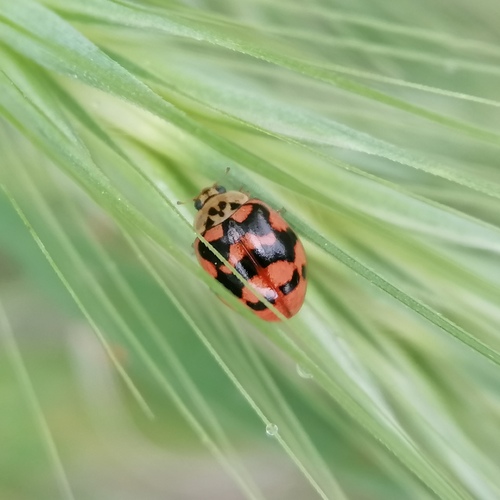
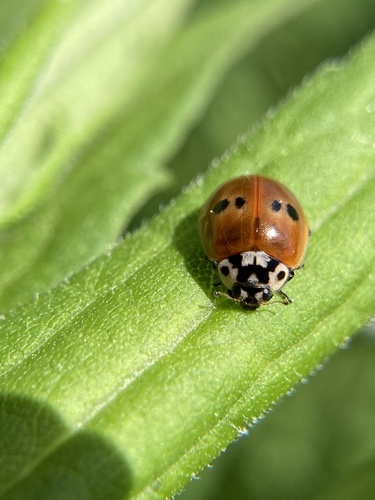
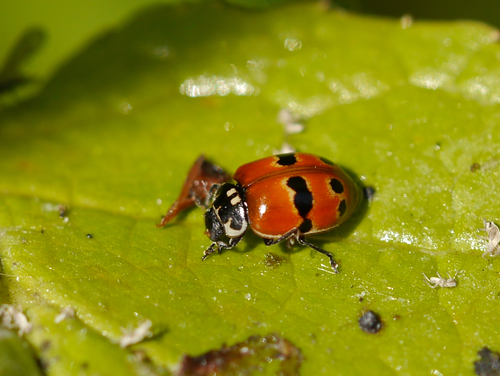
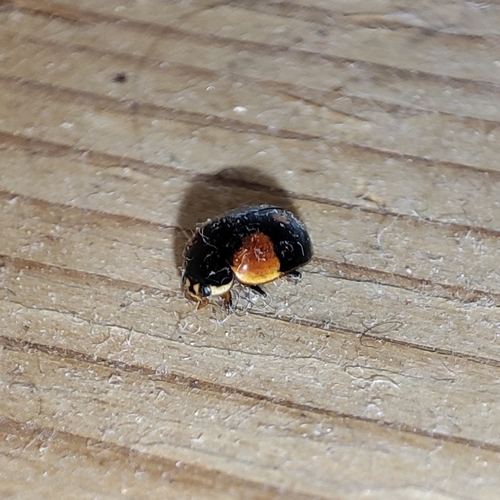
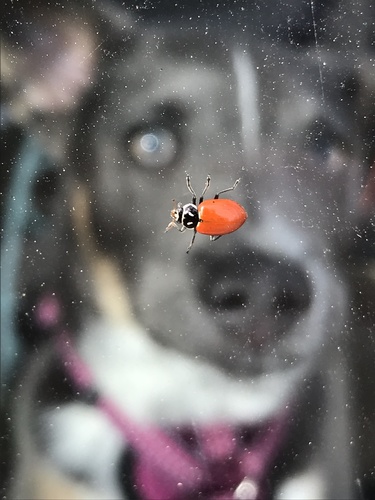
Adults are small, rounded, domed beetles. Typical size is about 3.5-5 mm long. The most familiar form is orange-red with one broad black spot on each elytron (giving two spots total). There are also black forms where the elytra are mostly black with one orange or red spot on each side. The pronotum (area behind the head) is usually black with white or pale markings, but pronotal pattern varies. Larvae are elongated, dark grey to black with lighter markings and a spiny appearance; pupae are attached to vegetation or bark and resemble an upside-down, mottled capsule.
- Small domed beetle 3.5-5 mm long with one large spot on each elytron (two spots total) in the common red/orange form
- Colour polymorphism: check for black form with a pair of orange/red spots; pronotal markings (white or pale patches) help confirm identity
- Smaller and with different pronotal pattern than the larger Harmonia axyridis (Asian lady beetle) and different spot counts from Coccinella septempunctata
Lookalikes
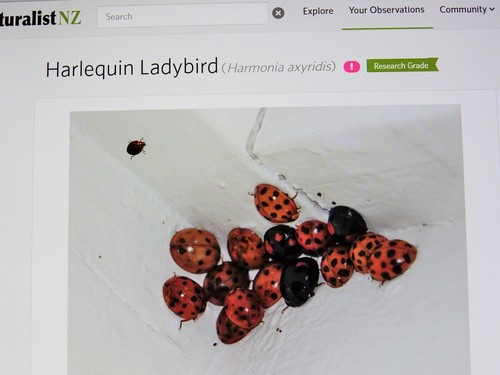
Asian lady beetle Harmonia axyridis
Often larger (6-8 mm), highly variable spot number and typically a distinct M- or W-shaped dark marking on the pronotum not usually seen in Adalia bipunctata.
Seven-spot ladybird Coccinella septempunctata
Larger and with seven black spots on red elytra (three on each elytron plus one shared spot), unlike the two-spot pattern of Adalia bipunctata.
↻Life cycle
Egg
Small yellow eggs laid in clusters or short rows near aphid colonies; hatch in a few days to a week depending on temperature.
Larva
Elongated, alligator-like larvae that actively hunt and consume large numbers of aphids over several weeks while growing through several instars.
Pupa
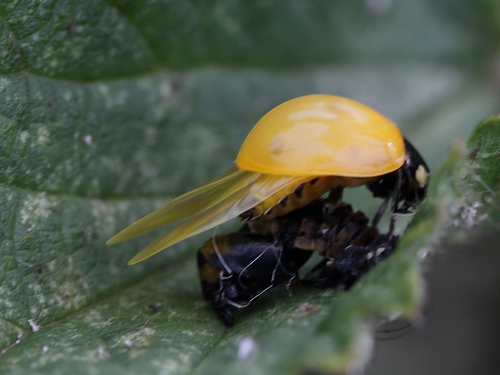
Larvae attach to leaves or stems and pupate; pupal stage lasts several days to two weeks before the adult emerges.
Adult
Winged, dome-shaped beetle that continues to feed on aphids; adults may reproduce the same season and many overwinter to the next year.
🍃Diet and predators
Young eat
Aphids, scale insect crawlers and other soft-bodied arthropods
Adults eat
Aphids and small pests; sometimes pollen and nectar
Predators of the young
Spiders, larger predatory insects (e.g. assassin bugs), birds and parasitic wasps
Predators of adults
Birds, spiders, predatory insects and some parasitoids; locally they may be outcompeted or preyed upon more where invasive lady beetles dominate
🌱Effect on plants and gardens
Feeds on aphids and other soft-bodied pests, helping protect garden plants, ornamentals and orchard trees; adults also sometimes eat pollen and nectar.
📍Where and when to find it
Search leaves and stems of plants with aphid colonies for eggs, larvae and adults; overwintering adults are found under bark, in leaf litter or inside sheltered structures.
Best time
Spring to early autumn for active feeding stages; autumn foraging and late autumn/early spring for overwintering adults. Best observed during daylight when they are active.
Observation tips
Look on the undersides of leaves where aphids congregate. Photograph both dorsal and pronotum views to capture spot pattern and pronotal markings needed for identification.
✨Fun facts
- Adalia bipunctata shows striking colour polymorphism; both red and melanic (black) forms are common in different regions and seasons.
- Because they are effective aphid predators, these beetles have been used in biological control programs in greenhouses and orchards.
- Overwintering adults often gather in sheltered sites and can sometimes be found in large groups under bark, in leaf litter or in buildings.
?Frequently asked questions
Do two-spotted lady beetles bite?
No — they do not bite people. They may occasionally nibble if trapped against skin but do not have a harmful bite.
Are two-spotted lady beetles good to have in my garden?
Yes. They eat aphids and other small pests and are considered beneficial for gardens and orchards.
Why do I find them in my house?
Adults seek sheltered overwintering sites; they may enter homes in autumn to escape cold weather and hide in attics, wall voids or window frames.
How can I get rid of them in my house?
Vacuum or gently sweep them up and release outdoors if possible. Seal entry points and reduce light at windows to discourage indoor gatherings. Avoid spraying insecticides indoors; use insect-proofing and exclusion.
Are they endangered or declining?
Adalia bipunctata remains common over much of its range, but local declines have been reported in some areas, possibly linked to invasive lady beetles and habitat change.
📷Photos of the two-spotted lady beetle
More beetles
This guide was written with AI assistance and fact-checked, last updated 2026-10-10. Identification from photos is never certain: don't handle insects you can't identify, and get medical advice for bites, stings or allergic reactions. More about the two-spotted lady beetle: iNaturalist, Wikipedia.