
Cardinal beetle vs Lily leaf beetle
These two are easy to mix up. Here's how to tell a cardinal beetle from a lily leaf beetle, and whether either one bites or stings.
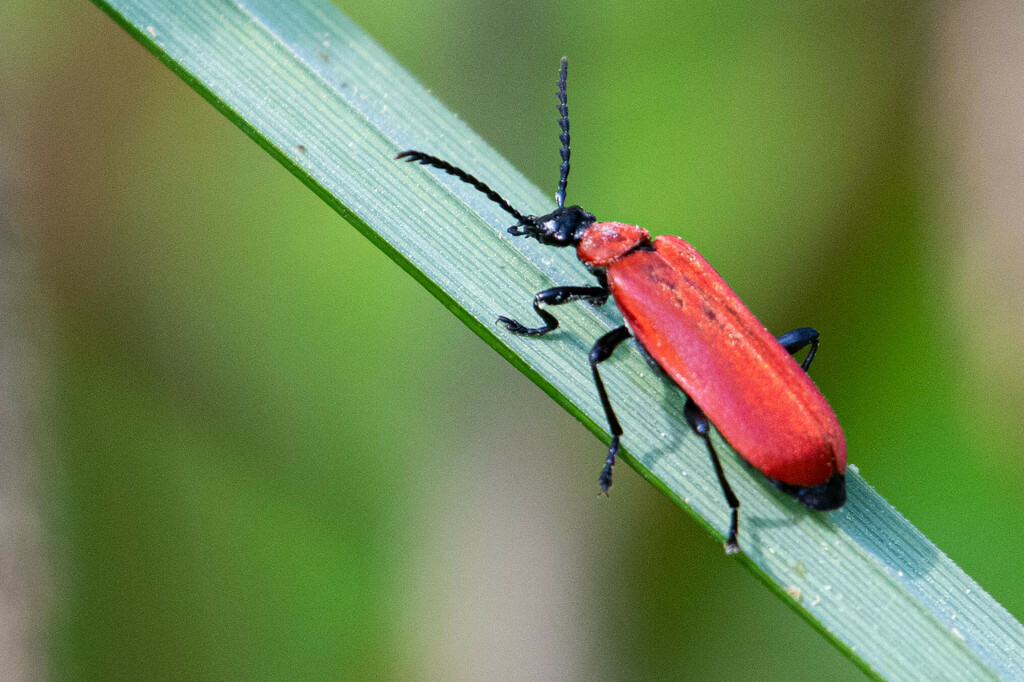
Cardinal beetle
Pyrochroa coccinea
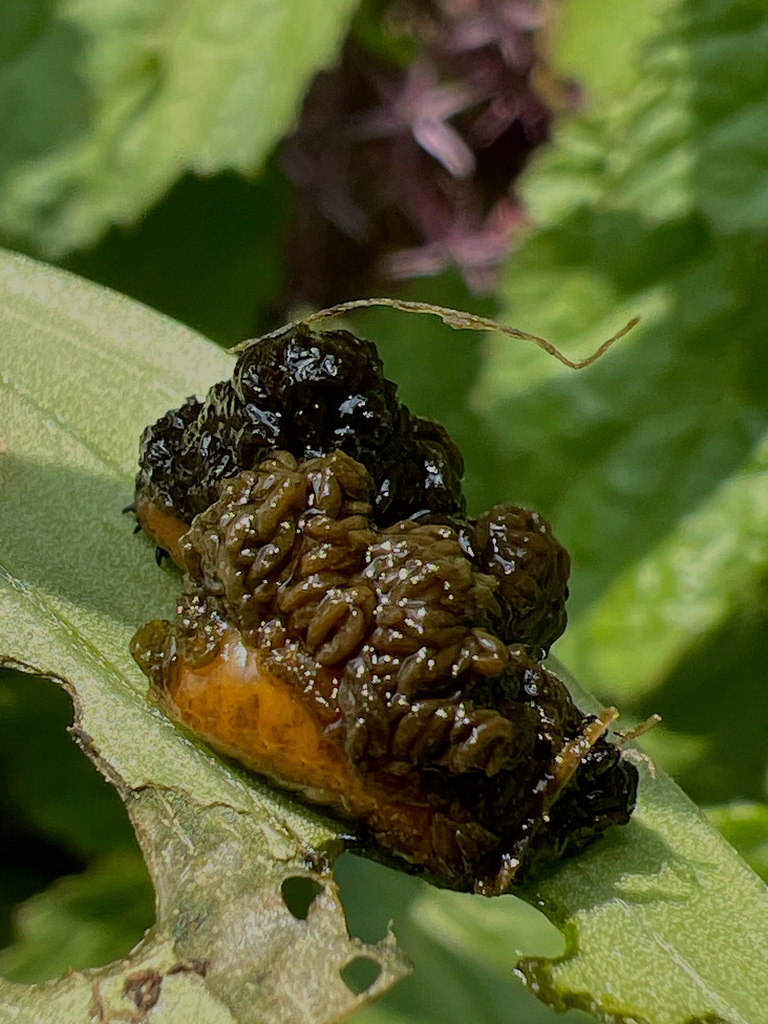
Lily leaf beetle
Lilioceris lilii
≠The key differences
Also red with a black head, but larger (14-20 mm) and flatter, with comb-like antennae and a red pronotum continuous with the elytra; found on flowers, tree stumps and dead wood rather than feeding on lilies.
Cardinal beetles are larger and often found on flowers; they have different body proportions and antennae compared with the smaller, more rounded lily leaf beetle.
⚖︎Side by side
| Cardinal beetle | Lily leaf beetle | |
|---|---|---|
| To humans | Non-toxic | Non-toxic |
| Size | 14-18 mm long | 6-9 mm long |
| Colours | Scarlet red, Crimson red, Black (legs/antennae) | Scarlet red, Jet black, Orange (eggs/young larvae) |
| Family | Pyrochroidae | Chrysomelidae |
| Habitat | Woodland edges, hedgerows, scrub, meadows and gardens — often on flowers, leaves and tree bark near decaying wood | Gardens, cultivated beds and nurseries where lilies, fritillaries and related plants grow; edges of woodlands and meadows in native range. |
| Range | Widespread across much of Europe, including the British Isles, central and western Europe; distribution details vary by region | Native to Europe and parts of Asia; introduced and now established in parts of North America (including northeastern USA and Canada) and reported elsewhere as an invasive pest. |
| Active | Late spring to early summer; diurnal (active during the day) | Spring to late summer (adults emerge in spring after overwintering and are active through the growing season); mostly daytime feeders. |
| Pest? | No | Yes |
🔍How to spot a cardinal beetle
- Bright scarlet-red elytra and pronotum with a black head
- Black legs and black, saw-toothed to comb-like antennae (most branched in males)
- Soft-bodied, slightly flattened beetle 14-18 mm long often sitting on flowers, leaves or tree trunks
- Usually seen in late spring and early summer near decaying wood
🔍How to spot a lily leaf beetle
- Adults bright scarlet red elytra with black head, legs and antennae; 6-9 mm long.
- Larvae carry a sticky dark fecal shield on their backs, making them appear black and slug-like.
- Egg clusters of yellow-orange laid on the underside of leaves.
- Gregarious feeding and rapid leaf skeletonisation on lilies is a telltale sign.
?Frequently asked questions
What is the difference between a cardinal beetle and a lily leaf beetle?
Also red with a black head, but larger (14-20 mm) and flatter, with comb-like antennae and a red pronotum continuous with the elytra; found on flowers, tree stumps and dead wood rather than feeding on lilies. Cardinal beetles are larger and often found on flowers; they have different body proportions and antennae compared with the smaller, more rounded lily leaf beetle.
Is a cardinal beetle or a lily leaf beetle more dangerous?
Cardinal beetle: Non-toxic. Lily leaf beetle: Non-toxic. Cardinal beetles are not dangerous to people. Lily leaf beetles do not have venom and are not dangerous to humans.
Identification from photos is never certain: don't handle insects you can't identify, and get medical advice for bites, stings or allergic reactions.