
Black vine weevil vs Pine weevil
These two are easy to mix up. Here's how to tell a black vine weevil from a pine weevil, and whether either one bites or stings.
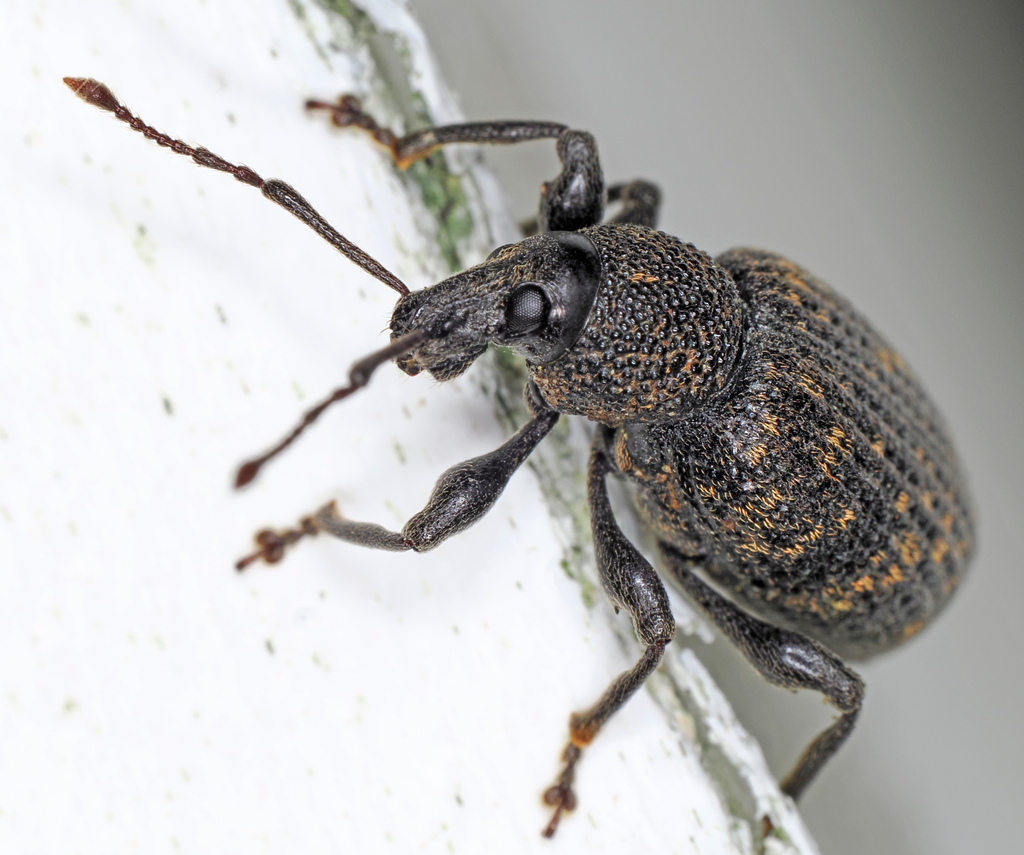
Black vine weevil
Otiorhynchus sulcatus
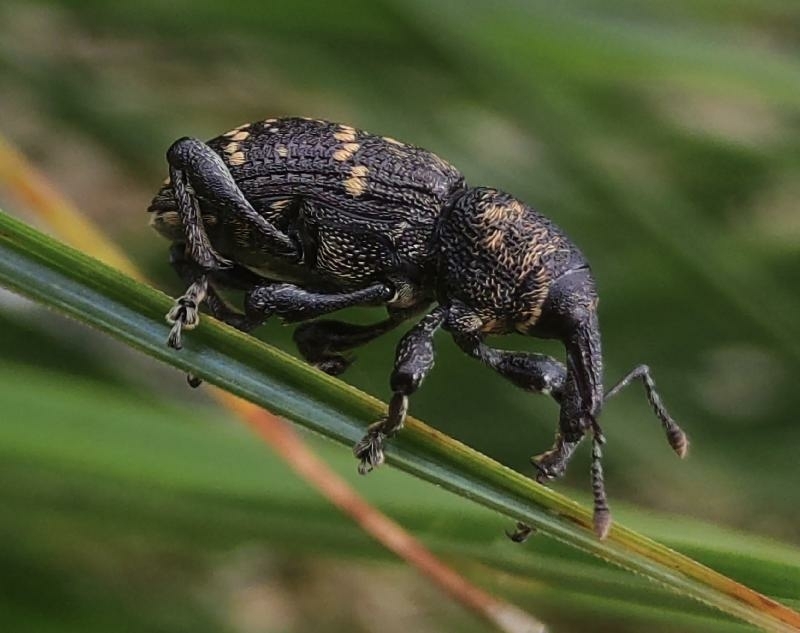
Pine weevil
Hylobius abietis
≠The key differences
Black vine weevil is generally uniformly dark and lacks the pronounced mottled reddish-brown scaling of H. abietis and is more commonly a nursery and garden pest on broad-leaved plants.
⚖︎Side by side
| Black vine weevil | Pine weevil | |
|---|---|---|
| To humans | Non-toxic | Non-toxic |
| Size | 8-12 mm long | 8-12 mm long |
| Colours | Black, Dark brown, Cream (larva) | Mottled brown, Reddish-brown, Black |
| Family | Curculionidae | Curculionidae |
| Habitat | Garden beds, container plants, nurseries, strawberry patches, woodland edges — larvae in soil around roots, adults on host plants at night. | Conifer forests, clear-cuts, recently harvested areas, and woodland edges where stumps and root plates remain |
| Range | Native to Europe; introduced and widespread in North America, parts of Asia, Australasia and other temperate regions where ornamental plants are grown. | Widespread across Europe and temperate parts of Asia; not found in the Americas, where the related pales weevil (Hylobius pales) has a similar role. |
| Active | Adults active at night from spring to autumn; larvae feed in soil year-round, often overwintering as larvae. | Adults active mainly spring to autumn (often from April to October); crepuscular and nocturnal feeding is common |
| Pest? | Yes | Yes |
🔍How to spot a black vine weevil
- Flightless, stout beetle 8-12 mm long with a short curved snout, matte black with small flecks of yellowish hairs.
- Adults active at night and leave semicircular notches along leaf edges of host plants.
- Look in soil and around root crowns for C-shaped, cream-coloured grubs that damage roots.
- Adults cannot fly; tap foliage at night with a light or torch to spot them walking on leaves.
🔍How to spot a pine weevil
- Size 8-12 mm with a distinct elongated snout (rostrum) typical of weevils
- Mottled reddish-brown and black scaly patches on the elytra giving a rough, camouflaged look
- Adults often found on or near young conifer seedlings, and fresh feeding marks are semicircular or irregular gouges on bark
- Larvae are C-shaped, creamy-white grubs in stumps and root plates
?Frequently asked questions
What is the difference between a black vine weevil and a pine weevil?
Black vine weevil is generally uniformly dark and lacks the pronounced mottled reddish-brown scaling of H. abietis and is more commonly a nursery and garden pest on broad-leaved plants.
Is a black vine weevil or a pine weevil more dangerous?
Black vine weevil: Non-toxic. Pine weevil: Non-toxic. Black vine weevils do not bite, sting or transmit disease. Pine weevils do not have venom, do not transmit disease, and are not dangerous to people.
Identification from photos is never certain: don't handle insects you can't identify, and get medical advice for bites, stings or allergic reactions.