
Asian lady beetle vs Convergent lady beetle
These two are easy to mix up. Here's how to tell an Asian lady beetle from a convergent lady beetle, and whether either one bites or stings.
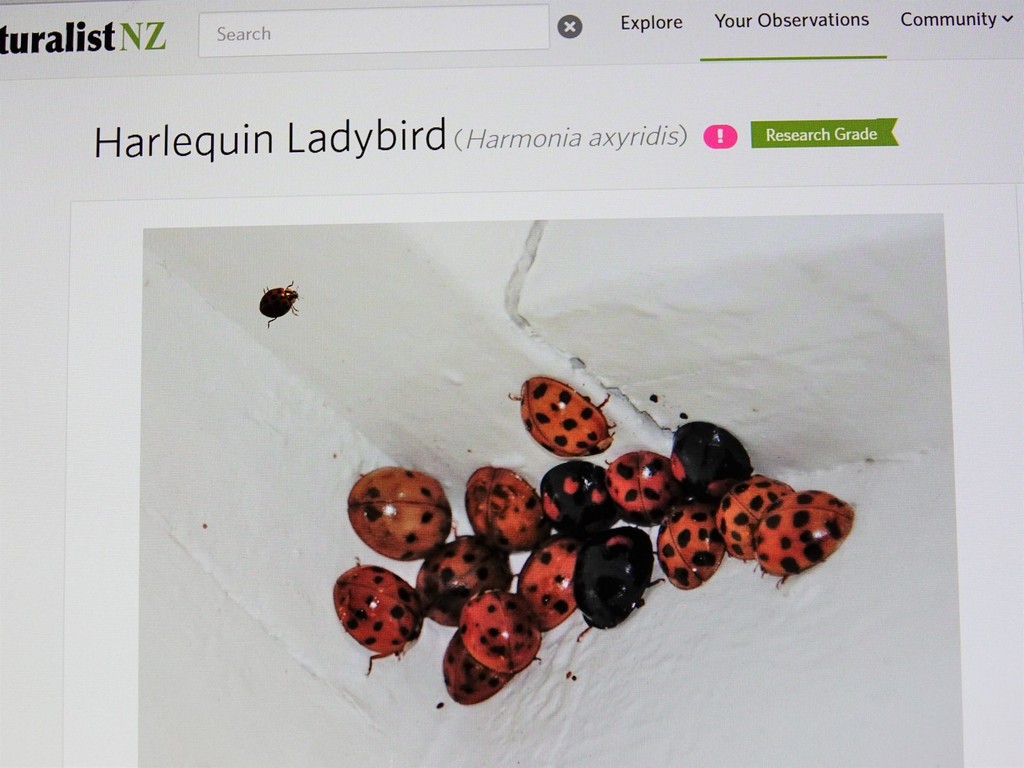
Asian lady beetle
Harmonia axyridis
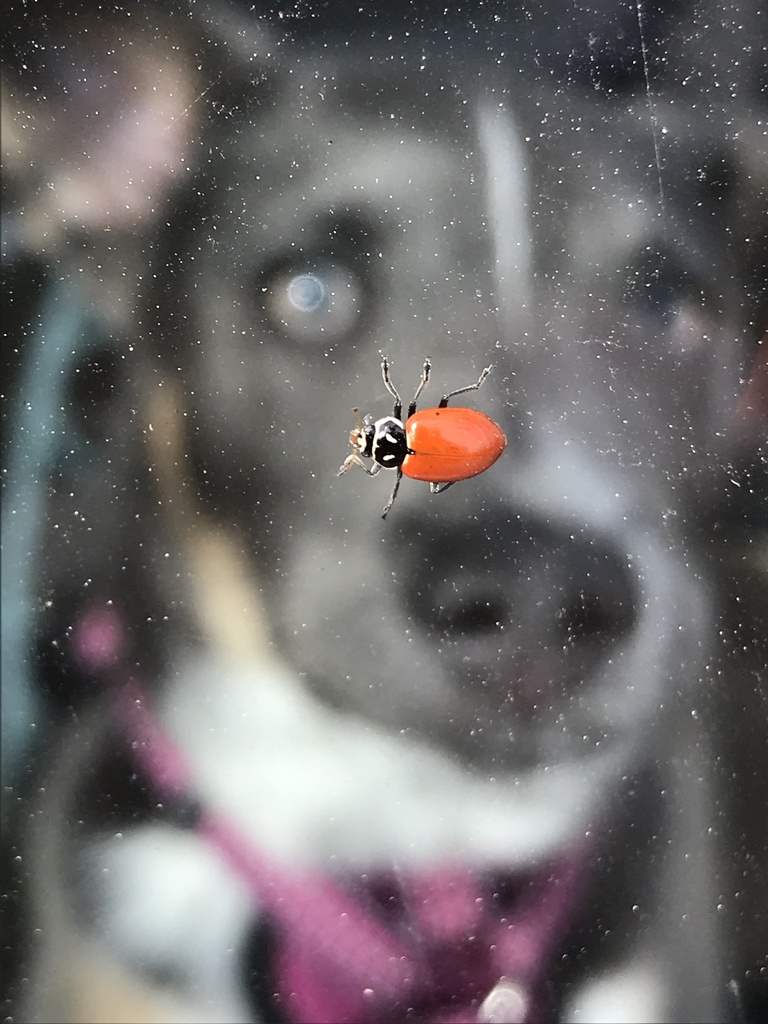
Convergent lady beetle
Hippodamia convergens
≠The key differences
Usually orange with many smaller spots and convergent white lines on the pronotum; lacks H. axyridis typical pronotal M-mark.
Often more variable in color and spot number; pronotum is mostly pale with a black M- or W-shaped marking rather than the two converging white spots of H. convergens.
⚖︎Side by side
| Asian lady beetle | Convergent lady beetle | |
|---|---|---|
| To humans | Mild irritant | Non-toxic |
| Size | 5-8 mm long | 3.5-7 mm long |
| Colours | Orange, Red, Black, Yellow | Orange-red, Black, White |
| Family | Coccinellidae | Coccinellidae |
| Habitat | Gardens, orchards, agricultural fields, parks and buildings; often found on aphid-infested plants and congregating on sunny walls and window frames in autumn. | Gardens, fields, meadows, forest edges and shrubby areas; often on plants with aphid infestations and in sheltered overwintering sites such as rock crevices, buildings and trees. |
| Range | Native to eastern Asia; introduced and now widespread across North America, Europe, South America, southern Africa and parts of Oceania. | Native to North America; abundant in the United States and Canada. Has been transported for commercial biocontrol to other regions. |
| Active | Active spring through autumn; aggregates to overwinter in autumn and are mostly inactive during winter. | Active spring through fall; adults congregate to overwinter in autumn and become active in spring. Diurnally active (daytime). |
| Pest? | Yes | No |
🔍How to spot an Asian lady beetle
- Size 5-8 mm long, dome-shaped beetle with highly variable color and spot pattern.
- Look for the M- or W-shaped black marking on the pale pronotum behind the head.
- Melanic individuals may be nearly all black; count of spots is unreliable because pattern varies.
- Larvae are elongate, black with orange markings and look like tiny alligators.
🔍How to spot a convergent lady beetle
- Look for orange-red, dome-shaped beetles about 3.5-7 mm long with black spots on the elytra.
- Check the pronotum behind the head for two white markings or lines that converge toward the center (the 'convergent' mark).
- Larvae are elongated, dark and spiny with orange spots (look like tiny alligators), often on plants with aphids.
?Frequently asked questions
What is the difference between an Asian lady beetle and a convergent lady beetle?
Usually orange with many smaller spots and convergent white lines on the pronotum; lacks H. axyridis typical pronotal M-mark. Often more variable in color and spot number; pronotum is mostly pale with a black M- or W-shaped marking rather than the two converging white spots of H. convergens.
Is an Asian lady beetle or a convergent lady beetle more dangerous?
Asian lady beetle: Mild irritant. Convergent lady beetle: Non-toxic. Bites are uncommon and usually produce only minor, short-lived discomfort. Harmless to people.
≠More comparisons
- Asian lady beetle vs Seven-spot ladybird
- Asian lady beetle vs Two-spotted lady beetle
- Convergent lady beetle vs Two-spotted lady beetle
- Asian lady beetle vs Fourteen-spotted ladybird
- Asian lady beetle vs Pink spotted lady beetle
- Asian lady beetle vs Large spotted ladybird
- Asian lady beetle vs Eyed ladybird
- Seven-spot ladybird vs Two-spotted lady beetle
Identification from photos is never certain: don't handle insects you can't identify, and get medical advice for bites, stings or allergic reactions.