
Japanese beetle vs Rose chafer
These two are easy to mix up. Here's how to tell a Japanese beetle from a rose chafer, and whether either one bites or stings.
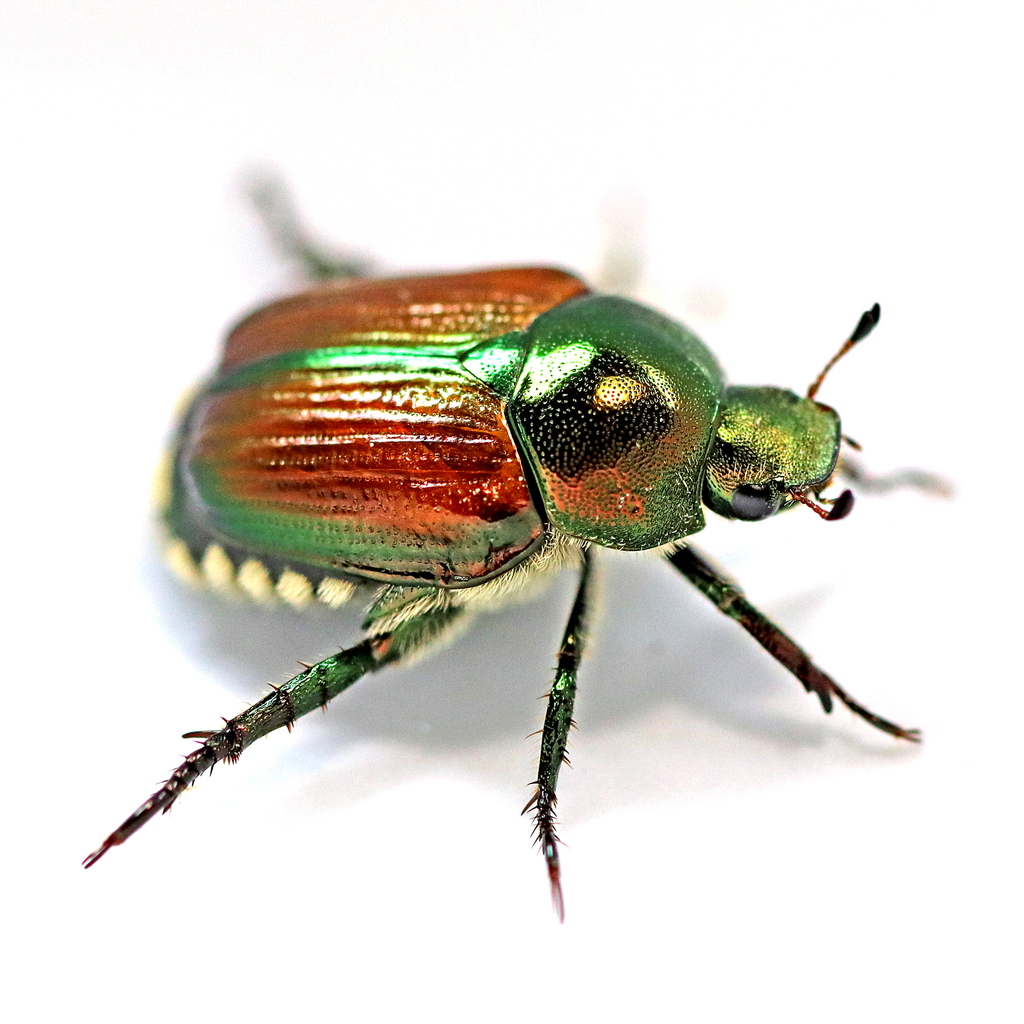
Japanese beetle
Popillia japonica
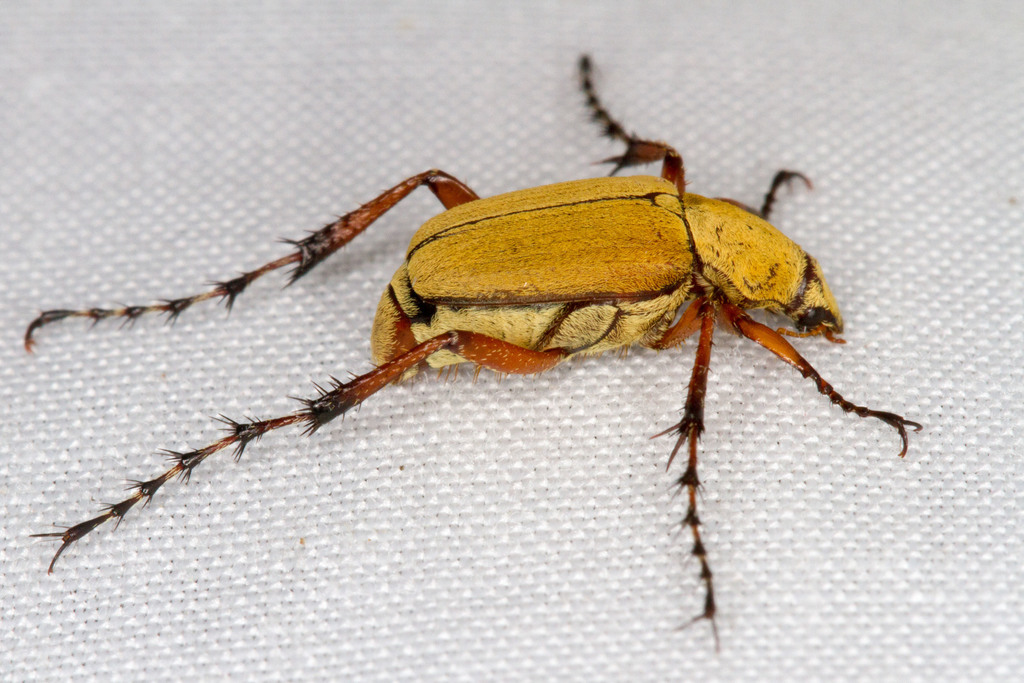
Rose chafer
Macrodactylus subspinosus
≠The key differences
Japanese beetle is smaller to similar size but has metallic green head and coppery wing covers and a distinct row of white tufts along the sides; rose chafer is uniformly tan/golden.
⚖︎Side by side
| Japanese beetle | Rose chafer | |
|---|---|---|
| To humans | Non-toxic | Non-toxic |
| Size | 8-11 mm long | 7-11 mm long |
| Colours | Metallic green, Coppery brown, Cream (larva), White (abdominal tufts) | Golden tan, Light bronze, Brown (legs/underside) |
| Family | Scarabaeidae | Scarabaeidae |
| Habitat | Adults found on shrubs, trees, flowers and crops in sunny locations; larvae live in turf, lawns, pastures and grassy areas with soil organic matter. | Open habitats: gardens, lawns, vineyards, orchards, fields and hedgerows where host plants (roses, grapevines, fruit trees, ornamental shrubs) are present. |
| Range | Native to Japan; invasive across much of eastern and midwestern North America with spreading populations in parts of western North America, and established in Europe in the Azores, northern Italy and Switzerland. | Eastern and central North America, extending from parts of Canada south through the United States. |
| Active | Adults active in summer months (commonly June-August); larvae active in late summer through spring while feeding on roots. | Late spring to early summer (commonly May to July); diurnal (active in daylight). |
| Pest? | Yes | Yes |
🔍How to spot a Japanese beetle
- Adults 8-11 mm, metallic emerald-green head and thorax with coppery-brown elytra
- Five small white tufts of hair along each side of the abdomen plus two at the tip, visible just below the edge of the elytra
- Adults skeletonize leaves, leaving a lace-like appearance on foliage
🔍How to spot a rose chafer
- Size about 7-11 mm, slender, straw-golden to light bronze body with fine hairs.
- Long legs and slightly clubbed antennae typical of chafer beetles.
- Active in daytime on flowers and leaves in late spring to early summer; often seen in groups.
- Larvae are white, C-shaped grubs in soil near roots.
?Frequently asked questions
What is the difference between a Japanese beetle and a rose chafer?
Japanese beetle is smaller to similar size but has metallic green head and coppery wing covers and a distinct row of white tufts along the sides; rose chafer is uniformly tan/golden.
Is a Japanese beetle or a rose chafer more dangerous?
Japanese beetle: Non-toxic. Rose chafer: Non-toxic. Japanese beetles are not poisonous and do not pose a medical threat. Rose chafers do not have venom and are not dangerous.
Identification from photos is never certain: don't handle insects you can't identify, and get medical advice for bites, stings or allergic reactions.