
Grapevine beetle vs Rose chafer
These two are easy to mix up. Here's how to tell a grapevine beetle from a rose chafer, and whether either one bites or stings.
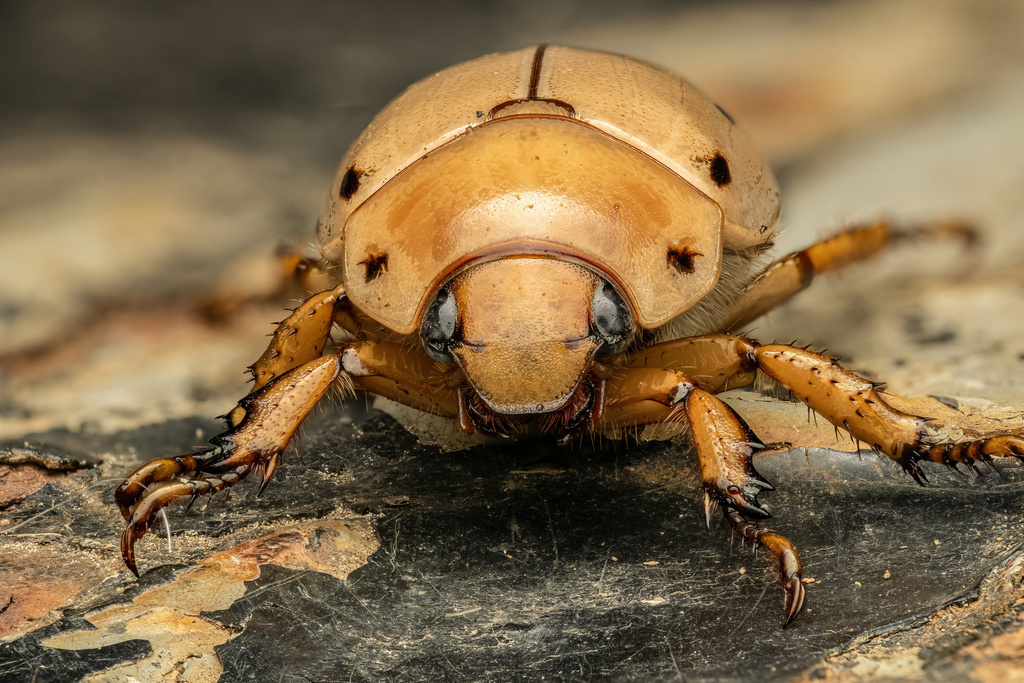
Grapevine beetle
Pelidnota punctata
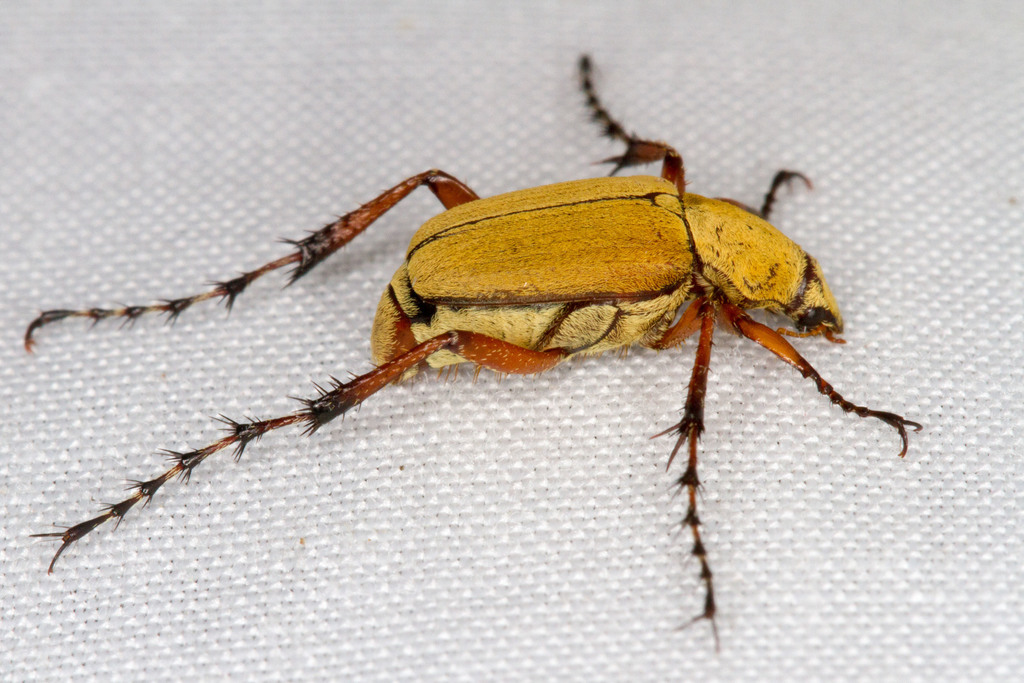
Rose chafer
Macrodactylus subspinosus
≠The key differences
Grapevine beetle is larger (often 20-30 mm) and more orange; rose chafer is much smaller and more straw-colored.
⚖︎Side by side
| Grapevine beetle | Rose chafer | |
|---|---|---|
| To humans | Non-toxic | Non-toxic |
| Size | 20-25 mm long | 7-11 mm long |
| Colours | Tan, Orange, Black, Brown | Golden tan, Light bronze, Brown (legs/underside) |
| Family | Scarabaeidae | Scarabaeidae |
| Habitat | Woodlands, edges, gardens and vineyards; adults on grapevines, fruit trees, sap flows and flowers; larvae in soil and decaying wood | Open habitats: gardens, lawns, vineyards, orchards, fields and hedgerows where host plants (roses, grapevines, fruit trees, ornamental shrubs) are present. |
| Range | Eastern and central North America (from southern Canada through much of the United States) | Eastern and central North America, extending from parts of Canada south through the United States. |
| Active | Summer (commonly July-August); adults most active in daytime and early evening, also attracted to lights at night | Late spring to early summer (commonly May to July); diurnal (active in daylight). |
| Pest? | Yes | Yes |
🔍How to spot a grapevine beetle
- Pale tan to orange wing covers with three black spots on each, plus a black spot on each side of the pronotum
- Size about 20-25 mm and oval, convex scarab shape
- Dark, often metallic greenish underside and legs
- Often found on grapevines or ripe fruit in summer and attracted to lights at night
🔍How to spot a rose chafer
- Size about 7-11 mm, slender, straw-golden to light bronze body with fine hairs.
- Long legs and slightly clubbed antennae typical of chafer beetles.
- Active in daytime on flowers and leaves in late spring to early summer; often seen in groups.
- Larvae are white, C-shaped grubs in soil near roots.
?Frequently asked questions
What is the difference between a grapevine beetle and a rose chafer?
Grapevine beetle is larger (often 20-30 mm) and more orange; rose chafer is much smaller and more straw-colored.
Is a grapevine beetle or a rose chafer more dangerous?
Grapevine beetle: Non-toxic. Rose chafer: Non-toxic. Grapevine beetles do not bite or sting and are not poisonous. Rose chafers do not have venom and are not dangerous.
Identification from photos is never certain: don't handle insects you can't identify, and get medical advice for bites, stings or allergic reactions.