
Green June beetle vs Grapevine beetle
These two are easy to mix up. Here's how to tell a green June beetle from a grapevine beetle, and whether either one bites or stings.
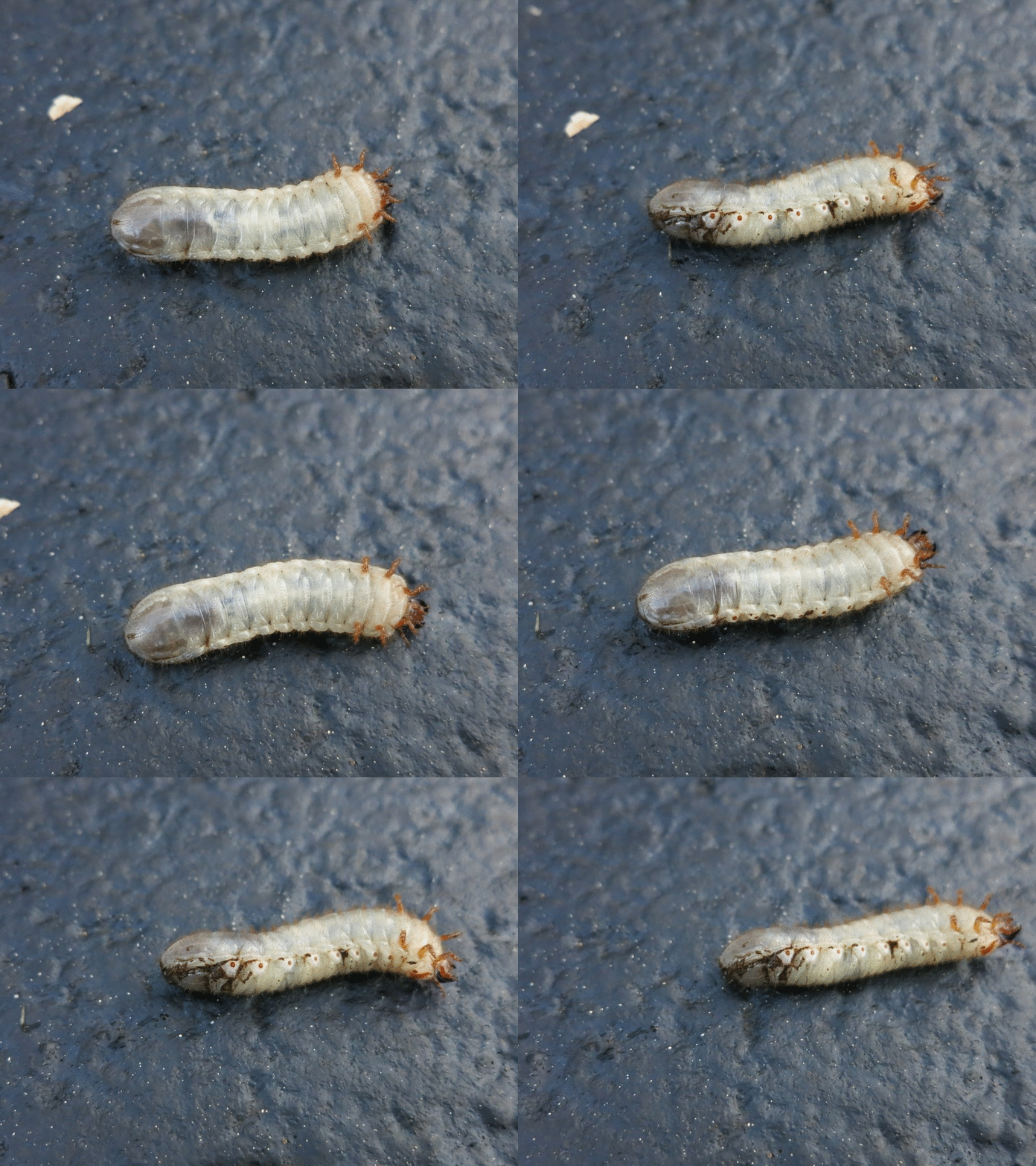
Green June beetle
Cotinis nitida
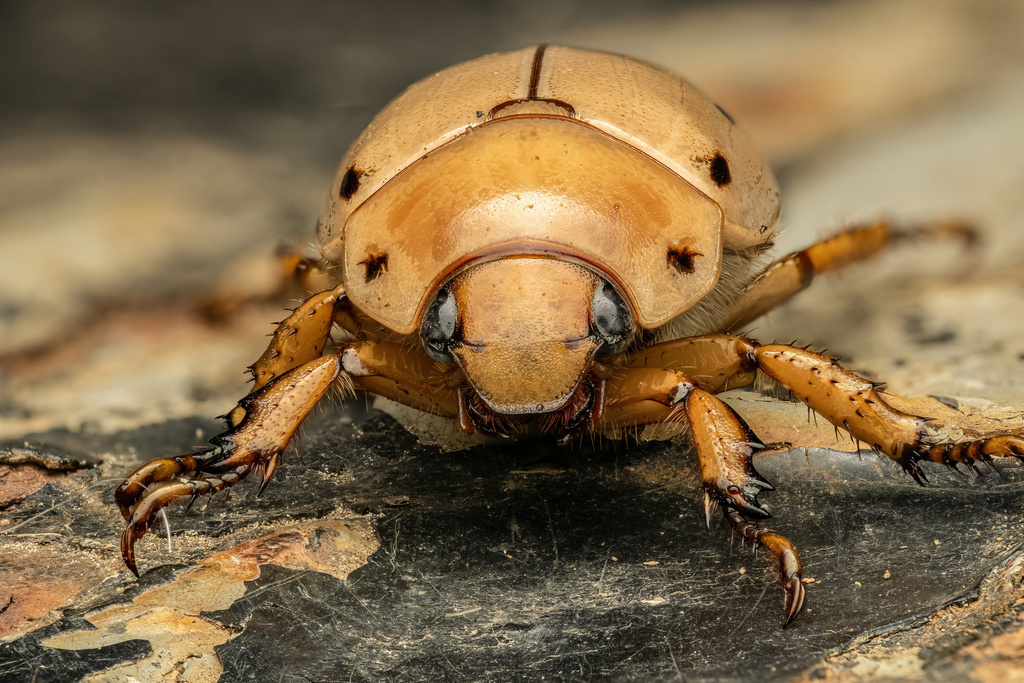
Grapevine beetle
Pelidnota punctata
≠The key differences
Similar in size (15-22 mm) but velvety green with bronze-orange edges rather than tan with black spots
⚖︎Side by side
| Green June beetle | Grapevine beetle | |
|---|---|---|
| To humans | Non-toxic | Non-toxic |
| Size | 15-22 mm long | 20-25 mm long |
| Colours | Metallic green, Golden yellow, Bronze brown | Tan, Orange, Black, Brown |
| Family | Scarabaeidae | Scarabaeidae |
| Habitat | Gardens, orchards, woodlands edges, compost piles, turf and lawns in urban and rural areas | Woodlands, edges, gardens and vineyards; adults on grapevines, fruit trees, sap flows and flowers; larvae in soil and decaying wood |
| Range | Eastern United States from the Atlantic coast west into parts of the Midwest and south into Florida and Texas | Eastern and central North America (from southern Canada through much of the United States) |
| Active | Warm months (primarily June and July in much of their range); active mainly during the day | Summer (commonly July-August); adults most active in daytime and early evening, also attracted to lights at night |
| Pest? | Yes | Yes |
🔍How to spot a green June beetle
- Large, broad beetle 15-22 mm long with a velvety green upper surface and shiny metallic green underside
- Tan to orange-yellow margins along the elytra
- Stout legs with digging spines and a convex, oval body shape
- Usually active in daytime and dusk feeding on fruit or sap
🔍How to spot a grapevine beetle
- Pale tan to orange wing covers with three black spots on each, plus a black spot on each side of the pronotum
- Size about 20-25 mm and oval, convex scarab shape
- Dark, often metallic greenish underside and legs
- Often found on grapevines or ripe fruit in summer and attracted to lights at night
?Frequently asked questions
What is the difference between a green June beetle and a grapevine beetle?
Similar in size (15-22 mm) but velvety green with bronze-orange edges rather than tan with black spots
Is a green June beetle or a grapevine beetle more dangerous?
Green June beetle: Non-toxic. Grapevine beetle: Non-toxic. Cotinis nitida is not venomous and does not pose a medical threat. Grapevine beetles do not bite or sting and are not poisonous.
Identification from photos is never certain: don't handle insects you can't identify, and get medical advice for bites, stings or allergic reactions.