
Locust borer vs Wasp beetle
These two are easy to mix up. Here's how to tell a locust borer from a wasp beetle, and whether either one bites or stings.
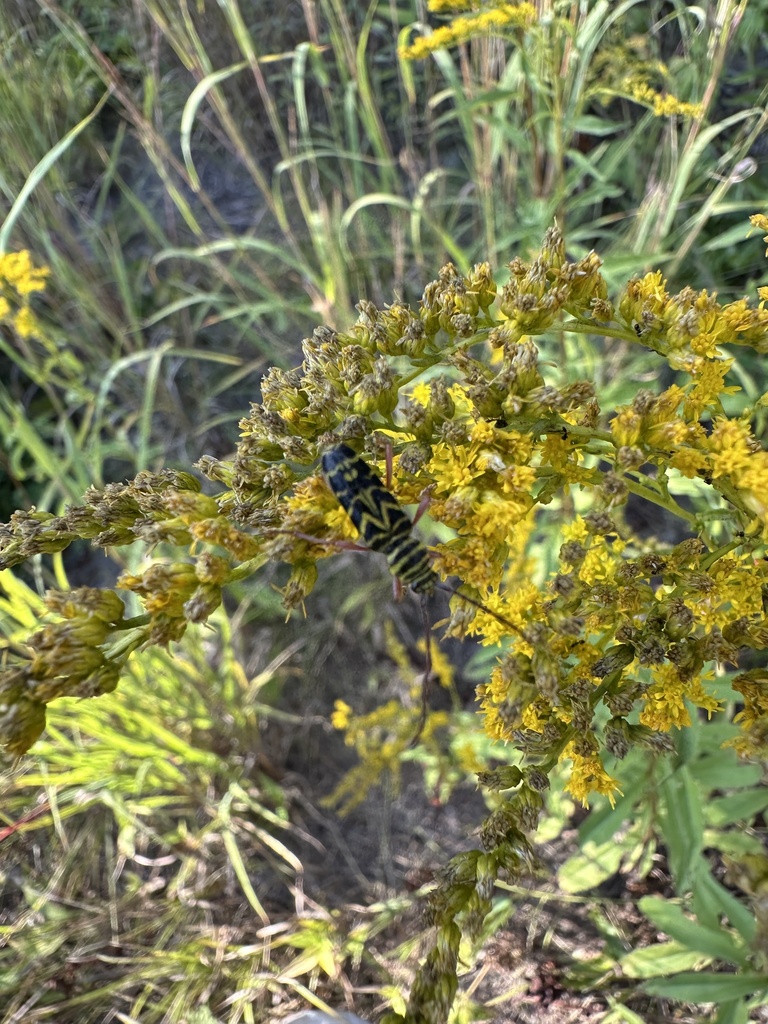
Locust borer
Megacyllene robiniae
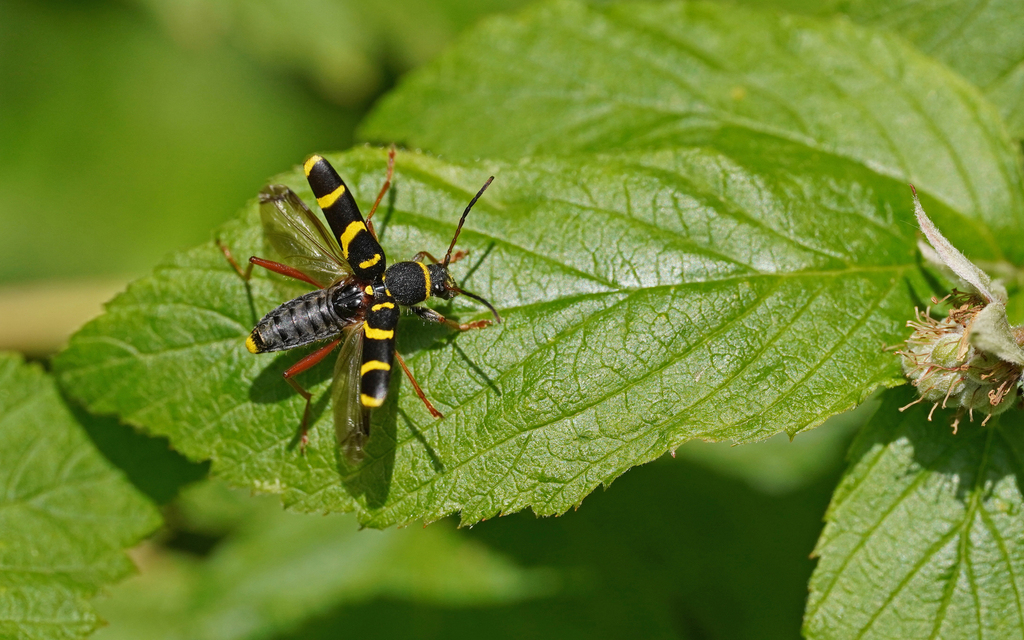
Wasp beetle
Clytus arietis
≠The key differences
Also a wasp-mimicking longhorn but smaller and found mainly in Europe; banding pattern and body shape differ and host plants are different.
⚖︎Side by side
| Locust borer | Wasp beetle | |
|---|---|---|
| To humans | Non-toxic | Non-toxic |
| Size | 10-20 mm body length | 7-15 mm long |
| Colours | Black, Bright yellow, Brown (legs/antennae) | Black, Yellow, Orange, Brown |
| Family | Cerambycidae | Cerambycidae |
| Habitat | Woodland edges, parks, windbreaks, any area with black locust trees; adults visit flowers and trunks of host trees. | Woodland edges, hedgerows, orchards and gardens — adults visit flowers; larvae develop in dead or decaying hardwood (broadleaf) timber. |
| Range | Native to eastern North America; present across the United States and southern Canada where black locust grows, occasionally elsewhere where hosts are planted. | Widely distributed across Europe and into parts of western Asia; common in temperate regions with deciduous trees. |
| Active | Adults active late summer to early fall (often August-September) during warm daylight hours. | Mainly spring and summer (often May to August); adults are diurnal and active in warm, sunny weather. |
| Pest? | Yes | No |
🔍How to spot a locust borer
- Black and bright yellow banded elytra forming wasp-like stripes across the back.
- Long antennae typical of longhorn beetles; adults 10-20 mm long.
- Adults active in late summer on flowers and on trunks of black locust trees.
- Presence of small round exit holes and powdery frass or galleries under bark indicates larval infestation.
🔍How to spot a wasp beetle
- Black elytra with bright yellow to orange transverse bands forming a wasp-like pattern.
- Small size, 7-15 mm, with relatively long antennae typical of longhorn beetles.
- Quick, jerky movements and a habit of visiting flowers in sunlight.
- No true wasp waist and hard elytra (beetle structure) — pick up gently to confirm if needed.
?Frequently asked questions
What is the difference between a locust borer and a wasp beetle?
Also a wasp-mimicking longhorn but smaller and found mainly in Europe; banding pattern and body shape differ and host plants are different.
Is a locust borer or a wasp beetle more dangerous?
Locust borer: Non-toxic. Wasp beetle: Non-toxic. Adults are harmless to people. Wasp beetles are harmless to people.
Identification from photos is never certain: don't handle insects you can't identify, and get medical advice for bites, stings or allergic reactions.