
Wasp beetle
Clytus arietis · Longhorn beetles
A small longhorn beetle that imitates wasps with black and yellow-orange stripes; harmless to people and associated with dead hardwood.
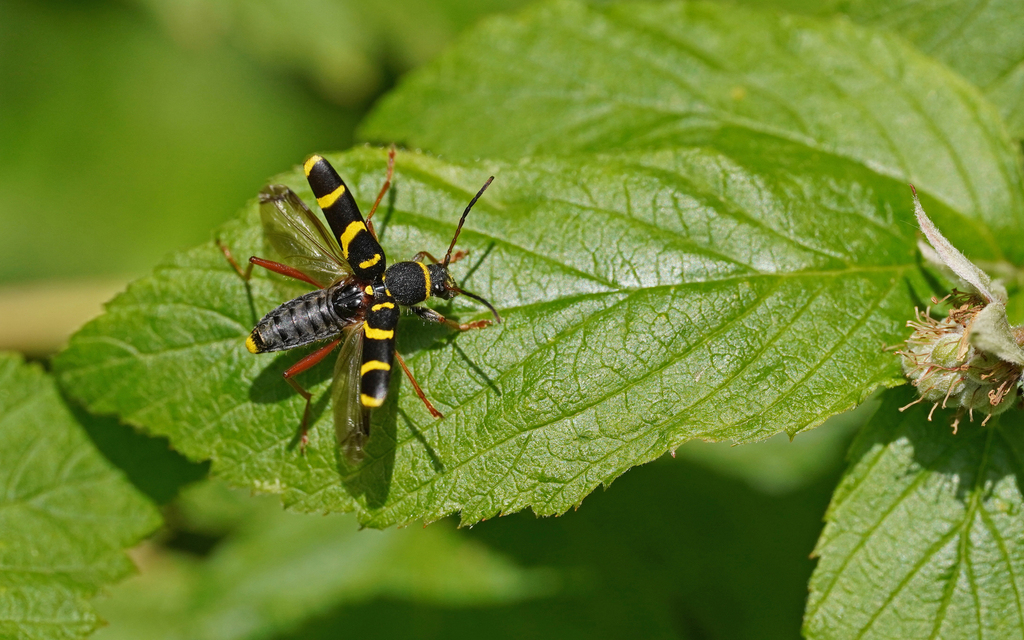
!Is the wasp beetle dangerous?
No. Wasp beetles are harmless to people. They do not have a sting and do not bite except rarely and gently if handled roughly. Their wasp-like colours are a defensive mimicry, not a sign of danger. No medical treatment is needed unless a rare crush injury or allergic skin irritation occurs.
Pets
Not harmful to pets. They are too small to cause injury; occasional ingestion is unlikely to cause problems beyond minor stomach upset.
📖Overview
Clytus arietis is a small, common longhorn beetle (family Cerambycidae) found across much of Europe and parts of western Asia. Adults are often seen on flowers in late spring and summer and are notable for their striking wasp-like coloration and quick, jerky movements that help deter predators. Larvae develop in dead or decaying broadleaf wood and play a role in wood decomposition.
🔍How to identify a wasp beetle
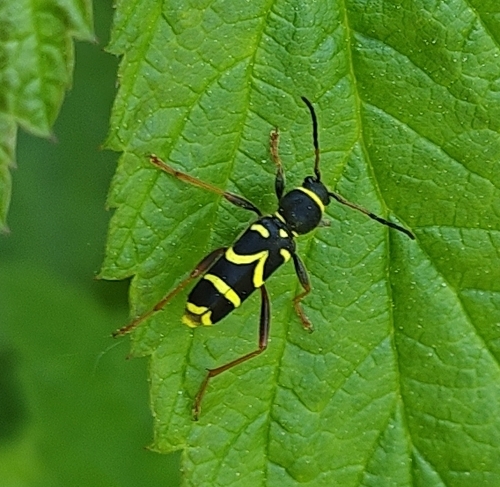
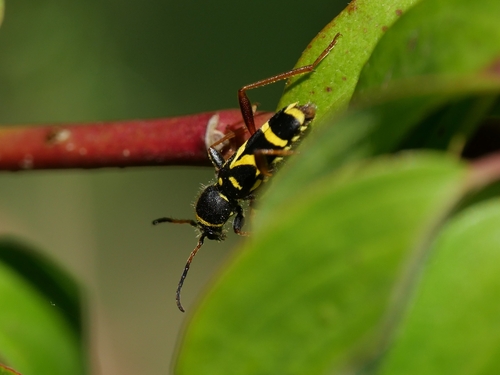
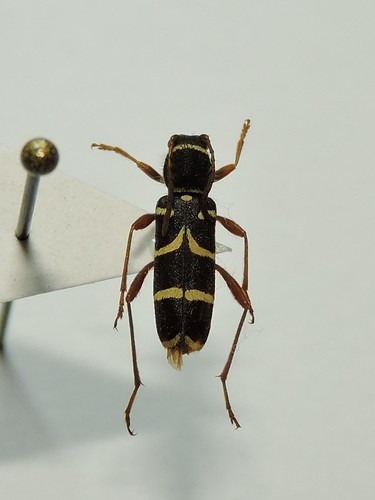
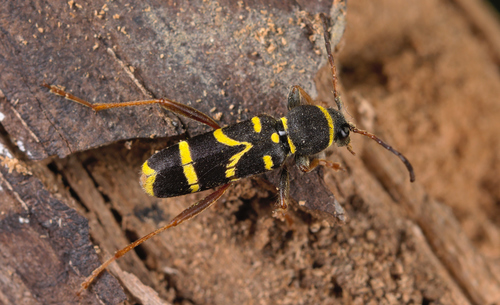
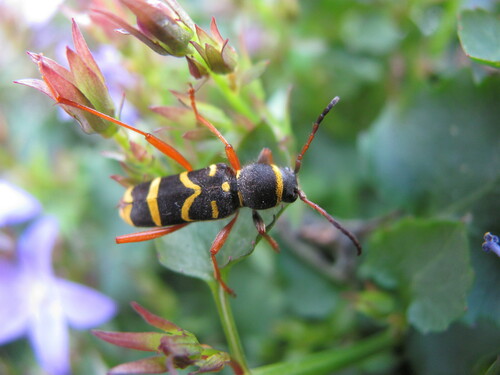
Adults are elongate, slightly flattened beetles with relatively long antennae (shorter than many other longhorns). Their elytra (wing covers) are black with bold yellow transverse bands and yellow marks near the shoulders, giving a wasp-like look. Legs are slender and reddish-orange; the beetle's surface is slightly glossy with fine punctures.
- Black elytra with bright yellow to orange transverse bands forming a wasp-like pattern.
- Small size, 7-15 mm, with relatively long antennae typical of longhorn beetles.
- Quick, jerky movements and a habit of visiting flowers in sunlight.
- No true wasp waist and hard elytra (beetle structure) — pick up gently to confirm if needed.
Lookalikes
Lesser wasp beetle Clytus rhamni
Very similar in pattern; C. rhamni is usually smaller with a more greenish-yellow tone and differently shaped bands, and is more southern and local in Europe. Close examination may be needed.
Spotted longhorn Rutpela maculata
Larger (often 10-20 mm) and with more spotted or mottled yellow markings rather than distinct stripes; body shape is broader.
Social wasps (lookalike) Various Vespidae
Wasps have a narrow 'waist', two pairs of exposed membranous wings and can sting; wasp beetles have a beetle body with hard wing covers protecting the hind wings.
↻Life cycle
Egg
Females lay eggs in crevices of dead or decaying wood or under bark. Eggs hatch in a few days to weeks depending on temperature.
Larva (wood-borer)
Grub-like larvae bore into and feed on dead hardwood, creating tunnels as they grow; this stage can last many months to over a year.
Pupa
Larvae pupate within the wood in a chamber; pupation lasts days to weeks before the adult emerges.
Adult (beetle)
Adults emerge in spring or early summer, feed on nectar and pollen, and are active for a few weeks while mating and laying eggs.
🍃Diet and predators
Young eat
Wood — feeding on dead or decaying broadleaf timber.
Adults eat
Pollen and nectar from flowers; sometimes they feed on sap or visit blossoms for energy.
Predators of the young
Woodpeckers and other wood-foraging birds, predatory beetles and parasitic wasps that attack larvae in wood.
Predators of adults
Birds, spiders and predatory insects; the wasp-like appearance and movements reduce predation by visual predators.
🌱Effect on plants and gardens
Larvae feed on dead or decaying broadleaf wood (such as beech, oak, willow, and fruit trees) and thus help break down dead timber. They are not normally a threat to healthy living trees.
📍Where and when to find it
Adults on flowers (umbellifers, hawthorn, blossoms) in sunny spots; larvae inside dead or decaying broadleaf wood, under bark or in logs.
Best time
Best months are May to August; midday on warm sunny days when adults visit flowers.
Observation tips
Look on flower heads in woodland clearings and hedgerows. Photograph them on blossoms from the side to show elytral pattern; avoid removing larvae from dead wood unless studying, as they aid decomposition.
✨Fun facts
- The wasp-like coloration is a form of Batesian mimicry — the harmless beetle copies the appearance and behaviour of stinging wasps to avoid predators.
- Adults are often seen on umbellifers and other flowers where they collect nectar and pollen, helping pollination incidentally.
- Larvae help recycle dead wood, returning nutrients to the soil and aiding decomposition.
?Frequently asked questions
Are wasp beetles dangerous?
No. Clytus arietis is harmless to people — it mimics wasps visually but has no sting and is non-venomous.
Do wasp beetles bite?
They do not normally bite. If handled roughly a beetle may nip but it is not harmful.
Why is a wasp beetle in my house?
Adults visit flowers and may be attracted to lights or enter homes accidentally through windows. Larvae live in dead wood, so beetles can also emerge from stored firewood brought indoors.
How do I get rid of wasp beetles?
They are not pests and are best left alone. To reduce indoor occurrences, keep doors and windows screened, avoid storing damp firewood inside, and remove or manage decaying timber near buildings.
Where do wasp beetle larvae live?
Larvae develop in dead or decaying broadleaf wood such as beech, oak, willow and fruit trees, often in logs, branches or veteran trees.
Are wasp beetles beneficial to gardens?
Yes — larvae help decompose dead wood and adults visit flowers, so they have neutral to beneficial effects in most gardens.
📷Photos of the wasp beetle
More beetles
This guide was written with AI assistance and fact-checked, last updated 2026-10-10. Identification from photos is never certain: don't handle insects you can't identify, and get medical advice for bites, stings or allergic reactions. More about the wasp beetle: iNaturalist, Wikipedia.