
Common red soldier beetle
Rhagonycha fulva · Soldier beetles
A familiar soft-bodied, orange-red beetle often seen on flowers in summer; a harmless pollinator and predator of small insects.
!Is the common red soldier beetle dangerous?
No. Not venomous and not known to bite in normal handling. They can produce a mild defensive secretion that may irritate very sensitive skin in rare cases; wash with soap and water if contact causes irritation.
Pets
Harmless to pets. Unlikely to be eaten in quantities large enough to cause harm; occasional ingestion might cause minor stomach upset but is unlikely.
📖Overview
Rhagonycha fulva is a widespread, daytime-active soldier beetle common across gardens, meadows and hedgerows in much of Europe. Adults are frequently found on umbels and other flowers feeding on nectar, pollen and small insects; they are important incidental pollinators. Larvae live in leaf litter or soil and are predatory on small invertebrates. This species is not dangerous to people or pets and is generally beneficial in garden ecosystems.
🔍How to identify a common red soldier beetle
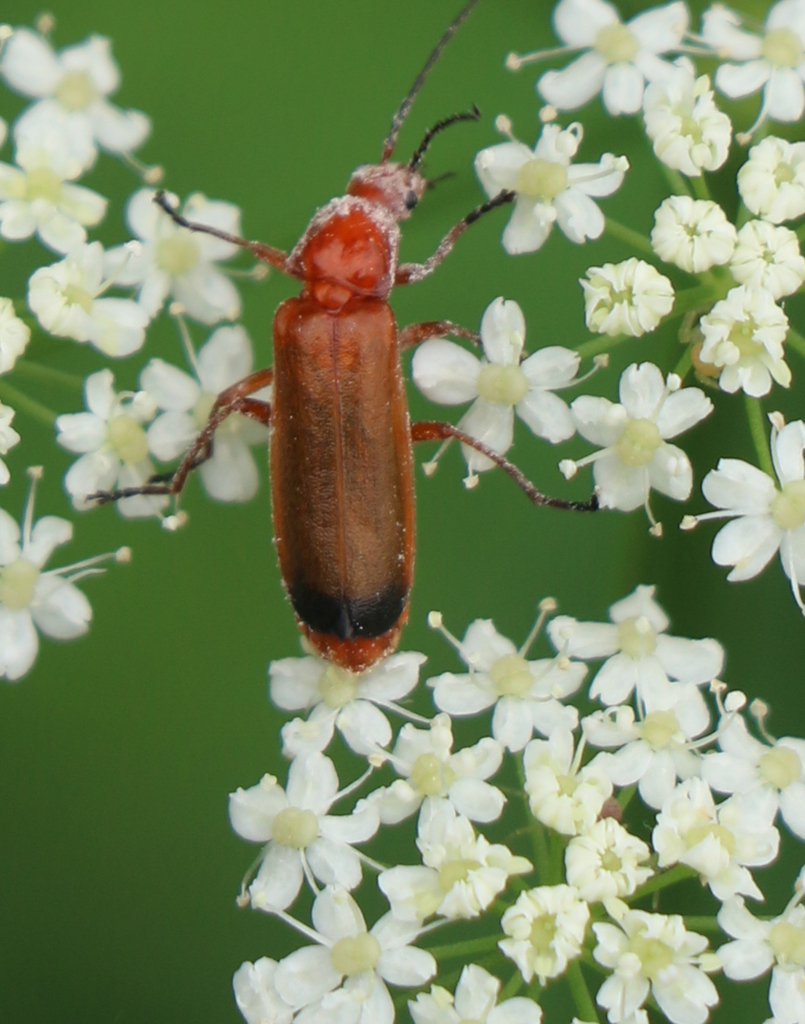
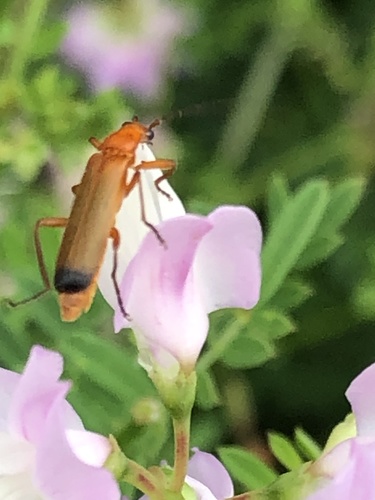
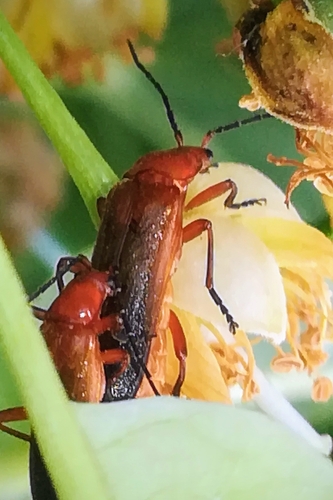
Adults are elongate, soft-bodied beetles with orange-red elytra (wing covers), head and pronotum; the tips of the elytra are black, a key field mark. The legs are mostly orange, with darker tips to the feet. The body surface is slightly hairy and the antennae are long and threadlike, often darker toward the tips.
- Orange-red body with black tips to the wing cases, 7-10 mm long
- Soft-bodied, slightly flattened beetle with long threadlike antennae
- Often seen on open flowers during warm, sunny days in summer
- Antennae darker toward the tips; wing cases soft rather than hard and shiny
Lookalikes
Red-headed cardinal beetle Pyrochroa serraticornis
Cardinal beetles are entirely red with no black wing tips, have black legs and comb-like (serrated) antennae, and are usually seen on tree trunks or foliage rather than in groups on flower heads.
Cantharis beetles (other soldier beetles) Cantharis spp.
Cantharis species vary from mostly black (Cantharis rustica, with red pronotum) to orange-brown without black wing tips (Cantharis livida); R. fulva is the common species with orange-red wing cases and neat black tips.
↻Life cycle
Egg
Laid in soil or leaf litter; eggs hatch after a short period depending on temperature.
Larva
Elongate, flattened, brownish larvae live in soil and leaf litter and are predatory on soft-bodied invertebrates such as slugs and other insect larvae.
Pupa
Pupation takes place in the soil or litter; the pupal stage lasts days to weeks before the adult emerges.
Adult
Adults emerge in late spring to early summer, feed on flowers, mate and are commonly seen from June to August.
🍃Diet and predators
Young eat
Predatory on small soil and litter invertebrates (insect larvae, small soft-bodied prey)
Adults eat
Nectar and pollen, plus small insects and aphids
Predators of the young
Ground beetles, parasitic wasps, small mammals and birds that forage in leaf litter
Predators of adults
Birds, spiders and predatory insects
🌱Effect on plants and gardens
Adults visit a wide range of flowering plants for nectar and pollen, aiding pollination. Larvae eat small invertebrates in soil and leaf litter and do not damage plants.
📍Where and when to find it
Adults on open, flat flowers such as umbellifers, goldenrod and knapweed; larvae in soil and leaf litter beneath vegetation.
Best time
June to August during warm, sunny daytime hours.
Observation tips
Look for active beetles on flower heads; a close-up photo from above showing the uniform orange elytra and head will help identification. Approach slowly to avoid disturbing them.
✨Fun facts
- Adults are sometimes called 'soldier beetles' because their bright red colour reminded people of old military uniforms.
- They are both predators and pollinators: adults feed on nectar and pollen but also take small insects, so they help control pests while pollinating flowers.
- You will often find pairs of adults mating on flowers, a common summer sight in flower-rich habitats.
?Frequently asked questions
Do red soldier beetles bite?
No — they are not known to bite people. They are soft-bodied and generally harmless when handled gently.
Are they harmful to my garden?
No — they are beneficial. Adults pollinate flowers and larvae eat small pest invertebrates in the soil and litter.
Why is this beetle in my house?
Adults are daytime flower visitors; occasionally one may drift inside through an open door or come in on cut flowers. They do not infest houses.
How can I get rid of them?
Control is usually unnecessary and not recommended. If needed, gently collect and release them outside. Avoid pesticides, which harm beneficial insects.
When will I see them in my garden?
You are most likely to see adults from late spring through late summer (commonly June to August), especially on sunny days visiting flowers.
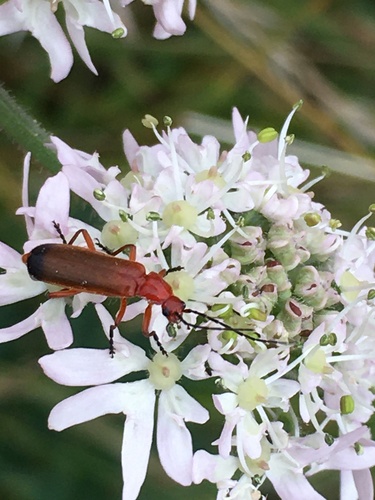
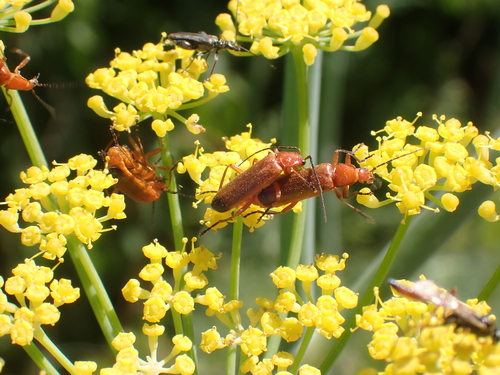
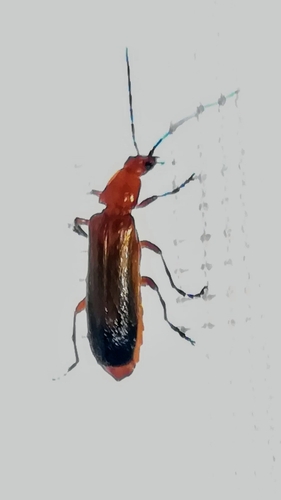
📷Photos of the common red soldier beetle
More beetles
This guide was written with AI assistance and fact-checked, last updated 2026-10-10. Identification from photos is never certain: don't handle insects you can't identify, and get medical advice for bites, stings or allergic reactions. More about the common red soldier beetle: iNaturalist, Wikipedia.