
Colorado potato beetle
Leptinotarsa decemlineata · Leaf beetles
A small, highly destructive leaf-eating beetle of potato and other nightshades, famous for rapid insecticide resistance and bright yellow-and-black stripes.
!Is the Colorado potato beetle dangerous?
No. Not venomous or dangerous to humans. They do not seek to bite or sting; handling may cause mild skin irritation in very sensitive individuals but this is uncommon. Standard hygiene (wash hands after handling) is sufficient.
Pets
Not known to be toxic to pets. Pets may find them unpalatable; accidental ingestion of a few beetles is unlikely to cause harm but avoid deliberate feeding to pets.
📖Overview
Leptinotarsa decemlineata is a compact, round leaf beetle that feeds primarily on plants in the nightshade family (Solanaceae), especially potato, tomato, eggplant and wild nightshades. Native to Mexico and the southwestern United States, it has spread across much of the temperate world as a major agricultural pest. Adults and larvae voraciously consume foliage and can defoliate plants if populations are high. Adults overwinter in soil and emerge in spring to lay clusters of orange eggs on the undersides of host leaves; there are typically one to several generations per year depending on climate.
🔍How to identify a Colorado potato beetle
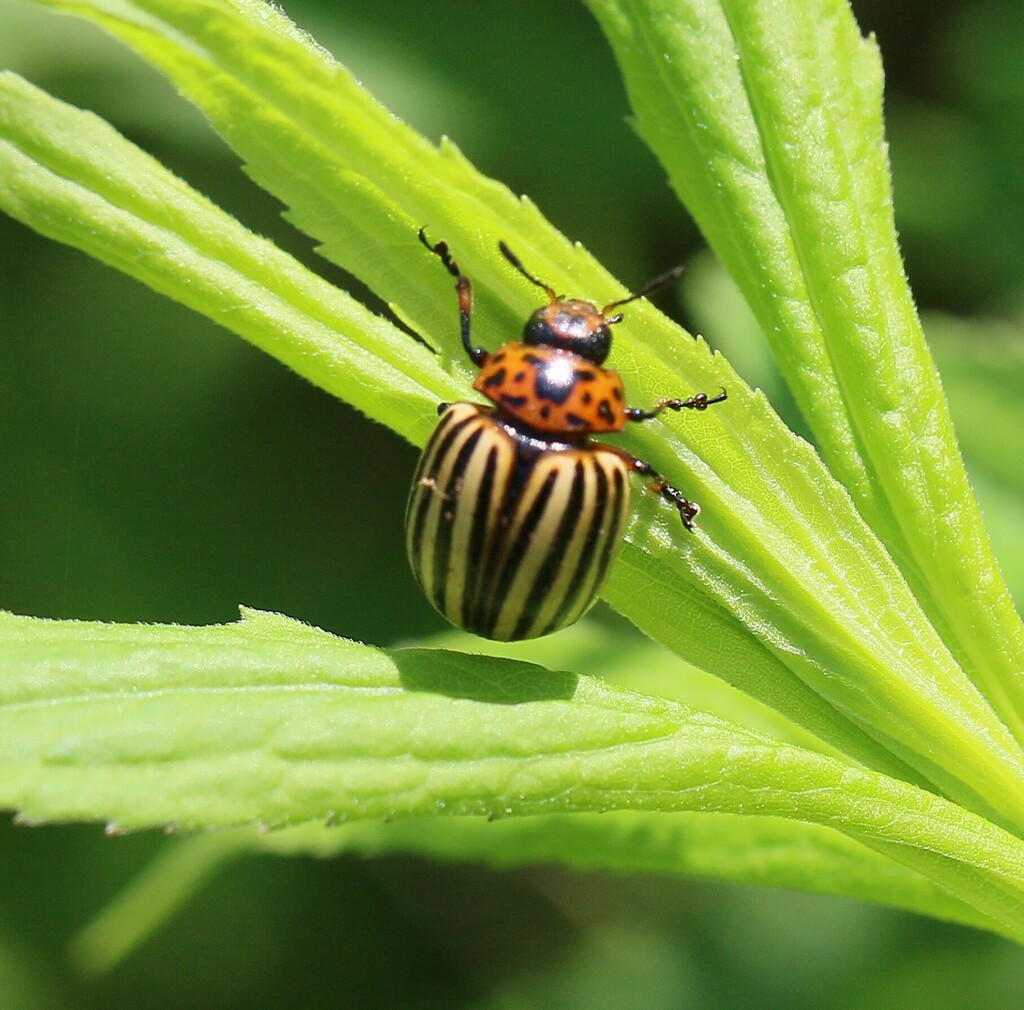
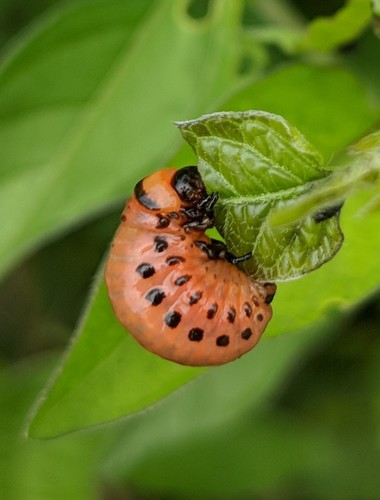
Adults are oval, convex beetles about 6-12 mm long with a yellow-orange background and five distinct black longitudinal stripes on each elytron (ten stripes in total). The head and pronotum often have black markings. Larvae are plump, humpbacked and usually reddish-orange to pink with two rows of dark spots along each side; fully grown larvae are about 8-12 mm long. Eggs are laid in clusters (often 20-60) and are bright yellow to orange. Pupae are cream to orange and form in earthen cells in the soil.
- Adults 6-12 mm, oval and convex with five black longitudinal stripes on each elytron (ten stripes total)
- Yellow-orange background colour with black markings on head and pronotum
- Larvae plump, reddish-orange with two rows of dark spots along each flank and a rounded humpbacked shape
- Eggs laid in conspicuous yellow-orange clusters on the undersides of host leaves
Lookalikes
False potato beetle Leptinotarsa juncta
L. juncta has pale legs (dark in the Colorado potato beetle), and on each wing cover one of the black stripes is replaced by a brownish stripe; it feeds mainly on horsenettle rather than potato.
Three-lined potato beetle Lema daturaphila
Smaller and more elongate, with three black stripes on the yellow-orange wing covers and a reddish-orange pronotum; its larvae cover themselves in their own droppings.
↻Life cycle
Egg
Females lay clusters of about 20-60 bright yellow-orange eggs on the underside of host leaves; eggs hatch in about 4-12 days depending on temperature.
Larva (grub)
Larvae pass through four instars over 2-3 weeks, feeding intensively on foliage and growing to about 8-12 mm long.
Pupa
Mature larvae pupate in earthen cells in the soil for about 5-10 days (longer in cool conditions).
Adult
Adults emerge, feed on foliage, mate and can produce one to several generations per season; adults enter the soil to overwinter.
🍃Diet and predators
Young eat
Leaves of Solanaceae (potato, tomato, eggplant, nightshades)
Adults eat
Leaves of the same host plants; both stages are leaf feeders (defoliators)
Predators of the young
Predatory insects (lady beetles, ground beetles, lacewings), some parasitic wasps and flies, birds
Predators of adults
Birds, predatory insects, some mammals; also susceptible to fungal and bacterial pathogens
🌱Effect on plants and gardens
Feeds on leaves of potato, tomato, eggplant, pepper and wild nightshades; heavy infestations can defoliate plants, reducing yield or killing young plants.
How to get rid of Colorado potato beetles
Use integrated methods: crop rotation and avoid planting potatoes near overwintering sites; hand-pick adults, larvae and egg batches into soapy water for small gardens; use row covers early in the season to prevent colonization; encourage natural enemies (predatory beetles, lacewings, parasitic wasps, birds); use biological controls such as Bacillus thuringiensis var. tenebrionis where approved and entomopathogenic fungi (Beauveria) or nematodes in some systems; rotate insecticide classes because this species readily develops resistance and follow local extension recommendations.
📍Where and when to find it
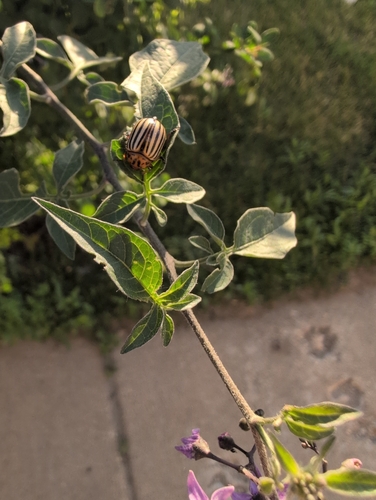
Look on the upper and lower surfaces of leaves of potato, tomato, eggplant and wild nightshades for adult beetles, larvae, and orange egg clusters; adults and larvae are most common on foliage.
Best time
Late spring through summer during daylight hours; peak activity depends on local climate and the crop calendar.
Observation tips
Check undersides of leaves for egg clusters; early-season monitoring and removal of small populations is the most effective garden strategy. Use a white tray or sheet to inspect plants and collect beetles into soapy water.
✨Fun facts
- The species name decemlineata means 'ten-lined', referring to the ten stripes on the elytra.
- Colorado potato beetles are famous for evolving resistance to many insecticide classes, making control challenging.
- Adults can travel short distances on their own and also spread via movement of infested plants and soil.
?Frequently asked questions
Do Colorado potato beetles bite?
No. They do not bite or sting humans. They are plant feeders and may be handled safely, though avoid touching eyes or mouth after handling.
Are they dangerous to people or pets?
No venom or significant toxicity is associated with the beetles. They are a danger to crops and gardens but not to people or pets.
Why are they on my potato plants?
They are attracted to plants in the nightshade family to feed and lay eggs; females lay egg clusters on the undersides of leaves so larvae have fresh food on hatching.
How do I get rid of them in my garden?
For small gardens: hand-pick adults, larvae and egg masses into soapy water; use row covers early in the season; practice crop rotation and remove nearby wild nightshades; consider biological options (Bt tenebrionis where permitted, encouraging predators) and follow local IPM guidance for insecticide use due to resistance.
Can insecticides control them?
Insecticides can suppress populations, but Colorado potato beetles have developed resistance to many chemical classes. Rotate modes of action and follow local extension recommendations; combine chemical control with cultural and biological measures.
Where do they come from in spring?
Overwintering adults emerge from soil, field margins and leaf litter near host plants when temperatures rise in spring.
📷Photos of the Colorado potato beetle



More beetles
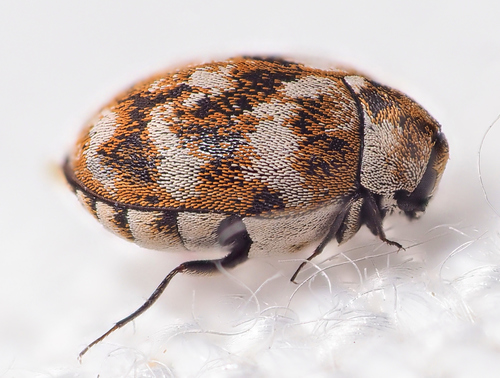
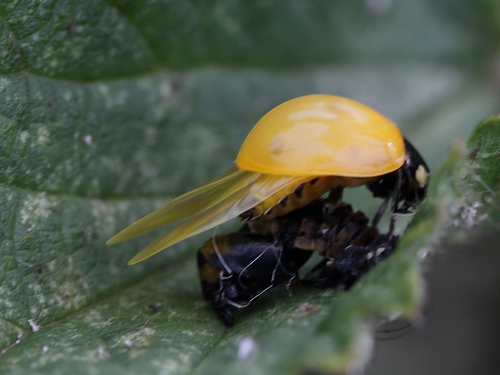
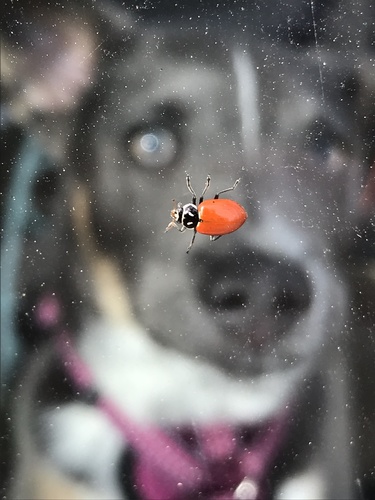
This guide was written with AI assistance and fact-checked, last updated 2026-10-10. Identification from photos is never certain: don't handle insects you can't identify, and get medical advice for bites, stings or allergic reactions. More about the Colorado potato beetle: iNaturalist, Wikipedia.