
Devil's coach horse beetle
Ocypus olens · Rove beetles
A large, glossy black nocturnal rove beetle that raises its abdomen like a scorpion, is a helpful predator in gardens, and can bite or spray a foul smell when threatened.
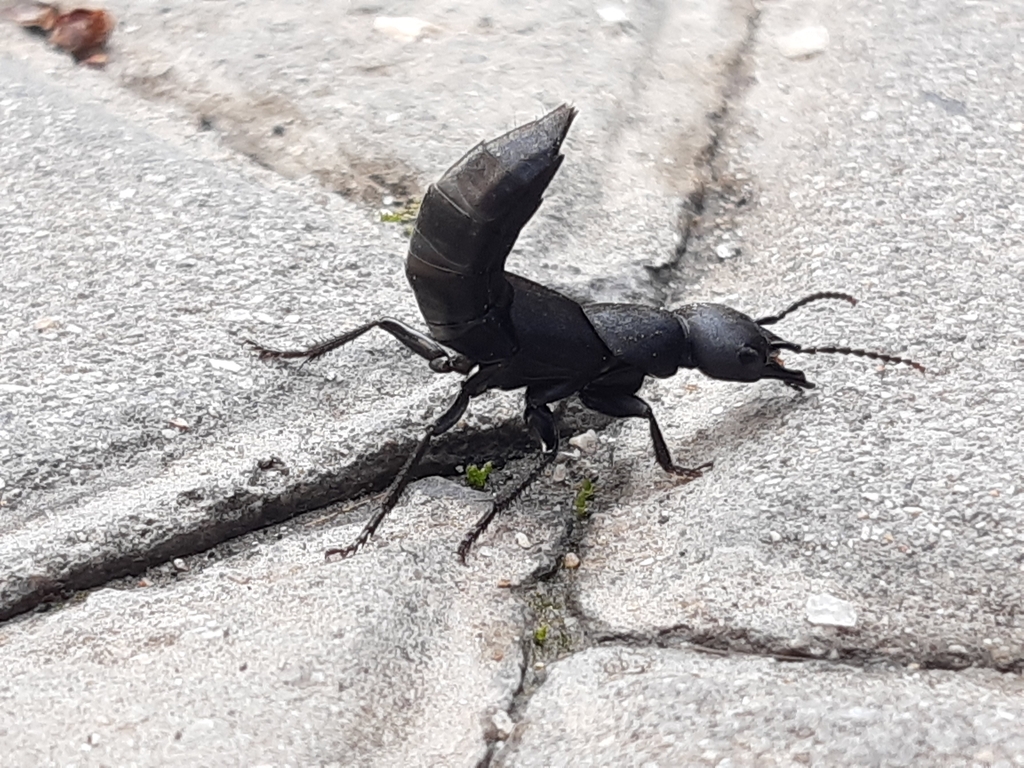
!Is the Devil's coach horse beetle dangerous?
Only mildly. Not venomous. Can bite with strong mandibles leaving a painful nip but not medically significant. Defends itself by releasing a foul-smelling, oily secretion that can irritate skin or stain clothing; wash skin with soap and water if contacted and remove contaminated clothing.
Pets
Generally harmless to pets; a curious dog or cat might get a painful bite if they try to eat one, and the scent may irritate or stain fur.
📖Overview
Ocypus olens is a widespread European rove beetle common in gardens, hedgerows and woodland edges. It is an active nocturnal predator that feeds on slugs, worms, other insects and carrion. When threatened it raises its abdomen and can emit a foul-smelling defensive secretion; it will also bite with its mandibles but is not dangerous to people. It is frequently found under stones, logs, compost and in leaf litter and is considered beneficial for controlling pest invertebrates.
🔍How to identify a Devil's coach horse beetle
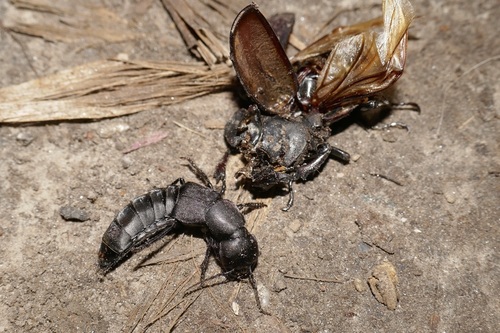
Adults are large, elongate and strongly built with a glossy black body and short elytra that leave most of the abdomen exposed. When alarmed they lift their abdomen and open their jaws in a characteristic defensive posture reminiscent of a scorpion. Legs and antennae are relatively long; the beetle appears smooth and hairless at a distance.
- Large, elongate beetle 20-32 mm with very short wing covers (elytra) leaving much of the abdomen exposed
- Glossy black body and dark brown to black legs and antennae
- Characteristic defensive posture: raises the tip of the abdomen and opens mandibles when disturbed
- Active at night and commonly found under stones, logs, in compost or leaf litter
Lookalikes
Other large rove beetles Various Staphylinidae species
Similar body shape but usually differ in size, leg colour or local range; Ocypus olens is notable for its larger size, entirely dark gloss and the frequent scorpion-like posture
Ocypus brunnipes Ocypus brunnipes
A close relative that is noticeably smaller and has brownish legs; careful examination may be needed.
↻Life cycle
Egg
Eggs are laid in soil, leaf litter or decaying matter; details of clutch size are not extensively documented.
Larva (grub)
Larvae are elongated, active predators in soil and litter, feeding on soft-bodied invertebrates.
Pupa
Pupation occurs in the soil or decaying material; pupae are immobile as the adult form develops.
Adult (beetle)
Adults are nocturnal predators with the characteristic short elytra and exposed abdomen; they overwinter and reproduce in warmer months.
🍃Diet and predators
Young eat
Predatory: small invertebrates, insect larvae and other soft-bodied prey found in soil and litter
Adults eat
Predatory and opportunistic: slugs, earthworms, insect larvae, dead animals and other invertebrates
Predators of the young
Ground-foraging birds, small mammals, larger predatory insects
Predators of adults
Birds, mammals and some larger arthropod predators; their defensive smell and biting reduce predation
🌱Effect on plants and gardens
Does not feed on healthy plants; helps control slugs, larvae and other invertebrate pests in gardens and compost heaps.
📍Where and when to find it
Look under stones, logs, bark, in compost heaps and leaf litter; adults and larvae are found in soil and decaying vegetation.
Best time
Spring to autumn, at night; check sheltered spots during the day.
Observation tips
Use a torch at night to spot active adults; lift stones and logs carefully and replace them. For photos, a macro lens and diffuse lighting show glossy body details without glare.
✨Fun facts
- Its raised, scorpion-like tail and black colour led to its long-standing association with the Devil in European folklore, which gave it its name.
- It is a useful garden predator that eats slugs, caterpillars and other pests.
- Despite its fearsome posture, it is not a stinging insect and poses little medical risk to people.
?Frequently asked questions
Are Devil's coach horse beetles dangerous?
Only mildly. They are not venomous, but they can give a painful bite with their mandibles and release a foul-smelling secretion that may irritate or stain; they do not pose a serious medical threat.
Do Devil's coach horse beetles bite?
Yes, they can bite if handled roughly. Bites are usually painful but not medically significant; clean the area and monitor for infection.
Why is a Devil's coach horse beetle in my house?
They shelter under stones, in compost and leaf litter and may wander into basements, sheds or houses at night while hunting or seeking shelter.
How do I get rid of Devil's coach horse beetles?
They are beneficial, so consider leaving them alone. To remove them, pick up with a jar and a piece of cardboard or wear gloves and relocate outdoors; reduce hiding places like dense leaf litter and tidy compost heaps to discourage them.
Where do Devil's coach horse beetles live?
They live across Europe and nearby regions, preferring gardens, hedgerows, wood edges, compost and areas with abundant leaf litter or decaying matter.
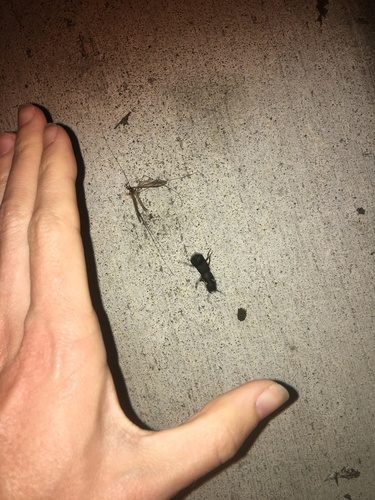
📷Photos of the Devil's coach horse beetle
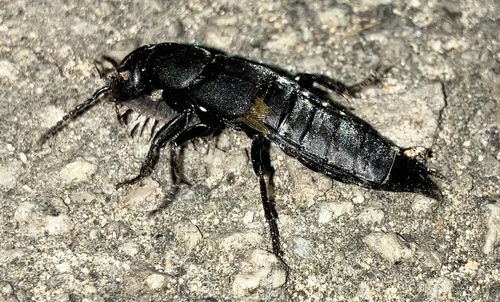
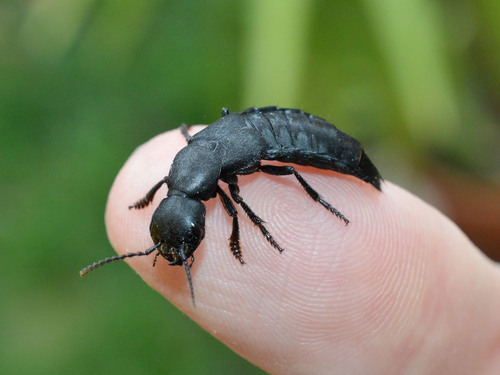
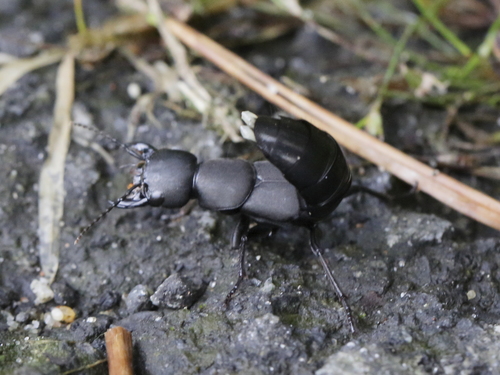
More beetles
This guide was written with AI assistance and fact-checked, last updated 2026-10-10. Identification from photos is never certain: don't handle insects you can't identify, and get medical advice for bites, stings or allergic reactions. More about the Devil's coach horse beetle: iNaturalist, Wikipedia.