
American carrion beetle
Necrophila americana · Carrion beetles
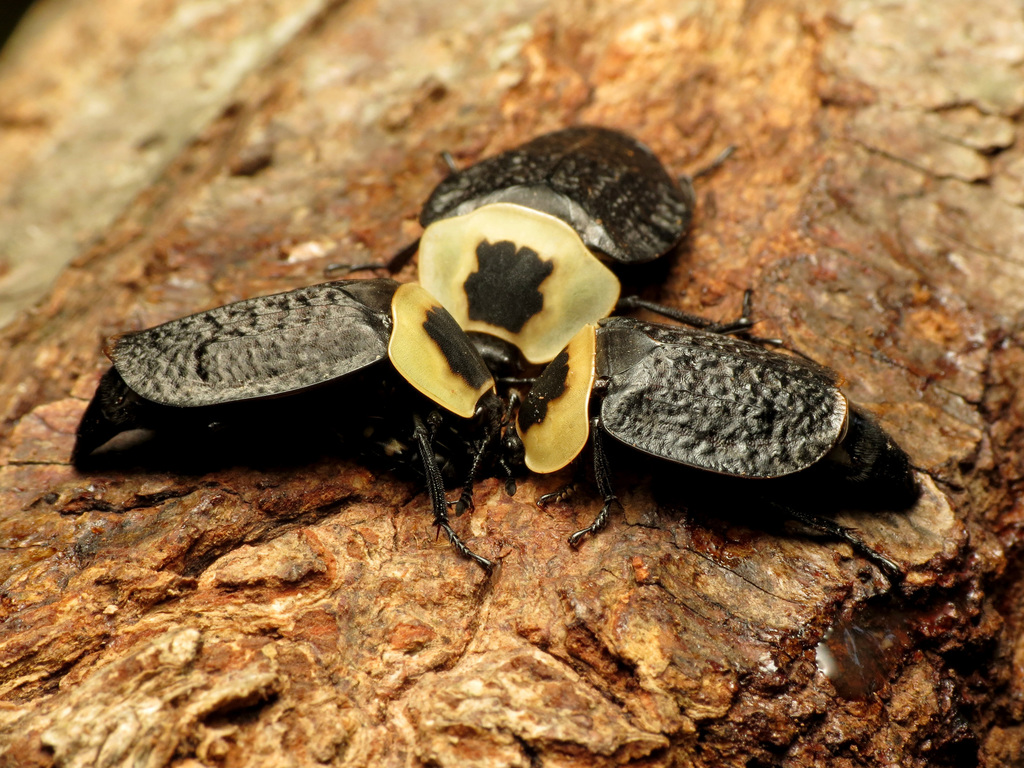
A medium-sized black and yellow carrion beetle common across much of North America that feeds on dead animals and helps decompose carcasses.
!Is the American carrion beetle dangerous?
No. Not dangerous or venomous. They do not sting; they may give a mild pinch with their mandibles if handled. Wash hands after handling any animal that has been in contact with carrion.
Pets
Not poisonous to pets. Pets may pick up bacteria from carrion that the beetles visit, so discourage pets from eating or rolling in carcasses.
📖Overview
Necrophila americana is a carrion-feeding beetle found across much of eastern and central North America. Adults locate small dead animals and animal remains, where they feed and lay eggs; larvae develop on the carcass. They are important decomposers in terrestrial ecosystems. Unlike the true burying beetles (Nicrophorus spp.), Necrophila adults generally do not bury carcasses but visit exposed carrion and may be seen on roadkill or in woodland clearings.
🔍How to identify an American carrion beetle
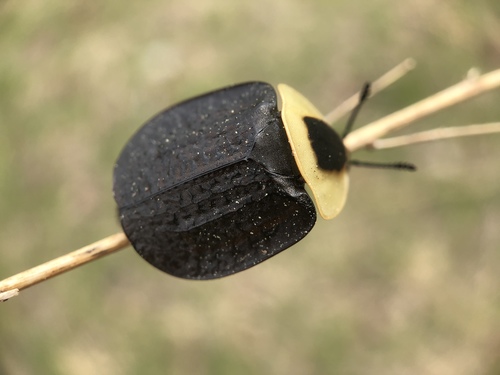
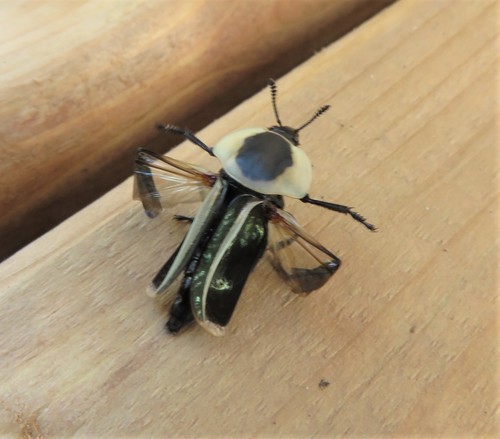
Adults are broad, flattened, oval beetles about 10-20 mm long. The large pronotum (shield behind the head) is yellow with a big black central spot, and the black elytra (wing covers) have raised lengthwise ridges and a roughened texture, often with a yellowish tip. Antennae are clubbed at the tip. Sexual dimorphism is slight and not conspicuous to non-specialists.
- Broad, flattened oval beetle 10-20 mm long with a yellow pronotum marked by a large black central spot.
- Black elytra with raised lengthwise ridges and a rough texture, often with a yellowish tip.
- Found on or near animal carcasses, roadkill, compost or areas with strong decay odors.
- Clubbed antennae typical of many carrion beetles; when disturbed, adults move actively across the substrate.
Lookalikes
Burying beetle Nicrophorus spp.
Nicrophorus species (burying beetles) usually have conspicuous orange-red patterns on the elytra and are known for burying small carcasses; Necrophila americana is generally darker and does not bury carcasses.
Margined carrion beetle Oiceoptoma noveboracense
Oiceoptoma noveboracense is smaller and its pronotum is black with reddish-orange side margins, rather than yellow with a black center as in Necrophila americana.
↻Life cycle
Egg
Females lay eggs near or on carrion; eggs hatch in a few days depending on temperature.
Larva
Larvae are grub-like and develop by feeding on decaying flesh and maggots on the carcass for a period of days to weeks.
Pupa
After feeding, larvae pupate in soil or nearby leaf litter for several days to weeks before emerging as adults.
Adult
Adults seek out fresh carrion to feed and reproduce; they can disperse to new food sources and are attracted to scents of decay.
🍃Diet and predators
Young eat
Decaying animal tissue and meat on the carcass, and possibly other carrion-associated invertebrates like fly larvae.
Adults eat
Primarily carrion and associated invertebrates; adults may also scavenge other protein-rich decaying matter.
Predators of the young
Predatory beetles, ants, parasitic wasps and small vertebrate scavengers.
Predators of adults
Birds, small mammals, frogs and spiders; also parasitized by some hymenopteran parasitoids.
🌱Effect on plants and gardens
Does not damage plants; adults and larvae feed on decaying animal matter and sometimes on fly larvae present on carrion.
📍Where and when to find it
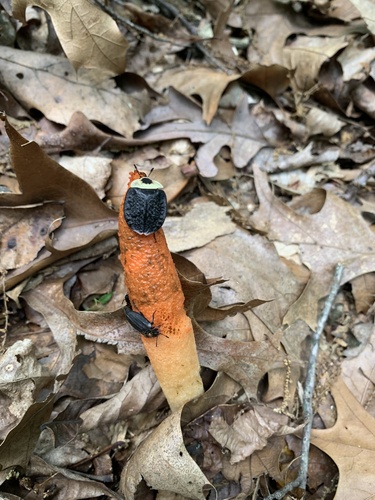
Look on roadkill, animal carcasses, compost heaps, and in leaf litter near woods. Adults are most commonly seen at carrion; larvae are on or under the carcass.
Best time
Best observed from spring through fall, especially at dusk and night when they are most active, or during the day if attending a carcass.
Observation tips
Photograph them at a safe distance on the carcass using a low angle for scale. Wear gloves if you need to handle or move material with dead animals for safety and hygiene.
✨Fun facts
- Carrion beetles like Necrophila americana help recycle nutrients by breaking down dead animals, speeding decomposition.
- They are attracted to the same smells that attract flies and are often found alongside large numbers of flies on roadkill.
- Although they feed at the same carcasses as flies, carrion beetles can reduce fly numbers by eating fly eggs and larvae.
?Frequently asked questions
Are American carrion beetles dangerous to people?
No. They are not venomous and do not pose a health threat. Avoid handling them if possible and wash hands after contact with carrion.
Do American carrion beetles bite?
They can pinch with their mandibles if grabbed, but bites are uncommon and not medically significant.
Why is one in my house?
They are attracted to decaying organic matter. One inside a house usually arrived because of indoor pet food, a small dead animal in or near the house, or an open window or light at night.
How do I get rid of them?
Find and remove the food source (dead animal or heavily soiled compost). Seal entry points, keep trash and pet food contained, and use a vacuum or trap to remove individual beetles.
Where does this beetle live?
In woodlands, fields and near human habitations across eastern and central North America, wherever small carcasses or decaying organic matter occur.
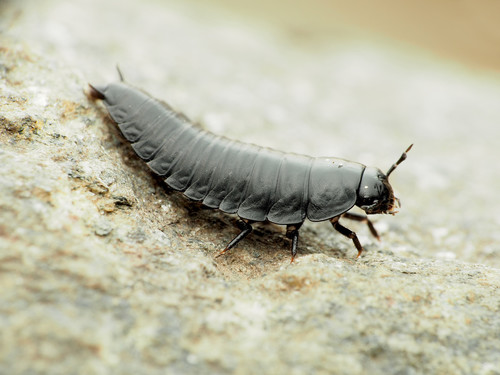
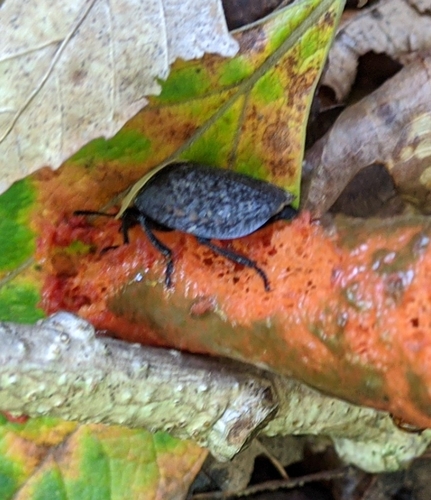
📷Photos of the American carrion beetle
More beetles
This guide was written with AI assistance and fact-checked, last updated 2026-10-10. Identification from photos is never certain: don't handle insects you can't identify, and get medical advice for bites, stings or allergic reactions. More about the American carrion beetle: iNaturalist, Wikipedia.