
Acorn weevil
Curculio glandium · True weevils
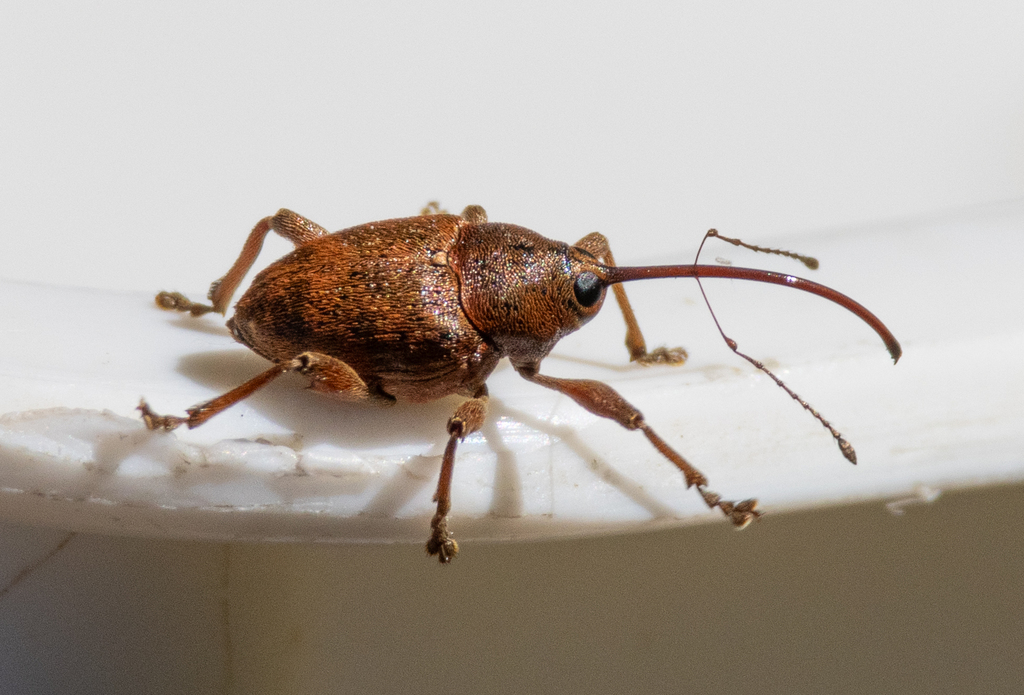
A small, long-snouted beetle whose larvae develop inside acorns, often reducing seed viability but posing no danger to people.
!Is the acorn weevil dangerous?
No. Acorn weevils do not sting or bite people and are not considered medically significant. Handle gently if needed; the tiny rostrum and mandibles are not dangerous.
Pets
The weevils are not toxic to pets, and a pet that eats a larva is unlikely to be harmed. Acorns themselves, however, can upset a dog's stomach or cause a blockage if eaten in quantity, so discourage pets from chewing fallen acorns.
📖Overview
The acorn weevil Curculio glandium is a small beetle in the true weevil family (Curculionidae) that specializes on oak acorns. Adult females use a long rostrum (snout) to drill a hole in developing acorns and deposit single eggs. The legless white larvae (grubs) consume the acorn kernel, exit in autumn, and overwinter in the soil, where they later pupate. Populations are generally univoltine (one generation per year) and are most noticeable where oak trees produce many acorns.
🔍How to identify an acorn weevil
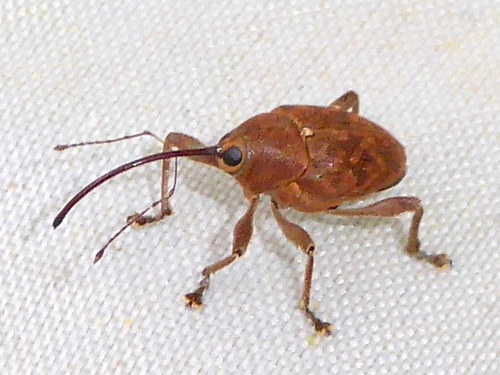
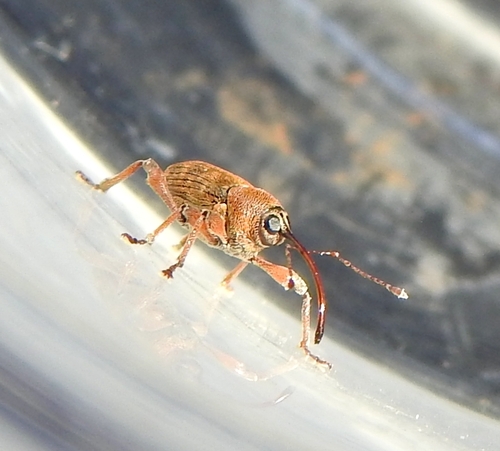
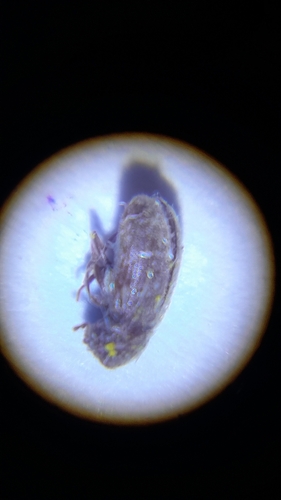
Adults are compact, oval beetles with a pronounced curved rostrum. They are typically 4-8 mm long (body not including rostrum). The body surface is covered with fine scales or hairs giving a mottled brown to grey appearance that helps camouflage them on bark and leaf litter. Legs and antennae are short; the antennae arise partway along the rostrum as is typical for weevils. Larvae are creamy-white, C-shaped grubs without legs, with a brown head capsule.
- Look for a small (4-8 mm) oval beetle with a distinct long rostrum (snout) pointing forward.
- Mottled brown-grey scale-like patterning on the elytra and body helps camouflage the beetle on bark and leaf litter.
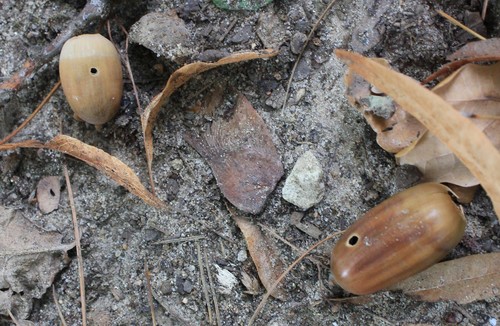
- Find evidence in acorns: small neat exit holes or a legless grub inside usually indicates Curculio species.
- Timing: adults are most often seen on or near oak trees in late spring and summer during acorn formation.
Lookalikes
Hazelnut weevil Curculio nucum
Prefers hazelnuts (Corylus) rather than acorns; slightly different host and often a different body shape/size on close inspection.
Chestnut weevil Curculio elephas
Attacks chestnuts and has different host preference and regional distribution; look at the host nut and local species lists to separate them.
↻Life cycle
Egg
Females chew a hole in a developing acorn with their rostrum and deposit a single egg under the shell.
Larva (grub)
A white, legless grub that feeds on the acorn kernel. When mature it chews an exit hole and drops to the ground in late summer or autumn.
Pupa
After dropping from the acorn the larva burrows into the soil and overwinters there, often for one or more years, before pupating in the following summer.
Adult
Adults emerge from the soil, climb host trees, and feed and mate while females bore into developing acorns to lay eggs.
🍃Diet and predators
Young eat
Acorn kernel (oak seeds)
Adults eat
Adult weevils feed on oak foliage and acorn surfaces; some species feed little as adults and concentrate on reproduction
Predators of the young
Birds, small mammals (that open acorns), and parasitic wasps and flies that can attack larvae or eggs
Predators of adults
Birds, predatory insects, and spiders
🌱Effect on plants and gardens
Larvae consume the seed inside acorns and can greatly reduce the number of viable acorns produced by infested trees; usually not a major threat to mature oak health but can reduce natural oak regeneration and seed crop quality.
📍Where and when to find it
Look on oak trees (leaves, branches and developing acorns) in late spring and summer; inspect fallen acorns in summer and autumn for exit holes or grubs.
Best time
Late spring to autumn; daytime for adults on trees, autumn for finding fallen infested acorns.
Observation tips
Carefully open suspect acorns to check for a grub; photograph adults on acorns or bark from a short distance to capture the rostrum and body pattern.
✨Fun facts
- Female acorn weevils use their long snout both to find a suitable spot and to drill a hole in the acorn for egg-laying.
- Females usually lay one egg per drilled hole, so many infested acorns hold a single larva, although one acorn can contain several.
- Acorn weevil infestations can influence oak regeneration and affect animals that rely on acorns by reducing the number of sound seeds available.
?Frequently asked questions
Are acorn weevils dangerous to people?
No. They do not bite or sting and are not poisonous. They are harmless to people.
Do acorn weevils ruin acorns?
Yes. Larvae consume the acorn kernel and make the seed non-viable; infested acorns often have an exit hole or one or more grubs inside.
Why are acorn weevils in my yard?
If you have oak trees producing acorns, acorn weevils are attracted to the developing nuts to lay eggs. You will notice them more in years with heavy acorn crops.
How do I get rid of acorn weevils?
Collect and destroy or remove fallen acorns in autumn before larvae burrow into the soil. Netting small trees during acorn development can reduce egg-laying. Widespread chemical control is rarely needed or practical.
Can acorn weevils kill my oak tree?
Unlikely. They reduce seed viability but do not normally harm mature oak trees. Heavy, repeated infestations could affect natural regeneration of young oaks.
📷Photos of the acorn weevil
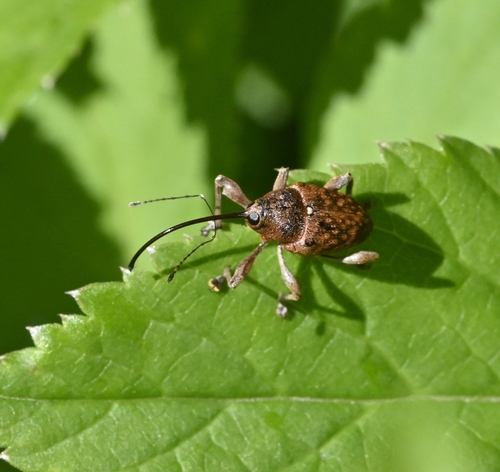
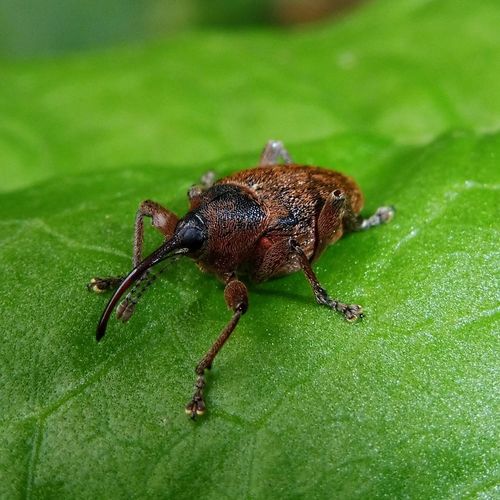
More beetles
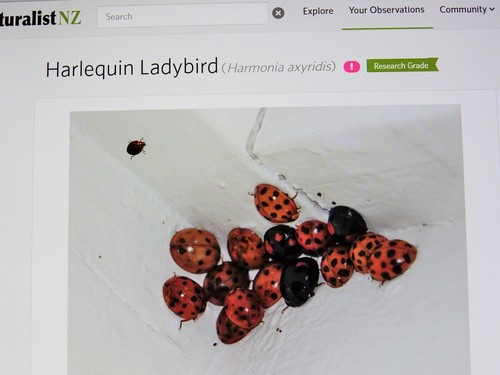
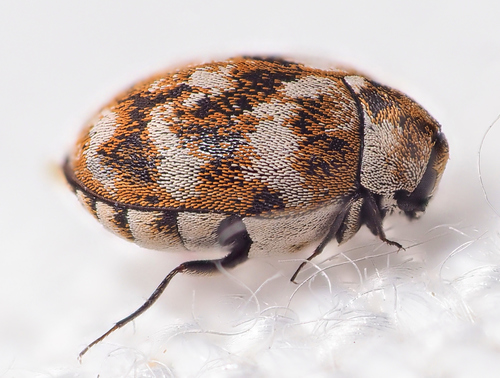
This guide was written with AI assistance and fact-checked, last updated 2026-10-10. Identification from photos is never certain: don't handle insects you can't identify, and get medical advice for bites, stings or allergic reactions. More about the acorn weevil: iNaturalist, Wikipedia.