
Red-headed ash borer
Neoclytus acuminatus · Longhorn beetles
A small, day-active longhorn beetle with red head and banded yellow-black elytra whose larvae feed in recently dead hardwoods.
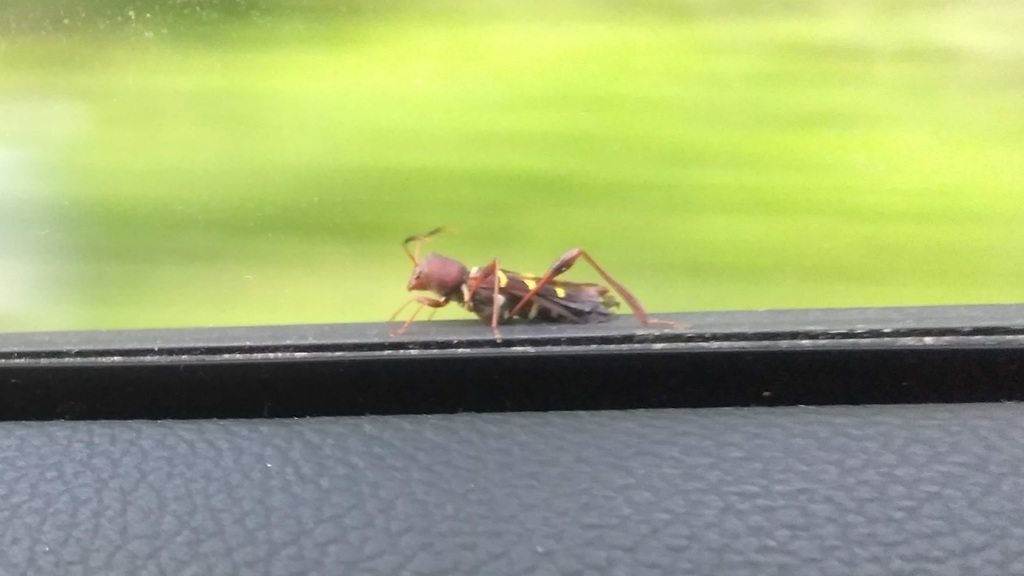
!Is the red-headed ash borer dangerous?
No. Adults do not bite or sting and are not venomous. They may startle people by moving rapidly or by their wasp-like appearance, but they pose no toxin-related risk. Handle gently if needed; avoid crushing to prevent mess.
Pets
Not toxic to pets. Larvae inside wood are not a typical pet risk, but chewing or swallowing large pieces of infested wood could be a choking hazard.
📖Overview
Neoclytus acuminatus is a small longhorn beetle common across much of North America. Adults are often seen on flowers or tree trunks in warm months; larvae develop by tunnelling in recently dead or dying hardwoods (especially ash but also other deciduous trees). This species is generally a secondary attacker of weakened or cut wood rather than a primary pest of healthy living trees.
Adults are active in daylight and are often mistaken for wasps because of their rapid movement and bold banded coloration. Larval development typically takes months to a year depending on climate and wood conditions. The species is not dangerous to people but can be a nuisance when infested firewood or cut lumber is brought into buildings.
🔍How to identify a red-headed ash borer
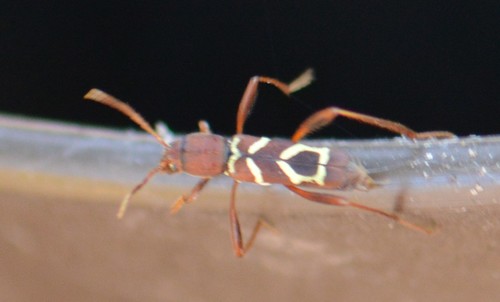
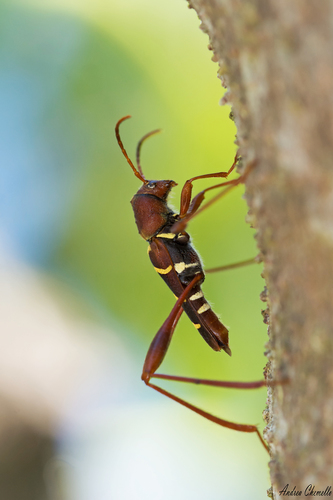
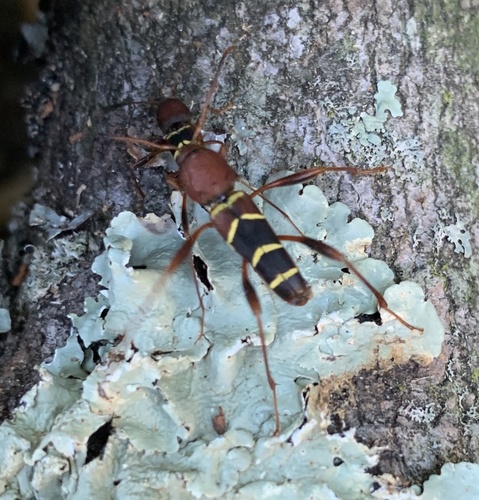
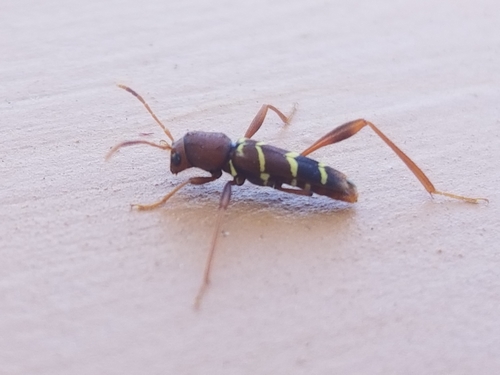
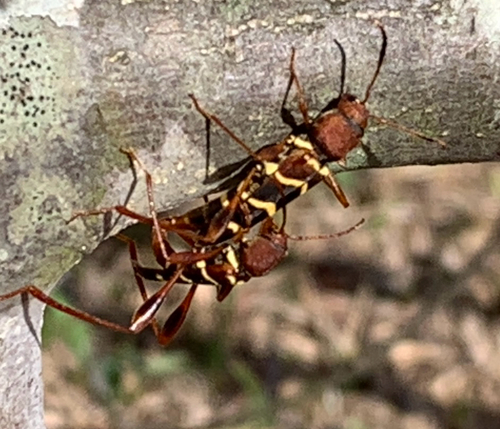
Adults are small (about 6-20 mm long) with a distinct reddish to orange head and pronotum and elongated, cylindrical bodies. Elytra (wing covers) are reddish-brown near the base, darkening to brown or black toward the tip, and are crossed by four narrow yellow or cream lines. Legs and antennae are relatively long for the beetle's size; antennae are shorter than or about the length of the body. Larvae are typical cerambycid grubs: creamy white, C-shaped, legless, with a hardened head capsule and strong mandibles for chewing wood.
- Reddish to orange head and pronotum with darker (brown to black) elytra crossed by yellow or cream transverse bands.
- Small size (6-20 mm) and elongated, narrow longhorn beetle shape with relatively long antennae.
- Day-active and often seen on flowers, tree trunks or recently cut logs; quick, wasp-like movements.
- Larval signs: round or oval exit holes in wood and shallow galleries beneath bark in recently dead hardwood.
Lookalikes
Other banded Neoclytus longhorns Neoclytus spp.
Many Neoclytus species share banded elytra; N. acuminatus is distinguished by its pronounced red head and the specific pattern and spacing of yellow bands on the elytra. Close comparison to regional keys may be required.
↻Life cycle
Egg
Females lay eggs in cracks or crevices of bark on recently dead or stressed hardwood. Eggs hatch in days to weeks.
Larva (wood borer)
Grubs tunnel through sapwood and heartwood, creating galleries as they feed. Larval development takes months to about a year.
Pupa
Larvae pupate within the wood in a pupal chamber; pupation lasts days to weeks before adults emerge.
Adult
Adults emerge in warm months, feed on nectar, pollen or tree sap and seek mates; they live for several weeks.
🍃Diet and predators
Young eat
Wood (sapwood and heartwood of recently dead or dying hardwoods)
Adults eat
Nectar and pollen from flowers, occasionally sap or bark exudates; adults do not feed on household materials.
Predators of the young
Woodpeckers, predatory beetles and parasitic wasps that attack larvae under bark
Predators of adults
Birds, spiders and predatory insects
🌱Effect on plants and gardens
Larvae feed on the wood of recently dead or dying hardwoods (commonly ash, but also maple, oak, elm and others). They play a role in decomposing downed timber and are not usually a threat to healthy living trees.
📍Where and when to find it
Adults on flowers, tree trunks, cut logs, firewood piles and sap flows; larvae under bark and in galleries in recently dead hardwood.
Best time
Late spring through summer on warm, sunny days; adults are most active in daytime and also may be attracted to lights at night.
Observation tips
Look at forest edges, sawmills, stacked firewood and recently felled trees. Photograph the head and elytral banding for reliable ID; avoid prying large pieces of wood to check for larvae unless necessary.
✨Fun facts
- Adults are often mistaken for wasps because their slender bodies, banded colour pattern and quick movements mimic stinging insects.
- They prefer recently cut or storm-damaged hardwood and help recycle dead wood back into the ecosystem.
- Because they are attracted to fresh sap and flowers, adults are commonly observed on blossoms at forest edges and gardens.
?Frequently asked questions
Are red-headed ash borers dangerous?
No. They are not venomous and do not bite or sting. Their appearance can be alarming but they are harmless to people.
Do red-headed ash borers damage houses or furniture?
They primarily attack recently dead or stressed hardwood. They rarely infest dry, seasoned lumber used indoors, but bringing infested firewood or logs inside can introduce them to buildings.
Why is one in my house?
Adults may fly indoors attracted to lights, or infested firewood or cut logs brought inside may contain larvae that later emerge as adults.
How can I get rid of them?
Remove and properly dispose of infested wood (burn, chip or solarize). Store firewood off the ground and use it promptly. For indoor adult beetles, capture and release outside; large structural infestations are uncommon, but consult a pest professional if you suspect widespread wood infestation.
Do they attack living ash trees?
They are primarily secondary colonizers of dead, dying or freshly cut wood and are not a major primary pest of healthy living trees.
📷Photos of the red-headed ash borer
More beetles
This guide was written with AI assistance and fact-checked, last updated 2026-10-10. Identification from photos is never certain: don't handle insects you can't identify, and get medical advice for bites, stings or allergic reactions. More about the red-headed ash borer: iNaturalist, Wikipedia.