
Violet ground beetle
Carabus violaceus · Ground beetles
A large, flightless, nocturnal predatory beetle with shiny black to purple margins that hunts slugs, snails and other invertebrates in gardens and woodlands.
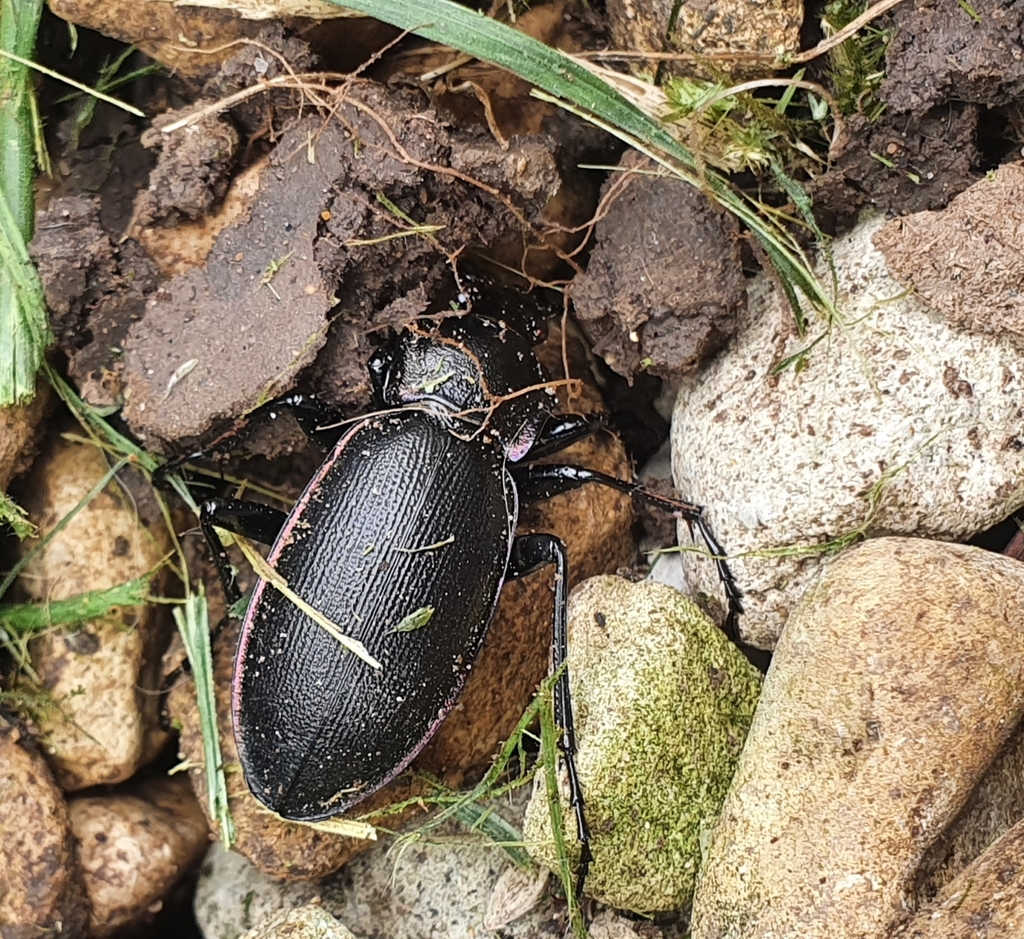
!Is the violet ground beetle dangerous?
No. Not venomous; does not spread disease. Can deliver a pinch with its mandibles if handled roughly, which may be mildly painful but not medically significant. Wash hands after handling in case of soil contaminants.
Pets
Generally harmless to pets. Large beetles could be chewed by dogs or cats and might cause mild mouth irritation; avoid encouraging pets to eat them.
📖Overview
Carabus violaceus is a widespread European ground beetle common in woodlands, hedgerows, grassland edges and gardens. Adults are active mainly at night and hunt slow-moving invertebrates such as slugs, snails and earthworms. They are flightless: the elytra are fused and the beetles move on foot. They are beneficial predators in gardens and are not harmful to people.
These beetles are most often found under logs, stones, compost, leaf litter and in other moist, sheltered microhabitats by day. Females lay eggs in soil and the larvae, which are also predatory, develop in the ground before pupating and emerging as adults. Carabus violaceus is generally common and not considered threatened across much of its range.
🔍How to identify a violet ground beetle
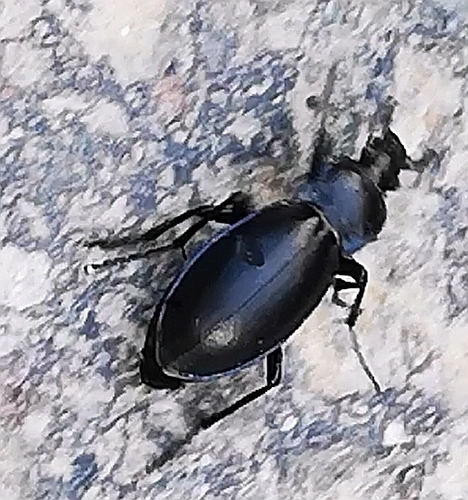
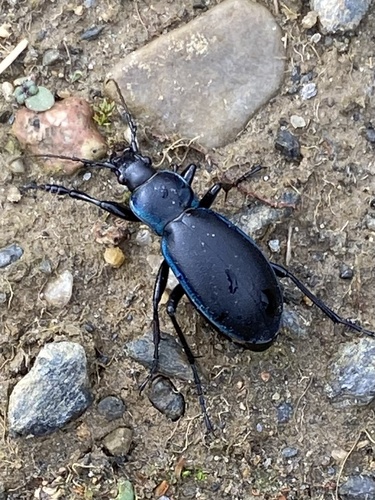
Adults are relatively large for ground beetles, elongated and robust with fairly smooth, finely granulated elytra. The body is broadly black with a noticeable purplish or violet sheen around the edges of the head, pronotum and elytra in many individuals. The elytra lack strong ridges or grooves and the legs are long and adapted for running. The antennae are filiform and the underside is dark. Wings are absent or nonfunctional because the elytra are fused.
- Large (20-30 mm), robust ground beetle with fused elytra and long legs for running
- Shiny black body with a purple/violet sheen or margins on head, pronotum or elytra
- Elytra fairly smooth and finely granulated, without strong ridges
- Flightless: elytra fused and no visible functional wings
Lookalikes
Bronze ground beetle Carabus nemoralis
Carabus nemoralis is usually smaller and more bronze or metallic brown overall rather than distinctly violet-margined; elytral sculpture differs in detail.
Carabus problematicus Carabus problematicus
C. problematicus tends to have different elytral texture and a less pronounced violet sheen; range and subtle structural features separate them.
↻Life cycle
Egg
Female lays eggs in soil; eggs hatch into predatory larvae.
Larva
Elongated, predatory larvae live in soil and leaf litter and feed on invertebrates as they grow.
Pupa
Larvae pupate in the soil; pupal stage lasts until the adult beetle is ready to emerge.
Adult
Flightless, ground-dwelling predator that hunts at night and overwinters as an adult in sheltered sites.
🍃Diet and predators
Young eat
Predatory on small invertebrates in soil and leaf litter, including insect larvae and small worms
Adults eat
Predatory: slugs, snails, earthworms, caterpillars and other slow-moving invertebrates
Predators of the young
Ground-dwelling predators such as rodents, birds and larger beetles
Predators of adults
Birds, mammals (shrews, hedgehogs), amphibians and larger invertebrate predators
🌱Effect on plants and gardens
Preys on slugs, snails and other invertebrates that damage plants; not a plant pest itself
📍Where and when to find it
Look under logs, stones, compost heaps, leaf litter and in garden borders. Larvae are found in soil and litter.
Best time
Spring to autumn, especially at night or after rain when they are actively hunting.
Observation tips
Search after dusk with a torch for active adults. Carefully turn over logs or stones and replace them to avoid damaging habitat; photograph rather than handle when possible.
✨Fun facts
- Violet ground beetles are flightless because their elytra are fused; they escape predators and hunt entirely on foot.
- They are useful garden allies because they eat slugs and snails that damage plants.
- When disturbed they can release a defensive-smelling secretion from glands near the end of the abdomen.
?Frequently asked questions
Are violet ground beetles harmful to people?
No. They are not venomous. They may give a mild pinch if handled, but they do not pose a medical risk.
Do violet ground beetles bite?
They can use their mandibles to pinch if handled roughly, but bites are uncommon and only cause minor irritation.
Why is a violet ground beetle in my house or garden?
They shelter in cool, moist places by day such as under logs, stones, compost or leaf litter. Gardens provide good hunting ground for slugs and snails, so they may be common there.
How do I get rid of them?
Usually you do not need to remove them because they help control garden pests. To discourage them from entering buildings, seal gaps, reduce damp shelter (move woodpiles away from foundations) and avoid leaving damp debris by doors. Handle gently with a jar and release outside if you need to remove one.
Where does the violet ground beetle live?
Across much of Europe and parts of western Asia in woodlands, hedgerows, meadows and gardens—especially in moist, sheltered microhabitats.
📷Photos of the violet ground beetle
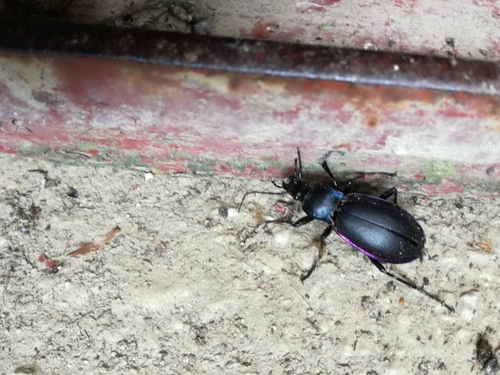
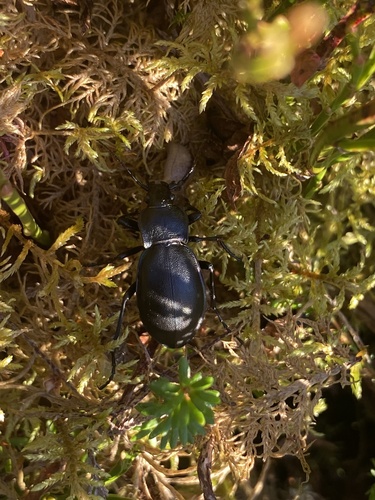
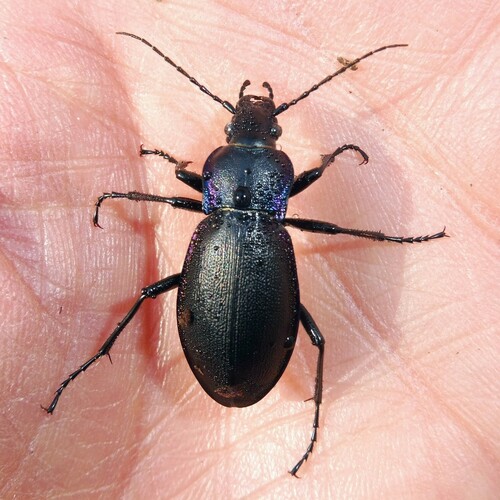
More beetles
This guide was written with AI assistance and fact-checked, last updated 2026-10-10. Identification from photos is never certain: don't handle insects you can't identify, and get medical advice for bites, stings or allergic reactions. More about the violet ground beetle: iNaturalist, Wikipedia.