
Powderpost beetle
Lyctus brunneus · Powderpost beetles
A small wood-boring beetle whose larvae bore sapwood of hardwoods and reduce timber and furniture to fine powdery frass.
!Is the powderpost beetle dangerous?
No. Lyctus brunneus is not venomous and does not bite or sting people. The main concern is economic — damage to wooden structures and furniture. Fine frass can be a nuisance and may cause mild irritation in people with dust sensitivities; use a mask when cleaning.
Pets
Not toxic to pets. Pets may chew on damaged wood and ingest wood dust or small fragments; this is usually not toxic but could cause digestive upset or risk of foreign-body obstruction if large pieces are swallowed.
📖Overview
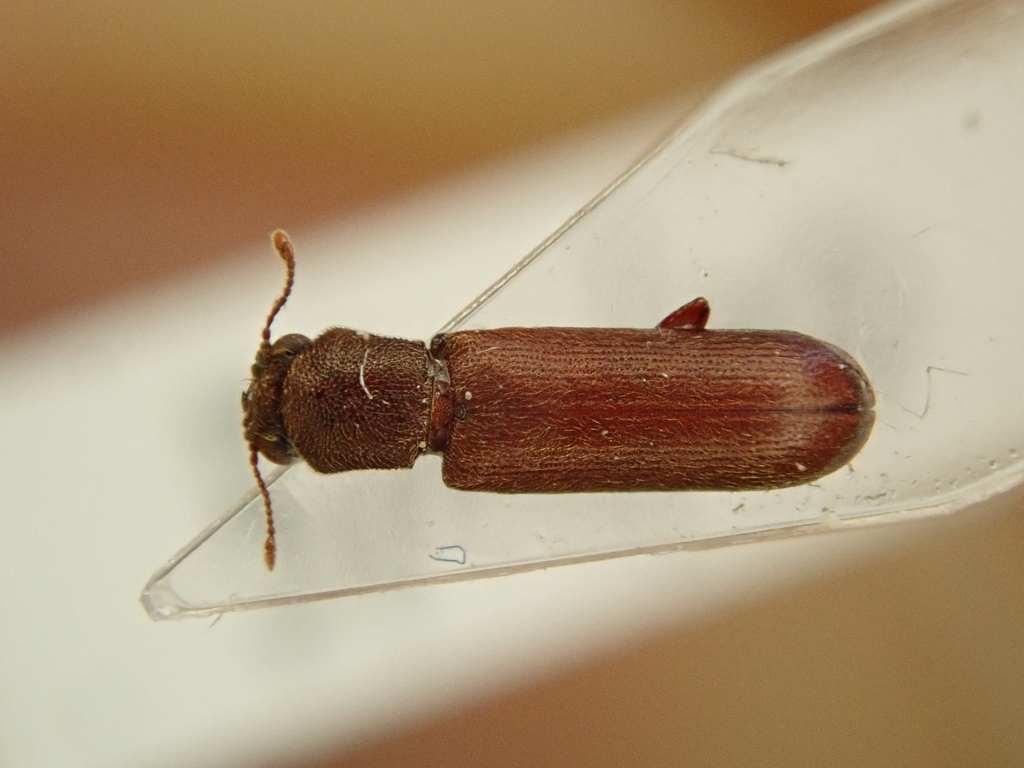
Lyctus brunneus is a species of powderpost beetle that attacks dry, seasoned hardwoods. The adult beetles are short-lived and do not cause the wood damage — the larvae do the boring and feeding inside the wood, producing characteristic fine, powdery frass. This species has become widespread worldwide through the movement of infested lumber, flooring and wooden furniture. Infestations are most problematic in finished hardwoods where larval tunnels are hidden until adults emerge.
🔍How to identify a powderpost beetle
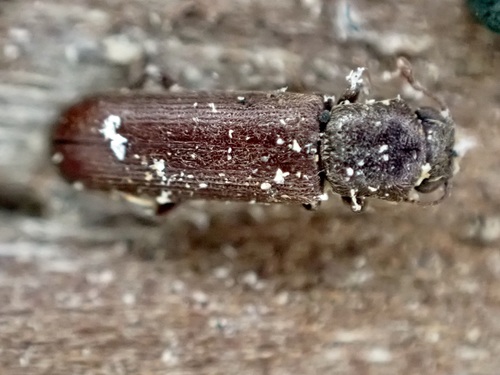
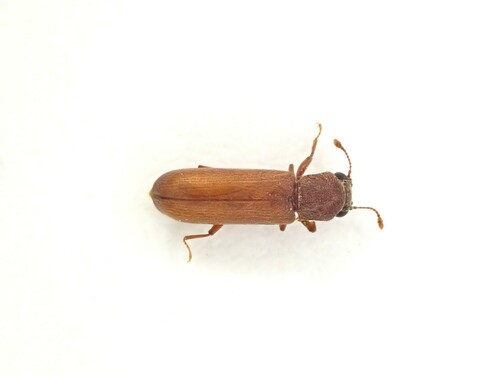
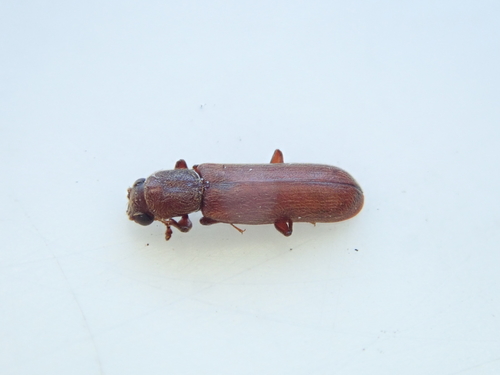
Adults are small, elongate, somewhat flattened beetles with a narrow parallel-sided body and short pronotum. Size typically ranges from about 3-7 mm long. Colour is yellowish to reddish-brown; the surface may appear slightly shiny. The head is clearly visible from above and antennae are 11-segmented with a 2-segmented club. Exit holes in wood made by adults are round and about 1-2 mm diameter; frass is very fine, flour-like powder.
- Small (3-7 mm), narrow, elongate brown beetle; head clearly visible from above.
- Round exit holes in hardwood about 1-2 mm diameter with fine, flour-like frass beneath.
- Damage limited to sapwood of hardwoods (flooring, furniture, mouldings); tunnels feel shallow under finish.
Lookalikes
Furniture beetle (Anobium punctatum) Anobium punctatum
Furniture beetle (furniture/woodworm) is in family Ptinidae; its exit holes are slightly larger and frass is coarser, often pellet-like. Anobium prefers damp or decayed wood and softwoods more than Lyctus.
False powderpost beetles Bostrichidae (other subfamilies)
Other Bostrichidae can be slightly larger, more robust, and often bore into both hardwood and softwood; lyctids are slender and specifically target hardwood sapwood.
↻Life cycle
Egg
Females lay eggs singly or in small groups in cracks, pores or existing holes in dry hardwood. Eggs hatch in 1-2 weeks under favorable conditions.
Larva (grub)
Creamy, C-shaped larvae bore in sapwood and feed for many months to several years, creating tunnels and producing fine powdery frass.
Pupa
Larvae pupate near the wood surface within a pupal chamber; pupation lasts days to weeks depending on temperature.
Adult
Adults chew a round exit hole and emerge from the wood. They live a short time, mate, and deposit eggs to start the cycle again.
🍃Diet and predators
Young eat
Dry sapwood of hardwoods — feed on starch and wood cell contents, not pure cellulose.
Adults eat
Adults feed little or not at all; primary role is reproduction.
Predators of the young
Woodpeckers, predatory beetles and parasitic wasps can attack larvae when accessible.
Predators of adults
Ants, spiders and small insectivorous birds may capture adults.
🌱Effect on plants and gardens
Larvae feed on the starch and cell contents of sapwood in hardwoods, weakening boards, flooring and furniture. They generally do not attack softwoods or wood with very low starch content.
How to get rid of powderpost beetles
Confirm the infestation is active (fresh, flour-like frass or new holes) before treating. Small items can be heat-treated, frozen or replaced; infested boards can be removed and replaced. Unfinished wood can be treated with borate products, which penetrate bare wood; paint, varnish or other finishes seal wood pores so females cannot lay eggs. For widespread structural infestations, consult a licensed pest control professional about fumigation or other treatments. Prevent problems by buying kiln-dried hardwood and inspecting second-hand furniture.
📍Where and when to find it
Adults and exit holes are most visible on hardwood floors, furniture, stair treads, mouldings and veneer. Larvae are hidden within the sapwood tunnels.
Best time
Warm months (spring-summer) in temperate regions; year-round in warm indoor or tropical conditions. Adults are most active during daylight and dusk.
Observation tips
Check baseboards, underside of furniture and inside drawers for fine powdery frass. Tap or sound suspect wood—hollow or weakened-sounding boards may be infested. Use good lighting and a magnifier to inspect exit holes.
✨Fun facts
- Lyctus brunneus larvae produce very fine, powdery frass—hence the common name 'powderpost'.
- Infested wood often shows no external damage until adult beetles emerge, making early detection difficult.
- Kiln-dried or chemically treated lumber and wood with low starch are poor hosts and resist infestation.
?Frequently asked questions
Do powderpost beetles bite?
No. They do not bite people. The adults are not aggressive and the concern is damage to wood, not direct harm to humans.
How do I know if I have Lyctus brunneus in my house?
Look for tiny round exit holes about 1-2 mm wide in hardwood flooring or furniture and fine, flour-like frass beneath. New adult beetles may be seen crawling or flying near infested wood in warm months.
How do I get rid of powderpost beetles?
For isolated items, heat treatment (kiln or heat box) or replacing the infested wood is effective. Borate products can be applied to unfinished wood, and sealing bare wood with paint or varnish prevents egg-laying. For structural infestations, a licensed professional may recommend fumigation or other treatments. Use kiln-dried or treated wood to prevent reinfestation.
Will they spread to other wood in my house?
Yes, they can infest other suitable hardwood items nearby if conditions are right. Females lay eggs in the pores of bare, unfinished hardwood that contains starch; painted or varnished surfaces are much less susceptible.
Can I prevent them when buying wood or furniture?
Buy kiln-dried, properly seasoned or chemically treated hardwoods; inspect second-hand furniture for small holes or powdery frass before bringing it indoors.
📷Photos of the powderpost beetle
More beetles
This guide was written with AI assistance and fact-checked, last updated 2026-10-10. Identification from photos is never certain: don't handle insects you can't identify, and get medical advice for bites, stings or allergic reactions. More about the powderpost beetle: iNaturalist, Wikipedia.