
Drugstore beetle
Stegobium paniceum · Furniture and pantry beetles
A tiny, common pantry pest that eats a wide range of dried foods, spices and stored products and can chew packaging.
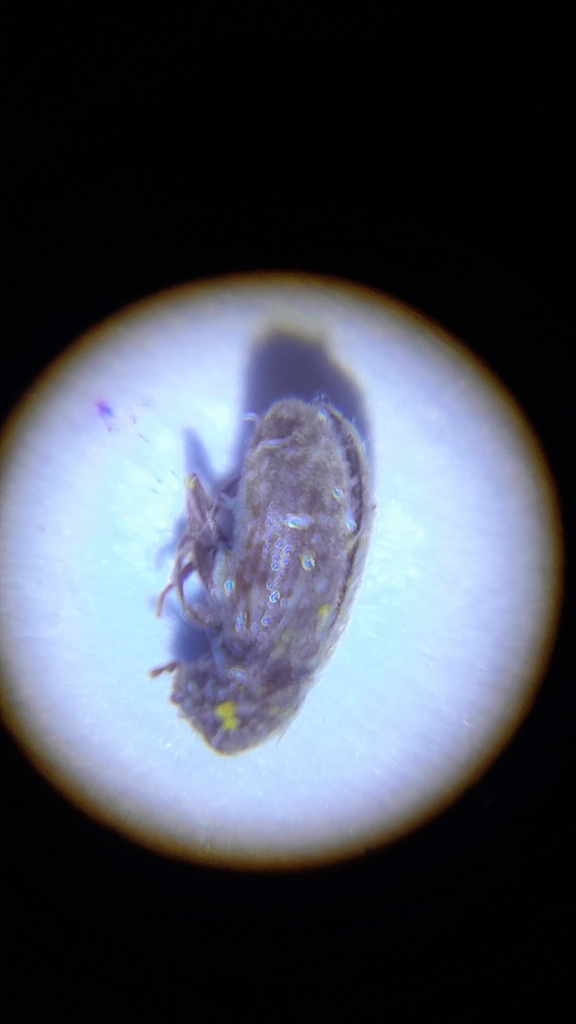
!Is the drugstore beetle dangerous?
No. Drugstore beetles do not bite or sting and are not poisonous. The main concern is food contamination: larvae and adults in food make it unfit to eat. If you suspect contaminated food, discard it. Clean storage areas and vacuum to remove eggs and larvae. People with severe food allergies should be cautious because contaminated products may cause reactions.
Pets
Not directly toxic to pets, but contaminated food may be unpalatable or cause stomach upset if eaten in large amounts. Discard infested pet food and clean the feeding area.
📖Overview
The drugstore beetle is a small, brown pantry-infesting beetle (a relative of wood-boring furniture beetles) now found worldwide. Adults are short-lived and are primarily important because females lay eggs on food and other dried organic materials; the larval stage does the feeding and damage. It infests a wide range of stored products including dried herbs, flour, cereals, spices, pet food, dried flowers and even book bindings and pharmaceutical items (hence the name). Infestations are usually discovered in kitchens and storage areas where dried goods are kept.
Adults fly readily and often appear near infested packages. They can chew through many types of packaging (paper, cardboard, thin plastic) to reach foodstuffs. Infestations are most effectively controlled by removing and discarding contaminated material and improving storage hygiene; insecticides are rarely necessary for small household outbreaks if good sanitation and sealing are used.
🔍How to identify a drugstore beetle
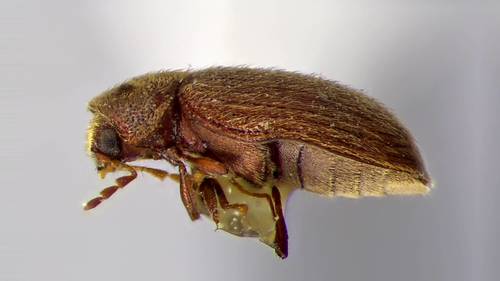
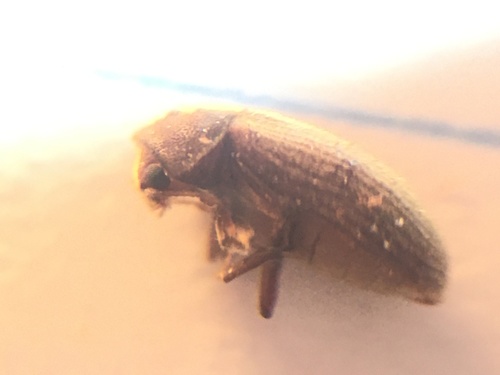
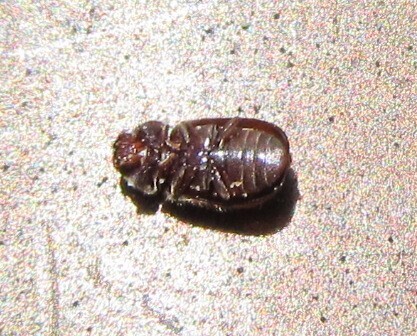
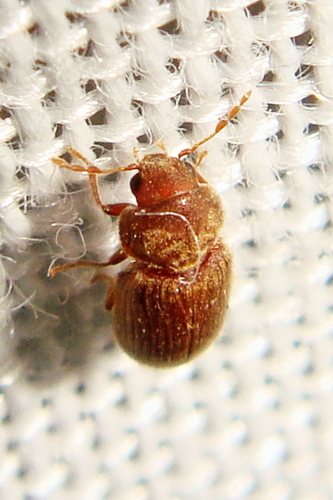
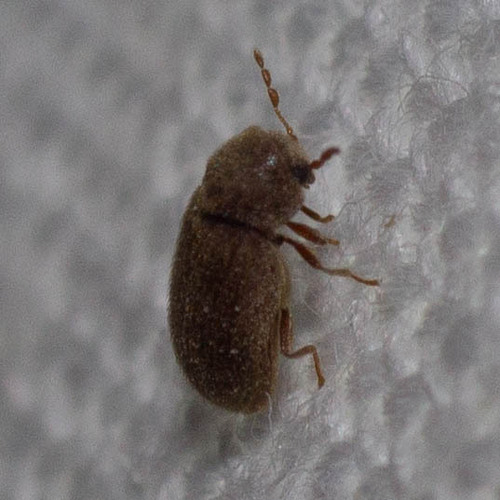
Adult beetles are small (about 2-3.5 mm long), oval and convex with evenly curved elytra (wing covers) marked by fine lengthwise rows of pits. Color is uniform light to reddish brown. The head is tucked down and not readily visible from above. Antennae end in a distinct three-segmented club. Larvae are C-shaped, creamy-white to pale brown grubs covered in fine hairs and about 3-4 mm when mature; pupae are pale initially and darken before the adult emerges.
- Small (2-3.5 mm), oval, uniformly light to reddish-brown beetle with rounded elytra bearing fine lengthwise grooves.
- Head tucked down and not obvious from above; antennae end in a distinct three-segmented club.
- Larvae are C-shaped pale grubs about 3-4 mm when mature and often found inside infested food packages with powdery frass.
- Look for tiny holes chewed in packaging or fine powder under containers as signs of infestation.
Lookalikes
Cigarette beetle Lasioderma serricorne
Very similar in size and habits; cigarette beetle antennae are serrate (saw-toothed) rather than ending in a distinct three-segmented club, its body is more rounded and humped, and its wing covers are smooth rather than grooved.
Hump spider beetle Gibbium psylloides
Shiny, globular, reddish-brown beetle with long, spider-like legs and smooth wing covers; a different stored-product scavenger found in similar settings.
↻Life cycle
Egg
Females lay tiny, whitish eggs on or near suitable food. Eggs hatch in about 6-10 days depending on temperature.
Larva (grub)
Creamy, C-shaped larvae feed within the food material, producing frass and tunnels. This stage does the bulk of the damage and lasts several weeks to months depending on food and temperature.
Pupa
Larvae pupate in protected areas within or near the food source; pupation lasts about 1-3 weeks.
Adult (beetle)
Adults emerge, mate and disperse. They are short-lived and may chew packaging to reach food; adults can also fly.
🍃Diet and predators
Young eat
Larvae feed on a very wide range of dried organic materials: flours, cereals, spices, dried herbs, biscuits, pet food, seeds, dried flowers, leather glue and some pharmaceuticals.
Adults eat
Adults feed little but may nibble on the same dried materials; they primarily seek mates and egg-laying sites.
Predators of the young
Generalist predators and parasitoid wasps in storage and natural settings; mites and beetle predators in stored-product environments.
Predators of adults
Spiders, ants and predatory insects; birds and small mammals may eat them outdoors.
🌱Effect on plants and gardens
Does not feed on living plants in the garden but damages stored plant products (flour, grains, herbs, seeds, spices). Can also consume dried animal products and museum specimens.
How to get rid of drugstore beetles
Find and discard all infested items. Inspect unopened packages for powder, tiny holes or beetles. Clean cupboards and pantry shelves thoroughly, vacuum cracks and crevices, and wipe with soapy water. Store susceptible foods in sealed glass, metal or thick plastic containers. Consider freezing suspect items at -18 degrees C (0 degrees F) for 3-7 days or heating at 60 degrees C for 30 minutes to kill all life stages. Use pheromone traps for monitoring; these traps attract males but do not eliminate infestations alone. For heavy or persistent infestations, consult a licensed pest control professional.
📍Where and when to find it
Search pantries and cupboards in dried goods (flour, cereals, spices, dried herbs, pet food). Look inside boxes, between folded bags, and under shelves. Outdoors they can occur in bird nests, rodent nests or in dried plant material.
Best time
Year-round indoors; adults more noticeable in warmer months. Check pantries early in the morning or evening when activity may be higher.
Observation tips
Inspect new purchases for signs of infestation, transfer susceptible foods to airtight containers, and photograph specimens next to a ruler for size reference if you need identification help.
✨Fun facts
- Named 'drugstore beetle' because it was historically common in pharmacies eating herbs, seeds and medicinal powders.
- It can chew through paper and thin plastic film, so infestations sometimes start in apparently sealed packages.
- Because of its broad diet it will infest both plant and some animal-derived dried materials, making it one of the most versatile stored-product pests.
?Frequently asked questions
Do drugstore beetles bite?
No. They do not bite people or pets and are not aggressive.
Are drugstore beetles harmful to humans?
They are not poisonous, but they contaminate food and stored products. Discard infested food and clean storage areas.
Why are drugstore beetles in my house?
They are attracted to and feed on a wide range of dried foods and organic materials. Infested products or packages brought into the home often introduce them.
How do I get rid of drugstore beetles?
Find and discard infested items, vacuum and clean storage areas, store susceptible foods in airtight containers, and use freezing or heating methods to kill hidden stages. Use pheromone traps for monitoring; call a pest professional for large or persistent infestations.
Can they chew through sealed packages?
They can chew through cardboard, paper and some thin plastics to reach food; rigid glass or metal containers are best for prevention.
📷Photos of the drugstore beetle
More beetles
This guide was written with AI assistance and fact-checked, last updated 2026-10-09. Identification from photos is never certain: don't handle insects you can't identify, and get medical advice for bites, stings or allergic reactions.