
Varied carpet beetle
Anthrenus verbasci · Carpet beetles
Small, rounded beetle whose pollen-feeding adults and destructive, hairy larvae commonly occur in homes and museums.
!Is the varied carpet beetle dangerous?
Only mildly. Adults do not bite or sting and are essentially non-venomous. Larvae have dense hairs that can cause mechanical skin irritation or allergic contact dermatitis in sensitive individuals; avoid handling larvae bare-handed. For suspected allergic reactions, wash the area with soap and water and seek medical advice if symptoms are severe or persistent.
Pets
Direct harm to pets is unlikely. Pets that chew or groom infested textiles may pick up larval hairs that can irritate skin; ingestion of large amounts of infested material could cause mild gastrointestinal upset.
📖Overview
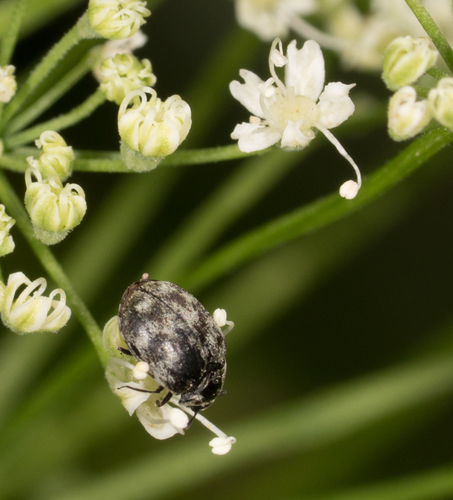
Anthrenus verbasci is a small dermestid beetle found across temperate regions worldwide. Adults are often seen on flowers feeding on pollen; larvae develop in dry animal-based materials and are the life stage responsible for damage to carpets, wool, museum specimens and stored products. Infestations indoors commonly originate from adults entering from outside or from bird and insect nests near buildings.
Adults are short-lived (weeks) and deposit eggs near suitable food sources; larvae take months to multiple years to complete development depending on temperature, humidity and food quality. Because larval hairs can cause skin irritation or allergic reactions in sensitive people, infestations require thorough cleaning and, sometimes, professional pest control in sensitive collections.
🔍How to identify a varied carpet beetle
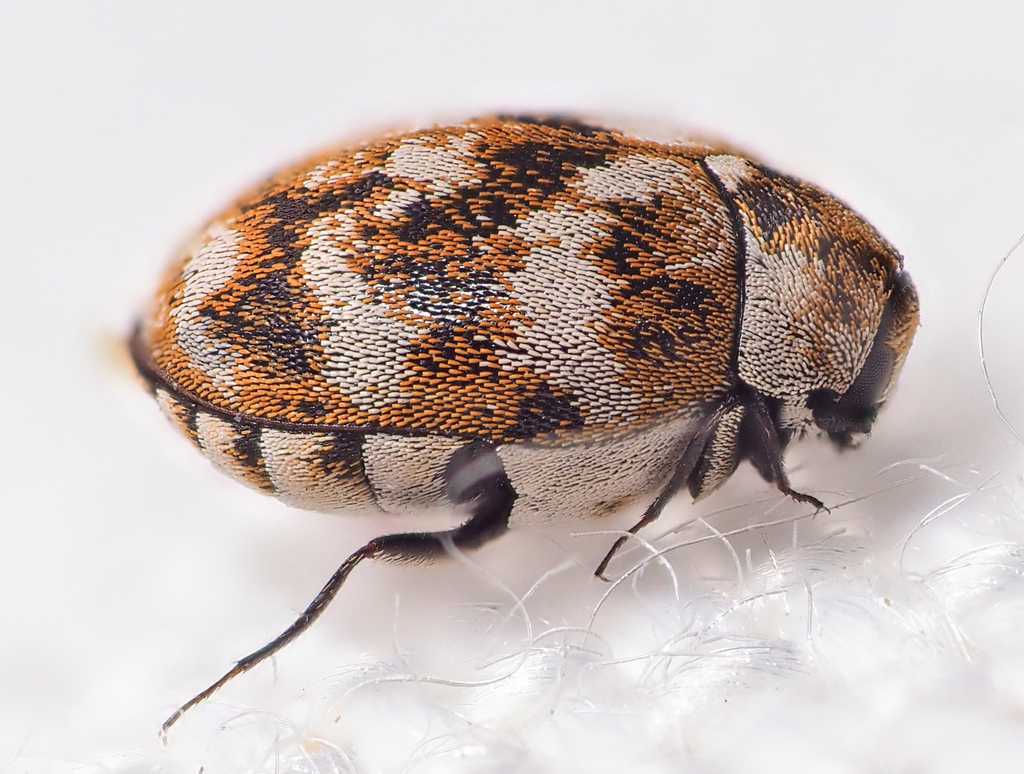
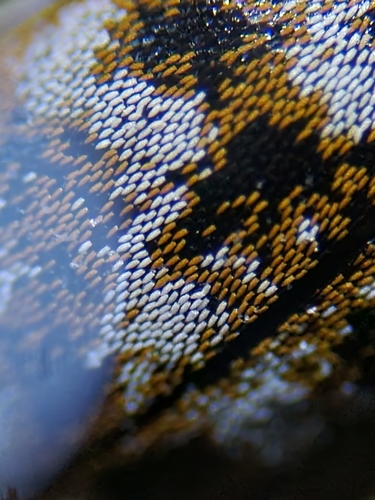
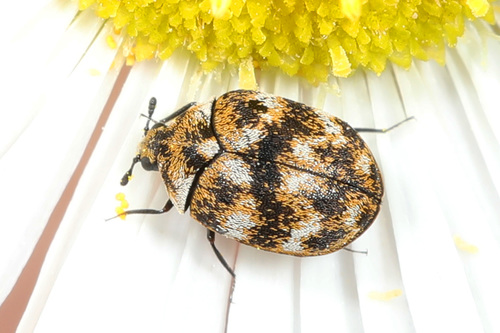
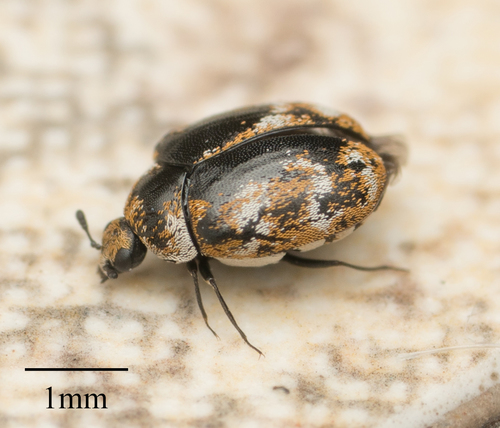
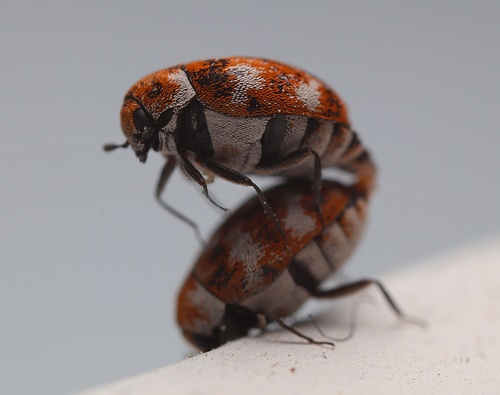
Adults are small (typically rounded, 2-4 mm long) with a mottled pattern of black, white and orange-yellow scales that form the 'varied' appearance. The body is broadly oval and convex. Larvae (often called 'woolly bears') are short and oval, widest toward the rear, about 4-5 mm when mature, banded light and dark brown and densely hairy, with three pairs of hair tufts at the rear that bristle when disturbed. Pupae develop inside the split skin of the last larval stage.
- Small, rounded beetle 2-4 mm with a mottled pattern of black, white and yellow-orange scales on the elytra
- Larvae are short, oval and widest toward the rear, banded brown and densely hairy, with tufts of hairs at the rear that flare when disturbed
- Adults often found on flowers during warm months; larvae found in dark undisturbed places with animal fibers (carpets, closets, museum drawers)
Lookalikes
Furniture carpet beetle Anthrenus flavipes
Similar size and habit but usually different elytral patterning with less orange; identification often requires close examination or expert confirmation.
Black carpet beetle Attagenus unicolor
Larger (about 3-5 mm) and uniformly dark brown to black adults; larvae are golden-brown, carrot-shaped and tapered with a long tail tuft.
↻Life cycle
Egg
Females lay small, white eggs (a few dozen) in cracks, crevices or on materials that will feed emerging larvae, such as wool, feathers or dried animal products.
Larva (woolly bear)
Larvae are hairy, oval and feed on animal fibres (wool, silk, leather), dried insects, museum specimens and occasionally stored food; this stage does most damage and lasts months to over a year.
Pupa
Larvae pupate inside the split skin of their last larval stage; pupation takes days to weeks depending on temperature.
Adult
Adults are small, rounded beetles that emerge, often visit flowers to feed on pollen, mate and disperse; adults may enter buildings through windows and doors.
🍃Diet and predators
Young eat
Animal-derived dry materials: wool, fur, feathers, leather, silk, dried insects, museum specimens, and some dried stored products containing animal protein
Adults eat
Pollen and nectar from flowers; sometimes feed on petals
Predators of the young
Spiders, ants, parasitoid wasps and predatory beetles in natural settings; indoors they have fewer predators
Predators of adults
Birds and predatory insects outdoors (e.g. spiders, predatory beetles)
🌱Effect on plants and gardens
Adult beetles visit flowers for pollen and can act as incidental pollinators; the species does not feed on live plants but larvae feed on animal-derived products rather than plant material.
How to get rid of varied carpet beetles
Regular vacuuming (including edges, under furniture, and inside closets), laundering or dry-cleaning of textiles, freezing small infested items at -20 degrees C for several days or heating to temperatures above 60 degrees C where safe, sealing stored fabrics in airtight containers, removing nests (bird, rodent, insect) near buildings, and inspecting museum specimens and stored collections. For large or persistent infestations, contact a professional pest controller experienced with dermestids; targeted insecticide treatments may be used in severe cases following label directions.
📍Where and when to find it
Adults on flowers outdoors (spring-summer); indoors find larvae in dark undisturbed locations with animal fibers (closets, under furniture, museum drawers, air ducts, attics, bird nests).
Best time
Best observed as adults in spring and summer during daylight on flowers; larvae can be found year-round indoors, especially in undisturbed areas.
Observation tips
Check edges of carpets, under radiators, inside stored clothing boxes and in collector cabinets. Use a flashlight and gentle probing; wear gloves and a mask if handling to avoid larval hairs.
✨Fun facts
- Despite the name, the adult varied carpet beetle feeds on pollen and is often found on flowers outdoors.
- Larvae are nicknamed 'woolly bears'; when threatened they flare tufts of barbed, spear-tipped hairs that can entangle small predators.
- Museum collections are particularly vulnerable; entomology and natural history exhibits use strict protocols to prevent dermestid damage.
?Frequently asked questions
Do varied carpet beetles bite?
No. Adults do not bite or sting. Larvae do not bite people but their hairs can irritate skin and occasionally cause an allergic reaction.
Are varied carpet beetles dangerous?
They are not dangerous in the venomous or disease-spreading sense, but larvae can damage textiles, rugs and museum specimens and their hairs can cause irritation in sensitive individuals.
Why are varied carpet beetles in my house?
Adults are attracted to flowers outdoors and may enter homes through open windows or on cut flowers; they lay eggs where larvae will find food, such as wool, feathers, carpets and stored animal-derived materials.
How do I get rid of them?
Thorough cleaning and vacuuming, laundering or freezing infested items, sealing stored textiles, removing bird or rodent nests near the building, and for severe infestations consider professional pest control. Inspect and treat hidden areas like attics, vents and museum storage.
Will they eat synthetic fabrics?
Larvae prefer animal-based fibers (wool, silk, fur, feathers). They sometimes damage blends and poorly finished synthetics if contaminated with food, sweat or oils, but they do not generally digest pure synthetic fibers.
📷Photos of the varied carpet beetle
More beetles
This guide was written with AI assistance and fact-checked, last updated 2026-10-09. Identification from photos is never certain: don't handle insects you can't identify, and get medical advice for bites, stings or allergic reactions.