
Pea leaf weevil
Sitona lineatus · True weevils
Small brownish weevil whose adults chew notches from pea leaf edges while larvae feed on legume root nodules, reducing nitrogen fixation and yield.
!Is the pea leaf weevil dangerous?
No. Not dangerous to people. They do not bite or sting. Handle gently if necessary; like most small beetles they may release odor or scales but pose no toxic threat.
Pets
Not toxic to pets. Damage is to plants, not animals.
📖Overview
Sitona lineatus is a small species of weevil in the family Curculionidae. Adults overwinter in field margins and hedgerows and fly into legume crops (peas, faba bean, clover and other legumes) in spring to feed and lay eggs. Larvae develop in soil and feed on the nitrogen-fixing root nodules of legumes, which can reduce plant vigor and crop yield. The species is native to Europe and has become an agricultural pest in parts of North America after introduction.
Damage is caused by adults feeding on leaf margins (creating characteristic semi-circular notches) and by larval feeding on root nodules. Management combines cultural controls (crop rotation, delayed sowing, field margin management), monitoring, and targeted insecticide or seed-treatment use where economic thresholds are exceeded.
🔍How to identify a pea leaf weevil
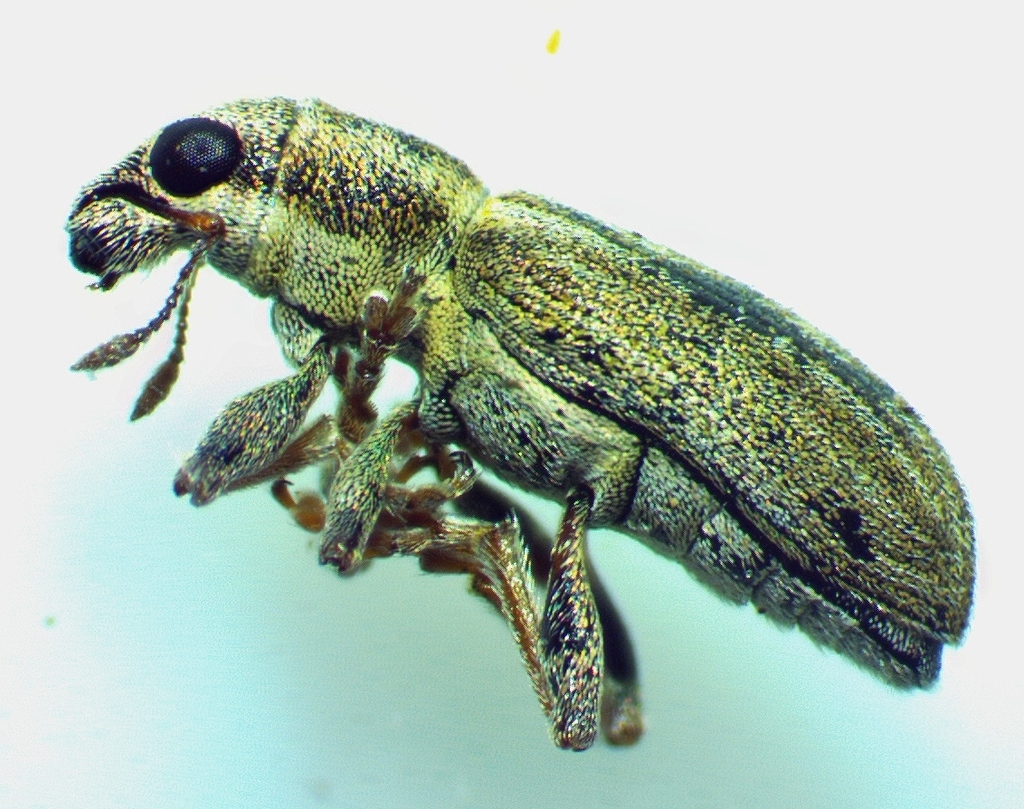
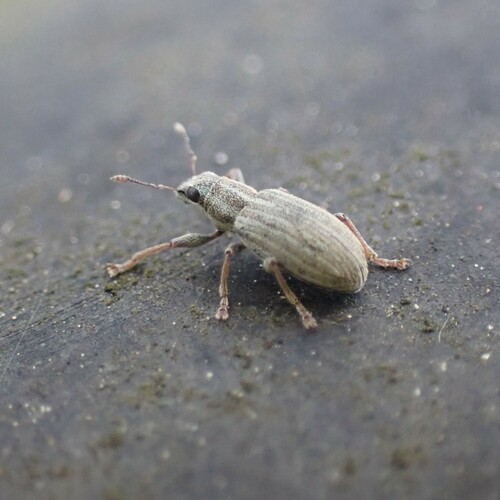
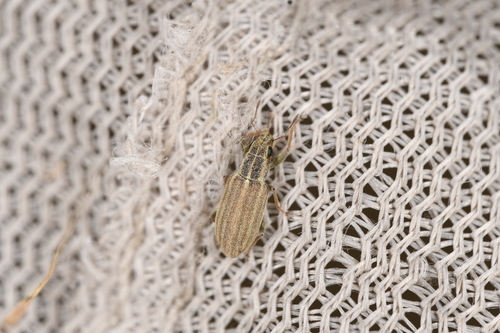
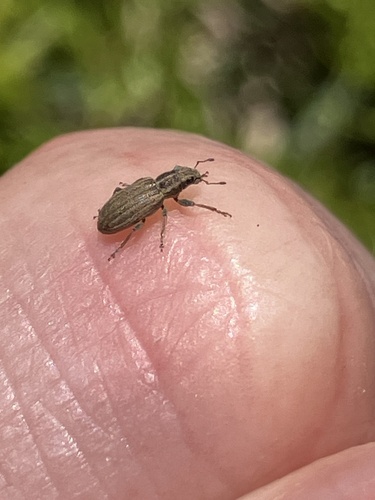
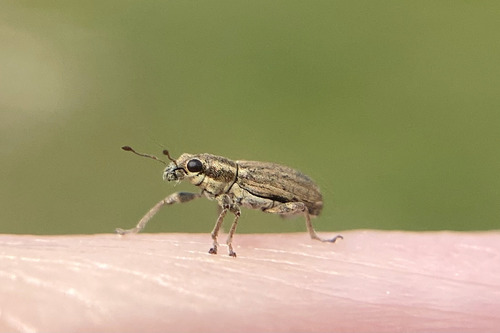
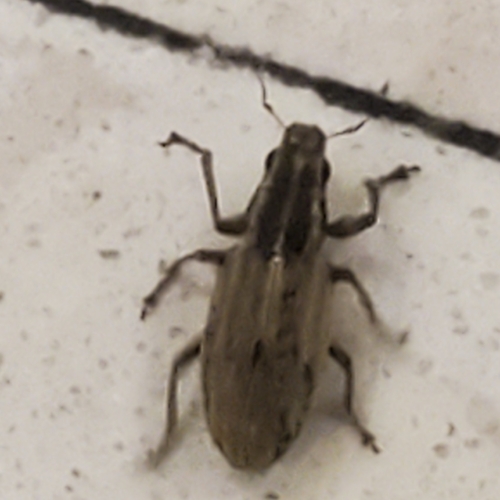
Adults are small, oblong-oval weevils with a short, broad snout. They are roughly 3.5-5.5 mm long, typically brown to grey-brown with a pair of paler longitudinal bands or stripes along the elytra (one stripe on each elytron). The legs and antennae are relatively short; the body is covered with fine scales or minute hairs that give a slightly mottled appearance. Larvae are white to creamy, legless grubs with a brown head, growing up to about 3.5-4.5 mm long. Pupae form in the soil.
- Small 3.5-5.5 mm brownish weevil with a distinct pale longitudinal stripe on each elytron.
- Adults create semi-circular notches along the edges of pea or clover leaflets — look for this feeding damage.
- Larvae are small white legless grubs found in soil near roots and root nodules of legume plants.
- Overwintering adults are often found in field margins, leaf litter, or hedgerows before spring migration into crops.
Lookalikes
Pea weevil Bruchus pisorum
Bruchus pisorum is a seed beetle that attacks pea seeds in pods and is larger with different body shape; it has a rounded, stubby body that leaves the tip of the abdomen exposed, lacks the pale elytral stripes of Sitona lineatus, and its damage is to seeds rather than leaf notching and root nodules.
Other Sitona species Sitona spp.
Several Sitona species feed on legumes; S. lineatus is distinguished by the paired pale longitudinal elytral stripes and the pattern of leaf margin notching. Other Sitona may be more uniformly colored or differ slightly in stripe pattern and host preference.
↻Life cycle
Egg
Eggs are laid in soil near host plants in spring after adults move into crops.
Larva (grub)
Soil-dwelling legless grubs feed on root nodules of legumes, reducing nitrogen fixation; larval development occurs in late spring to early summer.
Pupa
Pupation occurs in the soil; pupae are inactive and later transform into adults.
Adult (weevil)
Adults emerge and feed on foliage, creating notches along leaflet margins; they disperse, feed, lay eggs, and then overwinter as adults in sheltered sites.
🍃Diet and predators
Young eat
Root nodules of legumes (peas, faba bean, clover, vetch, and other legumes).
Adults eat
Leaves of legume plants; they chew semicircular notches from leaflet edges.
Predators of the young
Soil predators and parasites (generalist predatory beetles, ants, entomopathogenic nematodes and fungi) and parasitoids where present.
Predators of adults
Birds, predatory insects and spiders; adults are also susceptible to fungal pathogens and parasitoids.
🌱Effect on plants and gardens
Larvae feed on root nodules of legume species (peas, faba bean, clovers, vetch), reducing nitrogen fixation and sometimes yield; adults feed on leaf margins of the same plants causing characteristic notching.
How to get rid of pea leaf weevils
Use integrated pest management: monitor early-spring adult flights and leaf notching; delay sowing in some regions to avoid peak adult activity; crop rotation away from susceptible legumes; manage overwintering habitats at field edges to reduce local populations; use insecticidal seed treatments or foliar insecticides when economic thresholds are reached; encourage natural enemies and consider field sanitation. Follow local extension guidelines for approved treatments and thresholds.
📍Where and when to find it
Adults on the edges and upper surfaces of pea and other legume leaflets in spring; larvae in soil around roots and in root nodules of legume plants.
Best time
Spring and early summer (shortly after hosts emerge and leaf out); daytime when adults are active and feeding.
Observation tips
Look for semicircular notches along leaflet margins as an early sign; sweep netting of legume foliage in spring will capture adults; inspect soil around roots for small white legless larvae if plants look stunted.
✨Fun facts
- Pea leaf weevil adults are strong fliers and can colonize new legume fields from field margins and hedgerows.
- Larval feeding on root nodules indirectly harms plants by reducing nitrogen fixation, so damage is not just defoliation but also loss of soil nitrogen benefits.
- Since it was first found in North America in the 20th century, S. lineatus has spread to become a significant pest of peas and faba beans in the Pacific Northwest and the Canadian Prairies.
?Frequently asked questions
Are pea leaf weevils dangerous to people?
No. They are not venomous or harmful to people; the concern is crop damage only.
Do pea leaf weevils bite?
No. They do not bite people. They feed on plant tissue.
Why are pea leaf weevils in my field or garden?
Adults are attracted to legume crops in spring to feed and lay eggs; overwintering adults move from field margins into nearby legumes when temperatures rise.
How do I get rid of pea leaf weevils?
Use integrated management: monitor and scout for adults and leaf notching, rotate crops, manage overwintering refuges, consider delaying sowing, and apply seed treatments or targeted insecticides only when economic thresholds are exceeded. Follow local extension service recommendations.
What damage do pea leaf weevils cause?
Adults cause characteristic semi-circular notches on leaflet margins; larvae feed on root nodules, reducing nitrogen fixation and potentially lowering plant growth and yield.
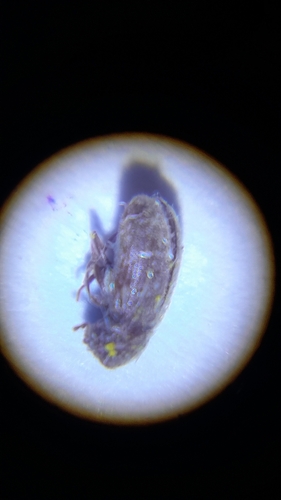
📷Photos of the pea leaf weevil
More beetles
This guide was written with AI assistance and fact-checked, last updated 2026-10-10. Identification from photos is never certain: don't handle insects you can't identify, and get medical advice for bites, stings or allergic reactions. More about the pea leaf weevil: iNaturalist, Wikipedia.