
Black blister beetle
Epicauta pensylvanica · Blister beetles
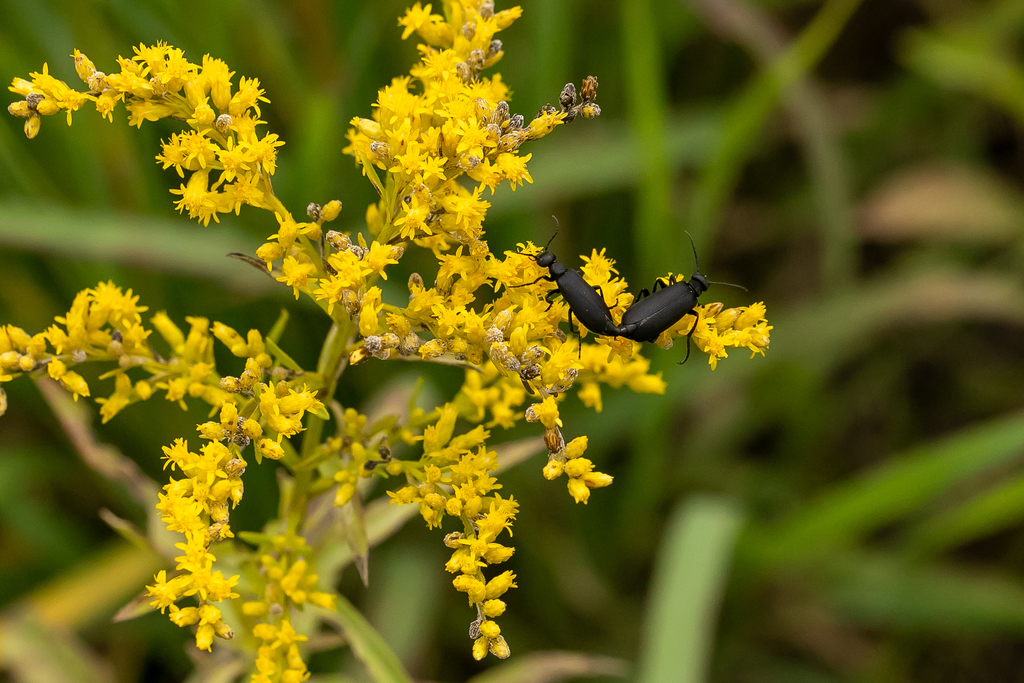
A slender black blister beetle that produces cantharidin (causes skin blisters) and commonly appears on flowers and crops in summer.
!Is the black blister beetle dangerous?
Yes, it can be. These beetles contain cantharidin, a vesicant that can cause painful blisters if the insect is crushed against the skin. Do not handle with bare hands; if contact occurs, wash the area with soap and water and avoid rubbing or touching your eyes; if it gets in the eyes, rinse them with plenty of water and seek medical care. Seek medical advice for large or worsening blisters. Never ingest.
Pets
Very dangerous to livestock, especially horses. Eating hay contaminated with crushed blister beetles can cause severe colic and death. Small pets (dogs, cats) could be irritated or harmed if they mouth or eat beetles; veterinary care is advised if ingestion or symptoms occur.
📖Overview
Epicauta pensylvanica is a species of blister beetle in the family Meloidae. Adults are often seen feeding on flowers and foliage in fields, meadows and gardens during warm months. They contain the defensive chemical cantharidin, which causes painful skin blisters if the insect is crushed against the skin and is highly toxic to livestock if eaten in contaminated hay. Larvae are predatory and typically feed on grasshopper egg pods in soil, helping regulate grasshopper populations.
This species occurs across much of eastern and central North America. Adults may form aggregations and can defoliate patches of plants when abundant, making them an occasional pest in alfalfa, vegetable gardens and other crops. Human contact is mainly a nuisance or a hazard because of skin blistering; livestock risk is a serious concern for hay producers and horse owners.
🔍How to identify a black blister beetle
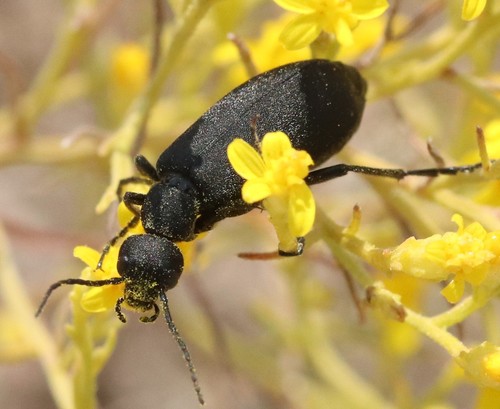
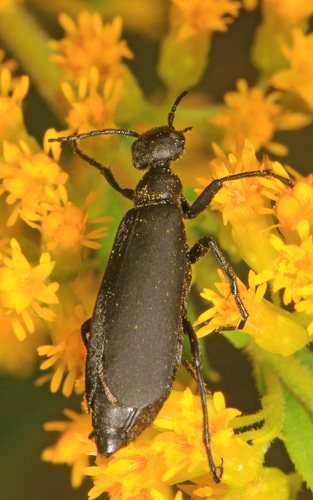
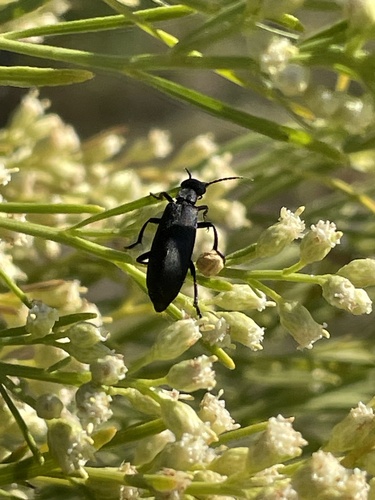
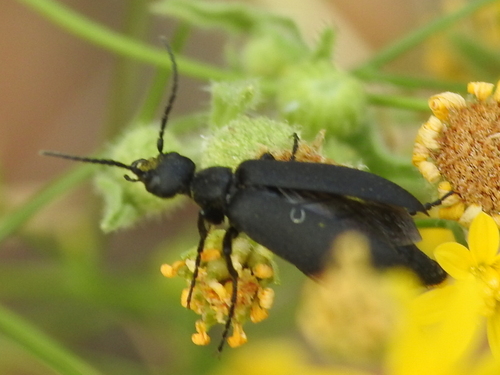
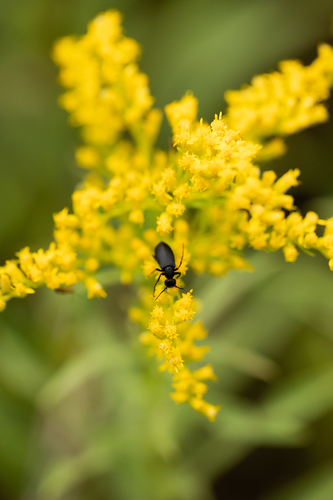
Adult black blister beetles are elongated, soft-bodied beetles with somewhat flexible wing covers (elytra) and a relatively narrow neck (pronotum). They are uniformly glossy to matte black, slender and typically cylindrical, with long legs and antennae. Body length commonly ranges from about 7 mm to 14 mm. The adults cannot be safely crushed on skin because they release cantharidin, a blistering agent.
- Uniform glossy to matte black elongated beetle, 7-14 mm long, with a narrow neck (pronotum) and soft elytra
- Slender, cylindrical body with relatively long legs and antennae compared with many other beetles
- When handling, do not crush against skin — cantharidin causes blistering (identification should rely on visual observation or gloved capture)
Lookalikes
Striped blister beetle Epicauta vittata
Has distinct yellow and black longitudinal stripes on the elytra, while Epicauta pensylvanica is uniformly black.
Oil beetles (other Meloidae) Various Meloidae
Some oil beetles (genus Meloe) are stouter and flightless with short elytra and swollen abdomens; Epicauta adults are more slender and able to fly.
↻Life cycle
Egg
Females deposit clusters of eggs in soil during summer; a single female can lay many eggs.
Larva (triungulin and later larval stages)
Larvae hatch as active, mobile triungulins that seek out grasshopper egg pods in soil (or in some species bee nests). They feed on egg pods and develop through several instars.
Pupa
After larval development in soil, they pupate underground and transform to adults.
Adult
Adults emerge above ground in late spring to summer, feed on flowers and foliage, mate and lay eggs to complete the yearly cycle.
🍃Diet and predators
Young eat
Predatory on grasshopper egg pods in soil
Adults eat
Feed on foliage and flowers of a wide range of herbaceous plants and crops
Predators of the young
Ground-dwelling predators (ants, predatory beetles) and parasitoids; many larvae are protected by being underground
Predators of adults
Birds, small mammals and predatory insects may eat them, but cantharidin makes many predators avoid them; some predators tolerate or remove toxins
🌱Effect on plants and gardens
Adults feed on foliage and flowers of many plants and can cause defoliation in alfalfa, beans, potatoes, tomatoes and ornamental flowers. Larvae feed on grasshopper egg pods, providing a mixed ecological role.
How to get rid of black blister beetles
Wear gloves and pick adults off plants into a container of soapy water; do not crush on skin. For larger infestations, use targeted insecticides approved for the crop and follow label instructions. Avoid harvesting or baling alfalfa when beetles are present; cut and condition to reduce beetle contamination and inspect hay. Consult local extension services for timing and control recommendations. Keep horses away from fields with heavy beetle presence and inspect hay prior to feeding.
📍Where and when to find it
Adults: on flowers, foliage and stems of herbaceous plants, alfalfa and garden crops. Larvae: in soil near grasshopper egg pods.
Best time
Late spring through summer on warm, sunny days; daytime is best for observation.
Observation tips
Photograph from a short distance; do not pick up with bare hands. If collecting for study, use forceps or a jar and avoid crushing the beetle.
✨Fun facts
- Blister beetles produce cantharidin, a chemical historically used (with danger) in medicine and as 'Spanish fly' preparations; it is potent and toxic.
- Although adults can damage crops, larvae help control grasshopper populations by eating their egg pods.
- They can appear in groups on flowering plants; large numbers in cut hay are the main livestock hazard.
?Frequently asked questions
Do black blister beetles bite or sting?
No — they do not bite or sting. The hazard comes from cantharidin in their bodies; crushing a beetle on skin releases the chemical and can cause blisters.
Are black blister beetles dangerous to humans?
They can cause painful skin blisters if crushed against skin. Avoid handling with bare hands and wash skin that contacts a beetle. Seek medical care for large or infected blisters.
Can black blister beetles kill horses?
Yes. Horses are highly susceptible to cantharidin poisoning if they eat hay contaminated with crushed blister beetles. Even small amounts can cause severe illness or death; contact a veterinarian immediately if exposure is suspected.
Why are these beetles in my garden?
Adults feed on flowers and foliage and are attracted to flowering plants, legumes (like alfalfa), and vegetables. They may also be present where grasshopper eggs are abundant because larvae develop on those eggs.
How do I get rid of them?
Remove small numbers by hand-picking while wearing gloves and drop them into soapy water; never crush them on your skin. For larger infestations use cultural controls (timing of harvest, inspecting hay) and consult local extension for approved insecticides and safe application methods. Prevent livestock access to suspect hay.
📷Photos of the black blister beetle
More beetles
This guide was written with AI assistance and fact-checked, last updated 2026-10-10. Identification from photos is never certain: don't handle insects you can't identify, and get medical advice for bites, stings or allergic reactions. More about the black blister beetle: iNaturalist, Wikipedia.