
Monarch butterfly
Danaus plexippus · Milkweed butterflies
Large, orange-and-black migratory butterfly whose caterpillars feed on milkweed and are chemically defended from predators.
!Is the monarch butterfly dangerous?
No. Monarchs are not dangerous to humans. They are chemically defended from predators because caterpillars sequester cardiac glycosides from milkweed; handling a butterfly briefly is safe but prolonged handling can damage wings. Milkweed sap can irritate skin and can seriously injure the eyes, so wash your hands after handling milkweed and avoid touching your eyes.
Pets
Monarch caterpillars feeding on milkweed contain toxic cardenolides; if pets (especially dogs) consume large numbers of caterpillars or milkweed plant material they can become ill. Keep pets from eating large quantities of milkweed or caterpillars; consult a veterinarian if ingestion occurs.
📖Overview
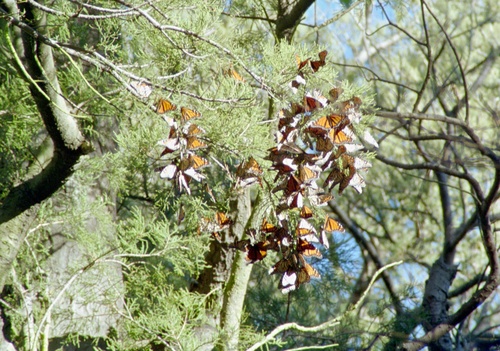
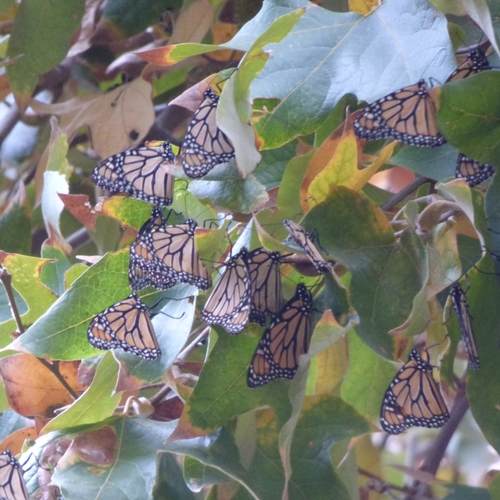
The monarch is one of the best-known butterflies worldwide because of its striking orange-and-black pattern and long-distance migrations in North America. Caterpillars feed almost exclusively on milkweed (Asclepias spp.), sequestering toxic cardenolides that make adults distasteful to many predators. In eastern North America, millions migrate up to 4,000 km to overwintering sites in central Mexico; western populations overwinter along the California coast. Monarchs have also established populations in other continents where milkweed occurs.
🔍How to identify a monarch butterfly
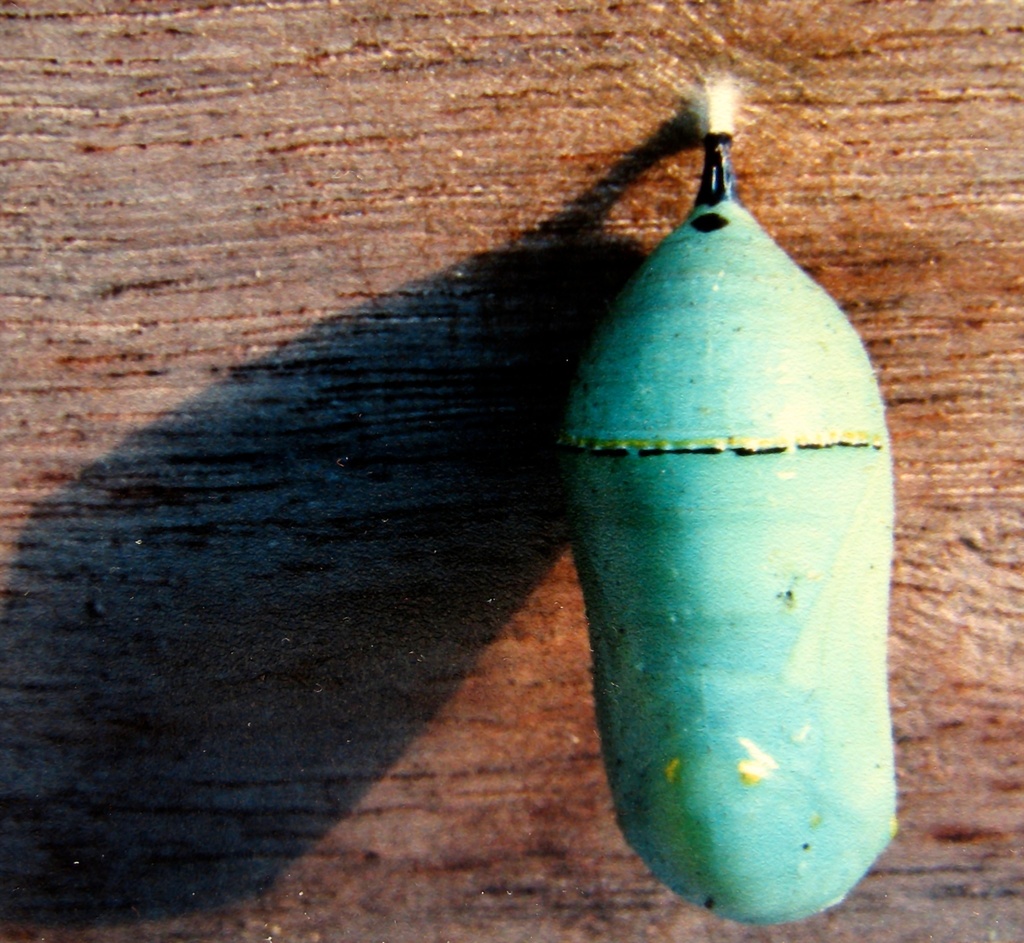
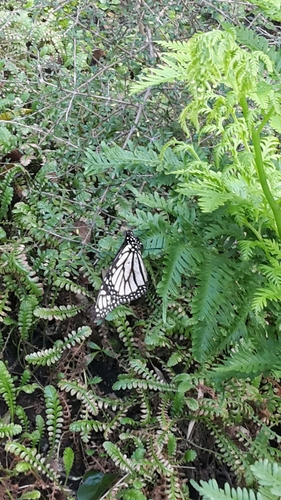
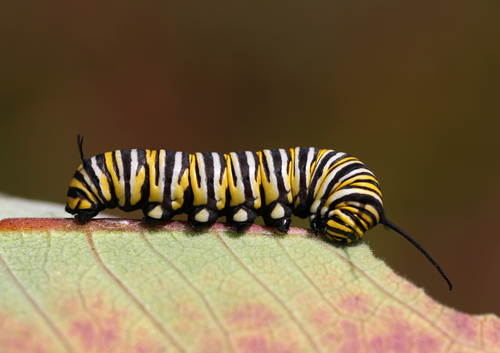
Adults have bright orange forewings and hindwings with bold black veins and a black border sprinkled with white spots. Males have a pair of small black scent patches (stigmata) on the hindwings; females have thicker black wing veins. Wingspan typically 8.5-10 cm. Caterpillars are banded in white, yellow and black stripes with three pairs of fleshy filaments. The chrysalis is jade-green with metallic gold spots.
- Large orange wings with thick black veins and a black border dotted with white spots.
- Males have a distinct pair of black scent patches on the hindwings; females lack these and have heavier black veining.
- Caterpillars with alternating bands of white, yellow and black and three pairs of fleshy filaments (two near the head, one near the rear).
Lookalikes
Viceroy Limenitis archippus
Viceroy is similar in color but has a distinct black line across the hindwing; often smaller and lacks monarch's scent patches.
Queen butterfly Danaus gilippus
Queen is darker, more reddish-brown and lacks the strong black vein pattern; ranges overlap in some areas.
↻Life cycle
Egg
Tiny, cream-colored, ribbed eggs are laid singly on the underside of milkweed leaves; they hatch in about 3-8 days depending on temperature.
Larva (caterpillar)
Striped black, white and yellow caterpillars go through 5 instars while feeding on milkweed for about 10-14 days (longer in cool conditions). They sequester milkweed toxins that provide chemical defense.
Pupa (chrysalis)
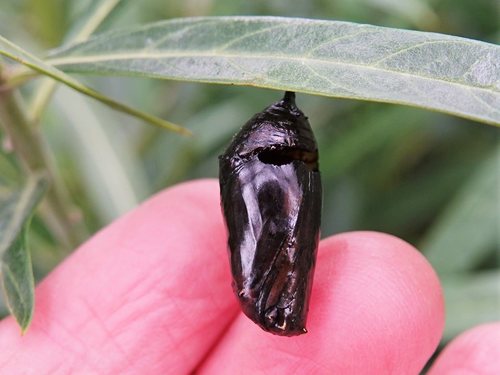
The caterpillar forms a jade-green chrysalis with gold spots and pupates for about 8-15 days before emerging as an adult.
Adult
Adults feed on nectar and reproduce; multiple breeding generations occur each year except for the single migratory generation that overwinters and delays reproduction.
🍃Diet and predators
Young eat
Exclusively milkweed leaves and related Apocynaceae species; they ingest cardenolide toxins.
Adults eat
Nectar from a wide variety of flowering plants (e.g., goldenrod, asters, milkweed flowers, thistles); also sip moisture and minerals from damp soil.
Predators of the young
Wasps, ants, spiders and some predatory insects; parasitic tachinid flies and parasitoid wasps also attack larvae.
Predators of adults
Birds, lizards and insects; chemical defenses make many predators avoid monarchs, though some species can tolerate or reject the toxins and some birds learn to eat them or target less toxic individuals.
🌱Effect on plants and gardens
Caterpillars feed almost exclusively on milkweed species (Asclepias and related genera). Adults visit a wide range of nectar-producing flowers and act as pollinators. Monarchs do not generally harm gardens, though heavy caterpillar feeding can defoliate small isolated milkweed plants temporarily.
📍Where and when to find it
Look for eggs and caterpillars on milkweed leaves; adults on nectar flowers, sunny roadsides, and field edges. Overwintering clusters occur in oyamel fir forests in central Mexico and in eucalyptus/monterey pine groves along the California coast.
Best time
In temperate North America: spring through fall for breeding generations; migratory peaks in spring and autumn. Daytime, especially sunny warm hours, is best for observing activity.
Observation tips
Walk slowly among milkweed patches to find eggs and caterpillars; use a long lens to photograph adults without handling them. If tagging or studying migratory monarchs, follow established scientific protocols.
✨Fun facts
- Monarchs are famous for their multi-generational annual migration in North America; no single butterfly makes the round trip.
- The chrysalis' metallic gold spots may help deter predators or play a role in development; their exact function is still studied.
- Monarch caterpillars store toxins from milkweed that make them unpalatable to many predators; their bright orange-and-black colors act as a warning signal.
?Frequently asked questions
Are monarch butterflies poisonous?
Monarchs are chemically defended: caterpillars sequester toxic cardenolides from milkweed, making them and many adults unpalatable to predators. They are not poisonous to touch.
Do monarch butterflies bite or sting?
No. Monarchs do not bite or sting people.
Why are monarchs in my garden?
If you have milkweed plants or nearby nectar flowers, monarchs will visit to lay eggs (on milkweed) or to feed on nectar.
How can I attract monarchs to my garden?
Plant native milkweed species for caterpillars and a variety of nectar plants (late-summer bloomers like goldenrod and asters) for adults; provide sunny spots and shelter from strong winds.
How can I help conserve monarchs?
Protect and plant native milkweeds and nectar sources, reduce pesticide use, and support or protect overwintering habitat. Habitat loss and pesticide exposure are major threats.
📷Photos of the monarch butterfly
More butterflies & moths
This guide was written with AI assistance and fact-checked, last updated 2026-10-09. Identification from photos is never certain: don't handle insects you can't identify, and get medical advice for bites, stings or allergic reactions.