
Painted lady
Vanessa cardui · Brush-footed butterflies
A widespread, migratory orange-and-black butterfly that feeds on many flowers as an adult and on thistles and related plants as a caterpillar.
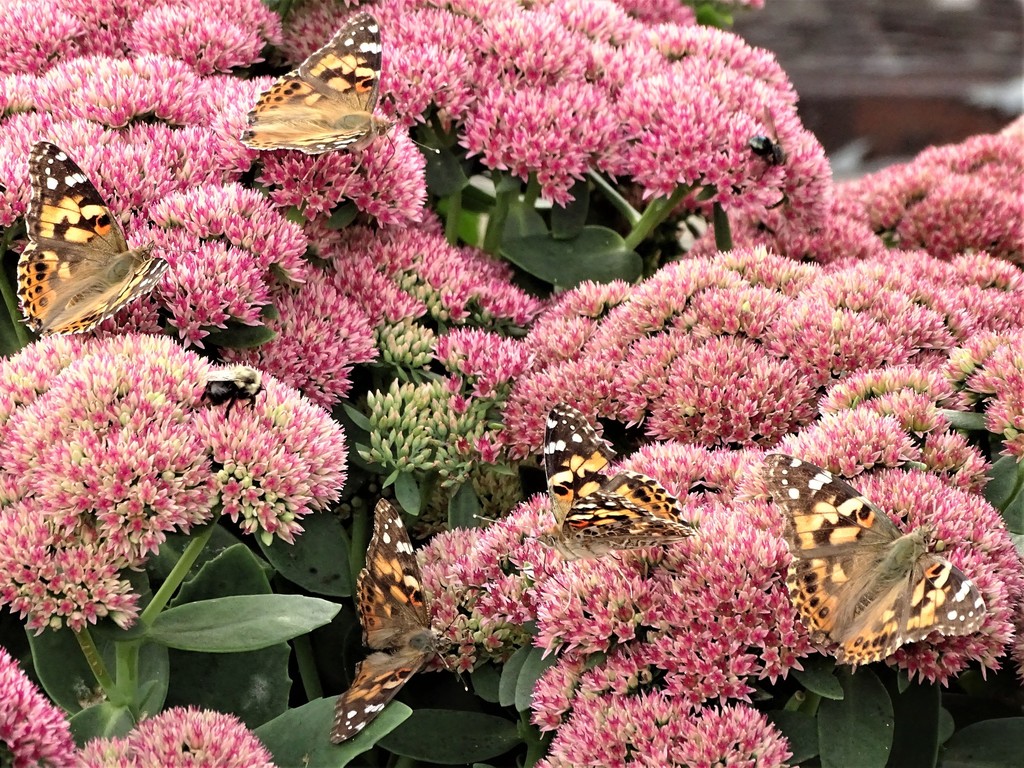
!Is the painted lady dangerous?
No. Painted ladies do not bite or sting and are not poisonous. Handling butterflies can damage their wings; if you must handle one, touch only the thorax gently. No medical treatment is needed after incidental contact.
Pets
Harmless to cats and dogs. Caterpillars have spines but do not carry dangerous venom; a pet that eats many caterpillars could have mild digestive upset.
📖Overview
Vanessa cardui, the painted lady, is one of the most widely distributed butterfly species in the world. Adults are strong fliers and undertake long-distance migrations in many regions. They are generalist feeders as adults, visiting a broad range of nectar plants, while the caterpillars use a variety of host plants (thistles, mallows, legumes and others). Populations fluctuate widely with climate and food availability but the species is common in many habitats including fields, gardens, roadsides and disturbed ground.
Painted ladies are harmless to people and pets. They are valued pollinators and are only rarely considered pests; caterpillar outbreaks can defoliate local patches of host plants but seldom cause lasting agricultural damage. Their life cycle includes egg, hairy caterpillar, chrysalis (pupa) and adult; many generations can occur each year in warm regions.
🔍How to identify a painted lady
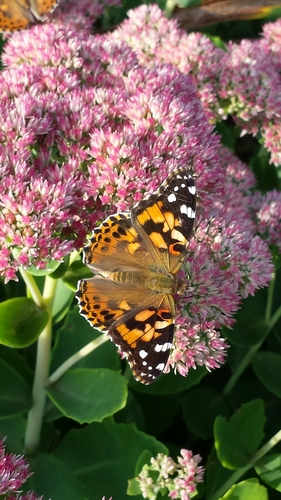
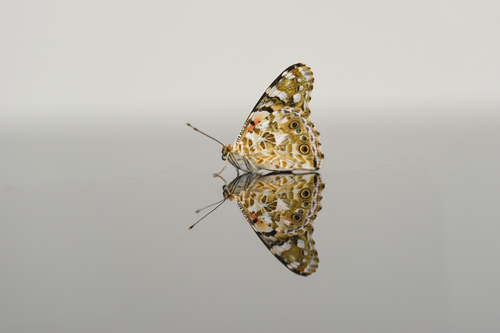
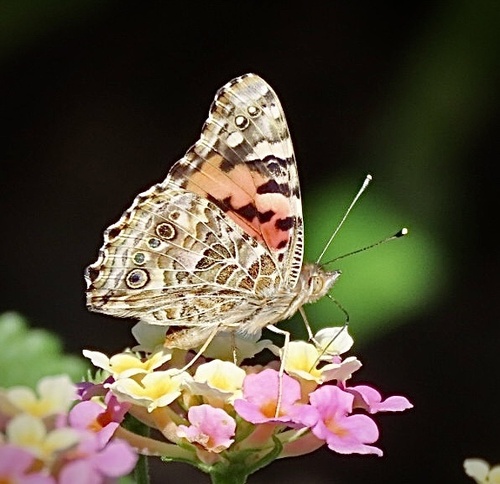
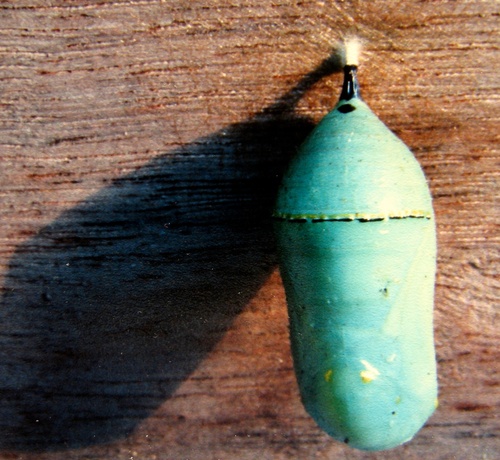
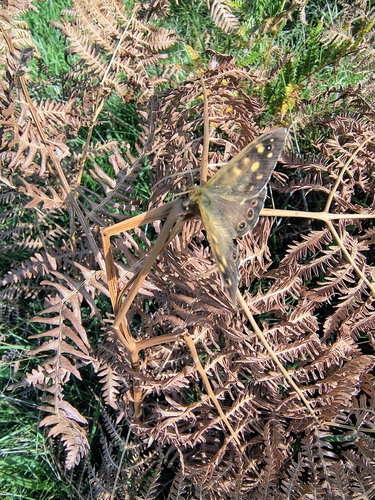
Adults have an orange-brown background with black markings and white spots on the black tips of the forewings. The hindwings show several small eyespots on the underside. Wingspan is moderate for a butterfly and the body is covered in short hairs. Caterpillars are dark with rows of spines (setae) and light striping; chrysalides are angular and often mottled brown or green, hanging head-down from a silk pad.
- Orange-brown wings with black markings and white spots on the black forewing tips.
- Underside of hindwing has several small eyespots (typically four) visible when wings are closed.
- Medium size with a wingspan about 45-65 mm and a robust, hairy body.
Lookalikes
American lady Vanessa virginiensis
American lady usually has two large eyespots on the underside of the hindwing and a small white spot within the orange area near the forewing tip; painted lady has four small underside eyespots.
Red admiral Vanessa atalanta
Red admiral has a bold red band across the forewing and fewer white spots on the black wing tips; painted lady lacks the red band.
↻Life cycle
Egg
Females lay single eggs or small groups on host plant leaves and stems; eggs hatch in about 3-7 days depending on temperature.
Larva (caterpillar)
Hairy, spiny caterpillars feed on the host plant and grow through several instars over 2-4 weeks in warm conditions.
Pupa (chrysalis)
The caterpillar pupates in a chrysalis that hangs head-down from a silk pad; pupation lasts about 7-15 days.
Adult (butterfly)
Adults feed on nectar, mate, and disperse; many generations per year are possible in suitable climates.
🍃Diet and predators
Young eat
Leaves of various host plants: thistles, mallows, plantains, legumes and others depending on local availability.
Adults eat
Nectar from a wide range of flowering plants; they are generalist pollinators.
Predators of the young
Birds, parasitic wasps and flies, predatory insects and spiders.
Predators of adults
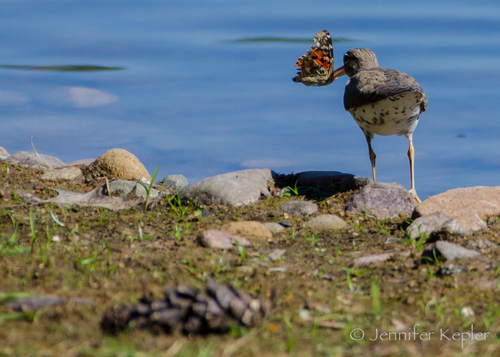
Birds, spiders, dragonflies and predatory wasps; adults avoid predation using erratic flight and wing patterning.
🌱Effect on plants and gardens
Adults visit many nectar-bearing flowers (thistles, asters, knapweeds, clovers, ivy and many garden flowers). Larvae feed on a wide range of host plants, commonly thistles (Cirsium, Carduus), mallows (Malva), plantains and legumes depending on region.
📍Where and when to find it
Adults on nectar flowers in sunny open habitats, gardens and roadsides; caterpillars on host plants such as thistles and mallows.
Best time
Warm months in temperate regions (spring to early autumn); midday when flowers are open and temperatures are higher.
Observation tips
Use a telephoto or long lens to photograph without disturbing; approach slowly and offer flat nectar-rich flowers to entice landing.
✨Fun facts
- Painted ladies are among the most widely distributed butterfly species on Earth, found on most continents.
- They are strong migrators: large spring migrations from North Africa to Europe and long-distance movements occur in other regions.
- Painted lady caterpillars are generalists and will eat many common weedy plants, which helps the species colonize disturbed habitats.
?Frequently asked questions
Do painted lady butterflies bite?
No. Adults do not bite or sting; they feed with a proboscis on nectar.
Are painted lady caterpillars harmful to garden plants?
They feed on host plants like thistles and mallows and can defoliate patches locally, but they are rarely a major agricultural pest.
Why are there so many painted ladies this year?
Population booms follow favorable weather and abundant host plants; painted ladies are migratory and can appear in large numbers when conditions along migration routes are good.
How can I attract painted ladies to my garden?
Plant a variety of nectar flowers (thistles, asters, knapweeds, clover, buddleia) and include larval host plants like mallows or plantain. Provide sunny, sheltered spots.
Can I handle a painted lady butterfly?
Handle only if necessary and very gently by supporting the body (thorax); touching wings can damage the tiny scales and reduce flight ability.
📷Photos of the painted lady
More butterflies & moths
This guide was written with AI assistance and fact-checked, last updated 2026-10-09. Identification from photos is never certain: don't handle insects you can't identify, and get medical advice for bites, stings or allergic reactions.