
Red admiral
Vanessa atalanta · Nymphalid butterflies
A striking black-and-red butterfly common in temperate regions, migratory and often seen feeding on flowers, sap and rotting fruit.

!Is the red admiral dangerous?
No. Red admirals do not bite or sting and are not poisonous. They may land on people to sip sweat or salt but pose no health risk. Handle gently if necessary; avoid crushing delicate wings.
Pets
Harmless to pets. Unlikely to be eaten by pets because of small size and quick flight; if a pet swallows one it is not toxic but could cause minor stomach upset.
📖Overview
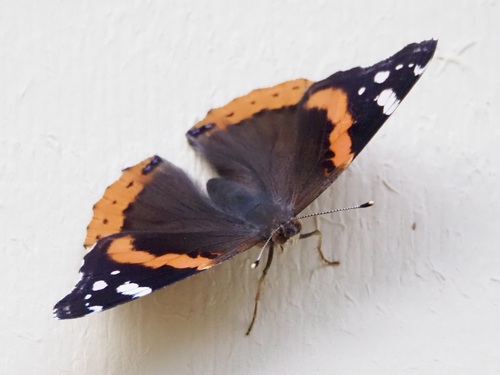
The red admiral is a medium-sized, highly visible butterfly known for its bold red bands and white spots on a dark background. It is widespread across temperate Europe, Asia and North America, with adults migrating seasonally in many parts of their range. Larvae feed on nettles and develop through typical butterfly stages (egg, caterpillar, chrysalis, adult). Adults are opportunistic feeders on nectar, tree sap, overripe fruit and flower nectar and are frequent garden visitors.
Red admirals are strong fliers that show territorial behaviour; males often defend perches. In colder regions they migrate south or appear again from new generations in spring. They are not dangerous to people and are regarded as beneficial pollinators and harmless garden visitors.
🔍How to identify a red admiral
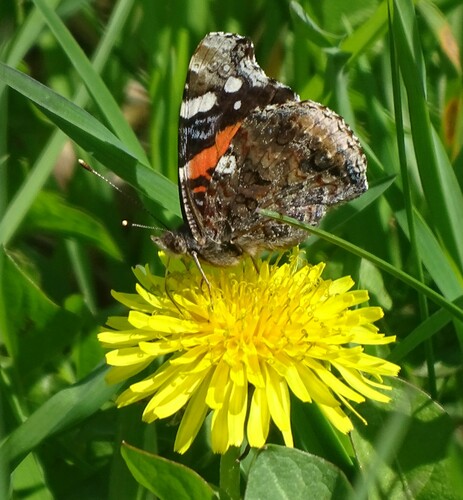
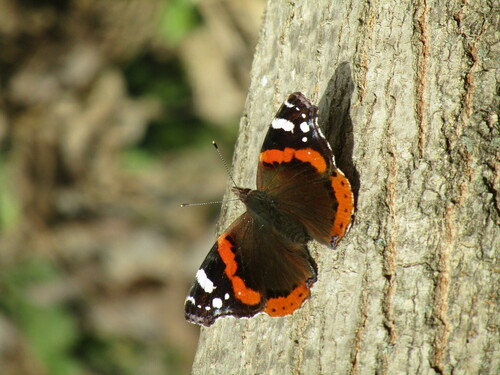
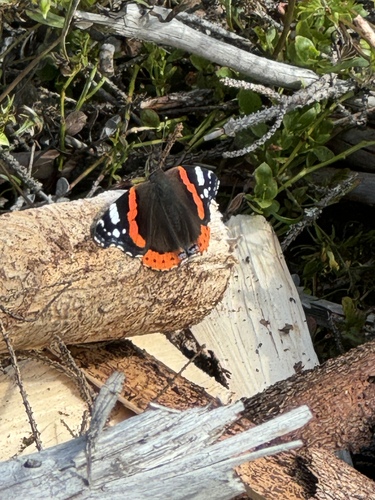
Wings are mainly black to very dark brown with a bright red-orange band across the forewings and hindwings. Forewing tips have conspicuous white spots on black. Underside of the hindwing is mottled brown and cryptic, helping resting adults remain camouflaged. Males and females are similar in appearance; sexes are best distinguished by behaviour (males are more territorial). Wingspan typically about 50-70 mm.
- Black wings with a bright red-orange transverse band across fore- and hindwings.
- White spots on the black forewing tips (apical area).
- Mottled brown underside of hindwing that looks cryptic when wings are closed.
- Wingspan about 50-70 mm; strong, fast flight and often seen sunning or defending perches.
Lookalikes
Painted lady Vanessa cardui
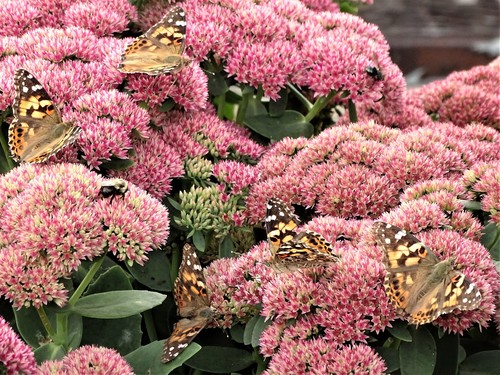
Painted lady lacks the broad red-orange forewing band and has a different pattern of pale spots and black eyespots on the hindwing; overall paler and more mottled.
American lady Vanessa virginiensis
American lady has two large eye spots on the underside of the hindwing and different white spot arrangement on the forewing tip; smaller and more orange-brown overall.
Comma Polygonia c-album
The comma has ragged, scalloped wing edges, orange upperwings without a red band, and a characteristic small white C-shaped mark on the underside, unlike the smoother-edged red admiral.
↻Life cycle
Egg
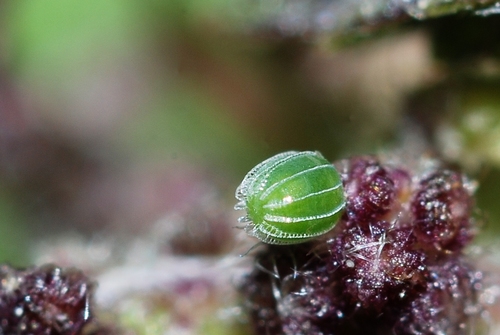
Females lay small green eggs singly on the upper surface of young leaves of the host plant, usually nettles.
Larva (caterpillar)
Spiny caterpillars, variable from black to greenish or yellowish, live alone inside tents made by folding a nettle leaf with silk and feed on the leaves, growing through several instars.
Pupa (chrysalis)
Pupation usually occurs inside a leaf tent on the host plant; the grey-brown chrysalis hangs head-down and is often marked with small golden spots.
Adult (butterfly)
Adults emerge with the characteristic black, red and white wing pattern, fly strongly, feed on nectar and fruit, and disperse or migrate.
🍃Diet and predators
Young eat
Leaves of nettles (Urtica species) and occasionally related plants.
Adults eat
Flower nectar, tree sap, overripe or rotting fruit, sap flows and occasionally animal droppings or moisture from damp ground.
Predators of the young
Birds, predatory insects, parasitic wasps and flies.
Predators of adults
Birds, spiders and insectivorous mammals; adults evade predators with quick flight and cryptic undersides when at rest.
🌱Effect on plants and gardens
Larvae feed primarily on nettles (Urtica species). Adults visit a wide range of nectar sources and also feed on tree sap and overripe or fermenting fruit, providing pollination services but not major crop damage.
📍Where and when to find it
Adults: sunny gardens, flower heads, hedgerows, parklands and tree sap runs. Eggs and larvae: underside of nettle leaves. Pupae: sheltered twigs, stems or man-made structures.
Best time
Best seen spring through autumn on warm, sunny days; peak activity midday to mid-afternoon. Migratory movements often occur in spring and autumn.
Observation tips
Approach slowly and photograph with wings closed and open for full identification. Offer ripe fruit or nectar plants to attract them for close observation.
✨Fun facts
- Red admirals are migratory in many regions and can travel long distances seasonally.
- They will often feed on overripe fruit and tree sap as well as flower nectar.
- Males commonly perch and defend territories, chasing other butterflies away.
?Frequently asked questions
Are red admirals dangerous?
No. They do not sting or bite and are harmless to people and pets.
Do red admiral caterpillars eat garden plants?
Caterpillars feed mainly on nettles, which are usually not wanted in ornamental gardens but they rarely damage crops.
Why is a red admiral in my house?
Adults may wander indoors while searching for food, shelter or during migration. They are attracted to light and ripe fruit; open windows and doors allow entry.
How can I attract red admirals to my garden?
Plant nectar-rich flowers (buddleia, thistles, asters), provide overripe fruit or a shallow sugar-water dish, and allow some nettles for caterpillars.
How do I get rid of red admirals in the house?
Gently herd them to an open window or door using a piece of paper or a container; never crush them. They will typically fly out when given a clear escape route.
Where do red admirals live in winter?
In mild areas some adults overwinter in shelters; in colder regions populations migrate to warmer areas or reappear from new generations in spring.
📷Photos of the red admiral
More butterflies & moths
This guide was written with AI assistance and fact-checked, last updated 2026-10-10. Identification from photos is never certain: don't handle insects you can't identify, and get medical advice for bites, stings or allergic reactions. More about the red admiral: iNaturalist, Wikipedia.