
Large yellow underwing
Noctua pronuba · Owlet moths
A common, widespread nocturnal moth with drab brown forewings and bright yellow-orange hindwings edged with a dark band.
!Is the large yellow underwing dangerous?
No. Harmless to people. Adults do not bite or sting. Larvae can chew plant material but do not harm humans. No venom or known toxic effects.
Pets
Not poisonous to pets. Larvae are not a normal pet food and could cause mild stomach upset if eaten in quantity, but no specific toxins are known.
📖Overview
Noctua pronuba is a very common noctuid moth native to Europe, North Africa and parts of Asia and introduced widely to North America. Adults fly at night and are strongly attracted to light. The species is adaptable and occupies many habitats from gardens and farmland to woodland edges. Larvae are generalist feeders known as cutworms and can damage grasses, vegetables and crop seedlings.
The species is easily noticed when disturbed because the resting forewings are cryptic brown but the hindwings flash bright yellow-orange in flight. It usually has a single generation per year in northern Europe, and it overwinters as a caterpillar that feeds on mild nights.
🔍How to identify a large yellow underwing
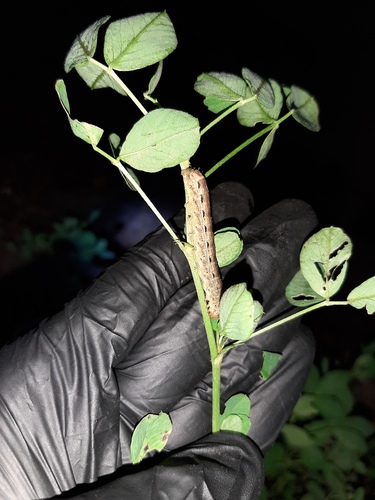
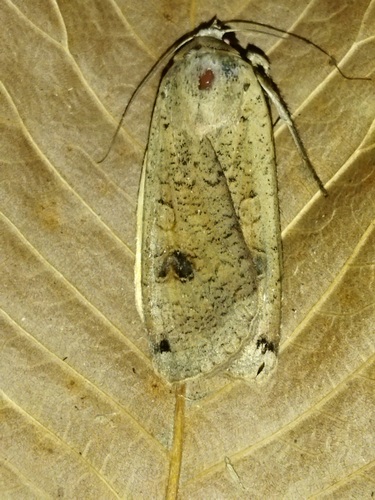
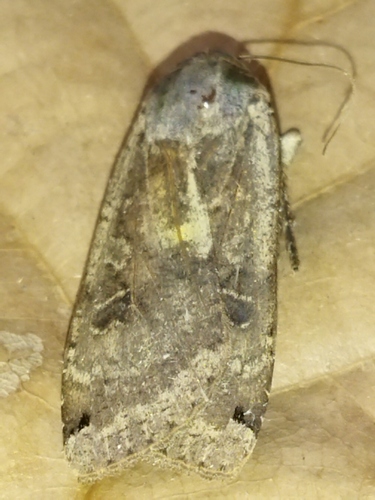
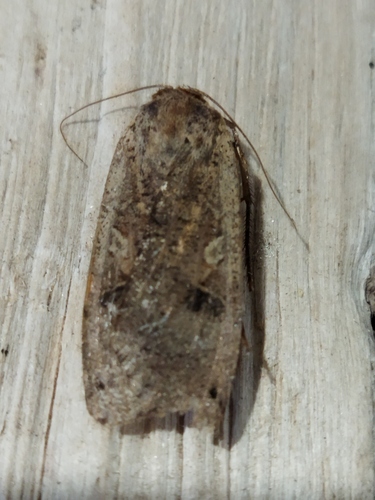
Adult wingspan about 40-60 mm. Forewings are variable shades of brown to reddish-brown with darker markings and sometimes a pale reniform (kidney-shaped) spot. Hindwings are bright yellow to orange with a broad blackish-brown terminal band; the contrast is a key field mark. The body is robust and hairy. Caterpillars are smooth or slightly hairy, grey to greenish or brown, with a pale dorsal line and dark head; they reach around 35-45 mm when fully grown.
- Look for bright yellow-orange hindwings with a narrow black band near the edge and no dark crescent mark in the center, visible in flight
- Forewings are variable brown or reddish-brown, usually with a small black mark near the wingtip on the leading edge
- Large size for a noctuid: wingspan about 40-60 mm and a robust body
Lookalikes
Lesser yellow underwing Noctua comes
Smaller, and its yellow hindwings have a dark crescent-shaped spot in the center as well as the dark border band; the large yellow underwing has no central mark.
Lesser broad-bordered yellow underwing Noctua janthe
Smaller, with a much broader dark band on the hindwings and forewings often tinged reddish or greenish.
↻Life cycle
Egg
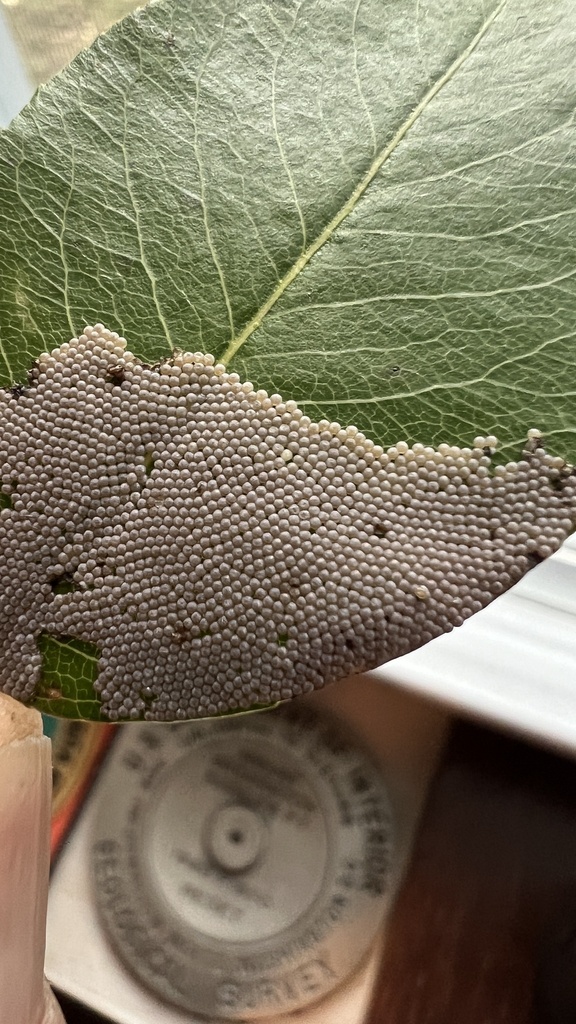
Females lay clusters or scattered eggs on grasses and low plants; eggs hatch in about 1-2 weeks depending on temperature.
Larva (cutworm)
The caterpillar stage is a ground-feeding generalist that chews leaves and can sever seedlings at soil level; it feeds slowly through autumn and winter on mild nights and completes growth in spring.
Pupa
Pupation occurs in a fragile cocoon in the soil in spring.
Adult (moth)
Nocturnal flyer that emerges from the pupa; adults mate and females lay eggs, producing one or more generations per year depending on climate.
🍃Diet and predators
Young eat
Generalist herbivore: grasses, broadleaf plants, vegetable seedlings, crop plants
Adults eat
Adults feed on nectar from flowers and may also visit fermenting fruit or tree sap; some do not feed heavily.
Predators of the young
Ground beetles, parasitic wasps and flies, birds
Predators of adults
Bats, night-flying birds, spiders and predatory insects
🌱Effect on plants and gardens
Larvae feed on a wide range of herbaceous plants, grasses, vegetable seedlings and young crop plants; in large numbers they can cause damage to lawns, vegetables and cereals.
How to get rid of large yellow underwings
Monitor gardens for young caterpillars and handpick at night or early morning. Use barriers or collars around vulnerable seedlings. Encourage natural enemies (birds, ground beetles, parasitic wasps). For heavy infestations, targeted biological insecticides containing Bacillus thuringiensis kurstaki (BTK) can be effective on young caterpillars; follow label instructions. Chemical insecticides are effective but use as a last resort and follow local regulations.
📍Where and when to find it
Adults at porch or street lights, near flowering plants or fermenting fruit at night. Larvae at ground level feeding on grasses and seedlings; look under debris, at base of plants or in soil.
Best time
Late spring through autumn (some regions year-round); best observed at night soon after dusk when adults fly.
Observation tips
Use a light trap or walk with a torch at night to observe adults. Photograph the hindwings in flight or when the moth is disturbed for easiest ID.
✨Fun facts
- First recorded in North America in Nova Scotia in 1979, it has since spread across much of the continent.
- The sudden flash of yellow-orange hindwings when it flies is a startle display to confuse predators.
- Caterpillars are often active at night and hide at the base of plants or in the soil during the day.
?Frequently asked questions
Do large yellow underwing moths bite?
No. Adults do not bite or sting. Caterpillars chew plant material but are not harmful to people.
Are they dangerous to humans or pets?
No venom or toxic effects are known. They are harmless to humans and pets.
Why is this moth in my house?
Adults are attracted to artificial lights at night and may enter houses through open doors or windows.
How do I get rid of large yellow underwing caterpillars in my garden?
Handpick caterpillars at night, use collars around seedlings, encourage predators, or apply BTK to small caterpillars. Use chemical insecticides only if necessary and follow label instructions.
Where does the large yellow underwing live?
It lives in a wide range of habitats including gardens, farmland, grasslands and woodland edges across Europe, North Africa, Asia and introduced regions such as North America.
📷Photos of the large yellow underwing
More butterflies & moths
This guide was written with AI assistance and fact-checked, last updated 2026-10-10. Identification from photos is never certain: don't handle insects you can't identify, and get medical advice for bites, stings or allergic reactions. More about the large yellow underwing: iNaturalist, Wikipedia.