
Silver-spotted skipper
Epargyreus clarus · Skipper butterflies
A common North American skipper butterfly with a distinctive large silver-white spot on the underside of the hindwing.
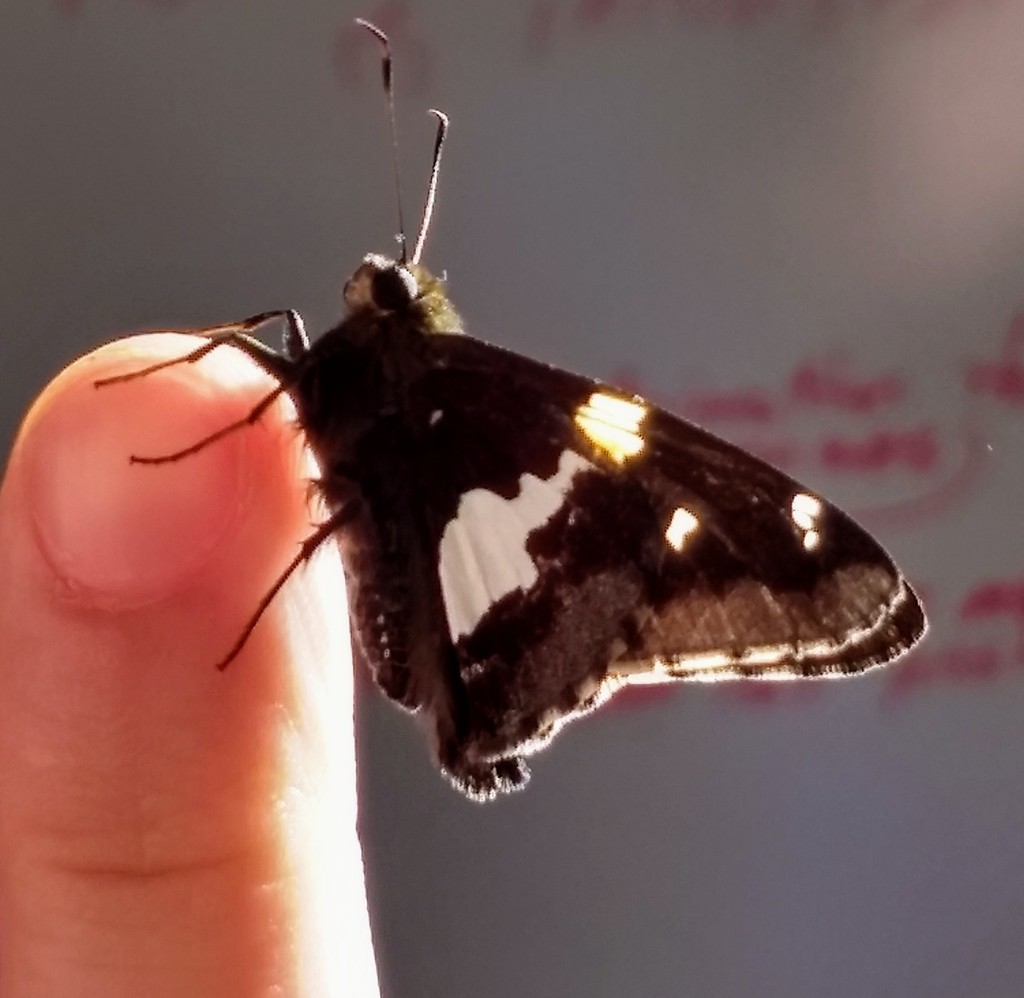
!Is the silver-spotted skipper dangerous?
No. Silver-spotted skippers do not sting or bite people. They pose no venom or disease risk. Handle gently if necessary; avoid crushing the wings.
Pets
Not toxic to pets. Small and harmless if a pet snatches one, though ingestion of any insect can in rare cases cause mild stomach upset.
📖Overview
The Silver-spotted skipper is a widespread, fast-flying butterfly found across much of North America. Adults are active in warm months and visit garden flowers for nectar. Females lay eggs on a variety of legume host plants; caterpillars make characteristic folded-leaf shelters. It is frequent in sunny edges, gardens, fields and disturbed areas and often tolerates suburban habitats.
This species is not dangerous to people or pets. It is valued as a pollinator and is not considered an agricultural pest. It can be found from southern Canada through much of the United States and into parts of Mexico, producing multiple broods where climate allows.
🔍How to identify a silver-spotted skipper
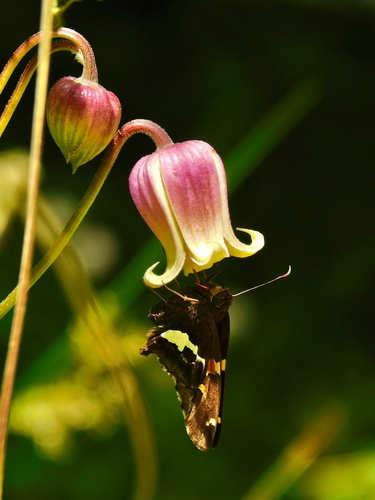
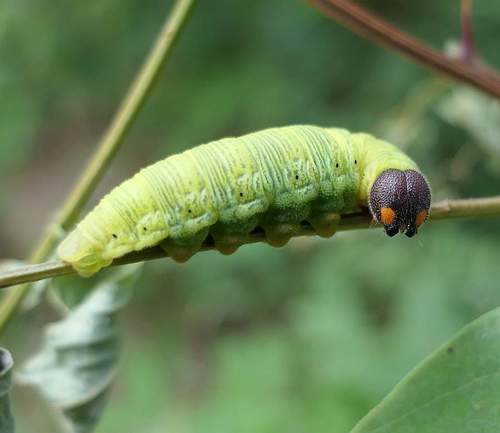
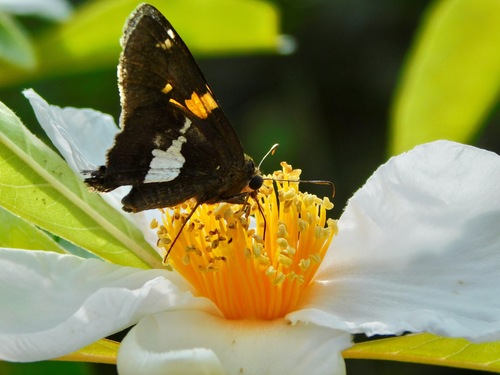
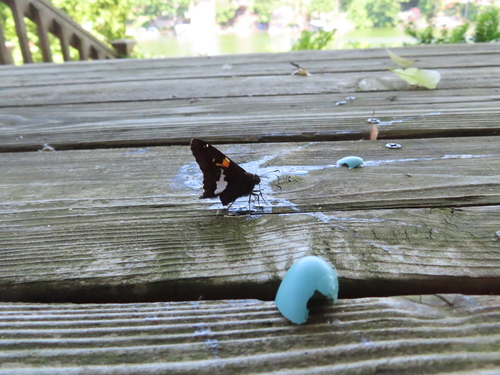
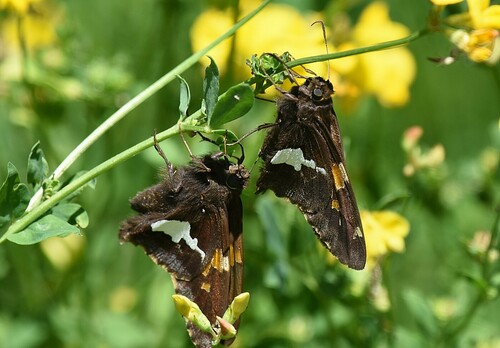
Adults have stout bodies and the wing shape typical of skippers. Upper wings are dark brown with a band of translucent gold-orange patches on the forewing. The most diagnostic feature is a large silvery-white or pale patch on the underside of the hindwing, visible when the wings are folded. The forewing often shows an orange band and small pale spots. Antennae are hooked at the tips (a skipper trait). Caterpillars are usually green with a brown head and live inside rolled or tied leaves; pupae are compact and attached inside the leaf shelter.
- Large silvery-white patch on the underside of the hindwing (the key field mark).
- Dark brown wings with orange patches on the forewing and pale spots near the margin.
- Stout skipper body and hooked antennae tips; wingspan about 4.5-6.5 cm.
- Caterpillars live in characteristic rolled or tied leaf shelters on legume host plants.
Lookalikes
Hoary edge Achalarus lyciades
Hoary edge is smaller, has a lighter frosted margin on the hindwing but lacks the large silver-white spot underside seen in the silver-spotted skipper.
Long-tailed skipper Urbanus proteus
Long-tailed skipper has narrow, iridescent blue-green wings and distinct long tails on the hindwings, unlike the silver-spotted skipper.
↻Life cycle
Egg
Single eggs are laid on leaves of host legumes. Eggs hatch in several days to a couple of weeks depending on temperature.
Larva (caterpillar)
Green caterpillars with a darker head that feed on host foliage and construct a rolled or tied-leaf shelter where they hide and pupate.
Pupa (chrysalis)
Chrysalis is formed inside the leaf shelter and lasts about 1-3 weeks for each brood; overwintering typically occurs as a pupa in colder regions.
Adult (butterfly)
Adults emerge, feed on nectar, mate and continue the cycle; there are multiple broods per year in warm areas.
🍃Diet and predators
Young eat
Leaves of legume host plants (Fabaceae) such as wisteria, Baptisia, Robinia and other peas and locusts.
Adults eat
Nectar from a wide range of flowering plants, preferring bright, nectar-rich flowers.
Predators of the young
Wasps, ants, spiders and predatory bugs that find the leaf shelters.
Predators of adults
Birds, dragonflies, spiders and other insectivores that catch flying butterflies.
🌱Effect on plants and gardens
Larvae feed mainly on legumes (Fabaceae). Known hosts include wisteria, false indigo (Baptisia), locusts and other pea-family plants. Adults nectar from many flowers such as thistles, milkweeds, blazing star, butterfly bush and other tubular or cluster flowers.
📍Where and when to find it
Look for adults on nectar flowers in sunny edges, gardens and meadows. Check legume leaves for folded-leaf shelters to find caterpillars or chrysalises.
Best time
Spring through early fall; observe on warm, sunny days from mid-morning to late afternoon.
Observation tips
Use a telephoto or macro lens for close shots since they fly fast. Scan the undersides of leaves on host plants for the silvery hindwing patch or for caterpillar shelters.
✨Fun facts
- The common name comes from the conspicuous silvery patch on the underside of the hindwing.
- Caterpillars fold or stitch leaves together to make a secure shelter where they rest and pupate.
- Adults can be territorial and often perch while monitoring for nectar sources or rivals.
?Frequently asked questions
Are silver-spotted skippers dangerous?
No. They do not sting or bite and are harmless to people and pets.
Do silver-spotted skippers bite?
No. They do not bite; adults feed with a proboscis on nectar and caterpillars eat plant leaves.
Why is a silver-spotted skipper in my garden?
They visit gardens for nectar and may lay eggs if you have legume host plants like wisteria, Baptisia or locusts nearby.
How can I get rid of silver-spotted skippers?
They are beneficial pollinators and usually do not require control. If you must reduce numbers, remove or relocate host plants or hand-remove caterpillar shelters; avoid broad insecticides which harm many beneficial insects.
Where do silver-spotted skippers live?
They live in sunny, open habitats with host legumes: field edges, gardens, roadsides and open woodlands across much of North America.
📷Photos of the silver-spotted skipper
More butterflies & moths
This guide was written with AI assistance and fact-checked, last updated 2026-10-10. Identification from photos is never certain: don't handle insects you can't identify, and get medical advice for bites, stings or allergic reactions. More about the silver-spotted skipper: iNaturalist, Wikipedia.