
Small tortoiseshell
Aglais urticae · Brush-footed butterflies
A common, brightly coloured European butterfly whose caterpillars feed mainly on stinging nettle and adults often overwinter in buildings or hollow trees.
!Is the small tortoiseshell dangerous?
No. Not dangerous. Adults do not bite or sting. Caterpillars feed on nettles but do not cause significant harm to people; avoid handling nettles without protection to prevent stings from the plant.
Pets
Harmless to pets. Not poisonous if eaten, although ingestion of large numbers of any insect could cause mild gastrointestinal upset.
📖Overview
Aglais urticae is a widespread temperate butterfly native to Europe and parts of temperate Asia. Adults are strong fliers, frequent gardens and meadows, and are an important early- and mid-season nectar feeder. The species is univoltine to multivoltine depending on latitude (one to several broods per year) and is notable for overwintering as an adult, often in sheltered places.
Larvae feed primarily on stinging nettle (Urtica species) and form communal groups when young. Pupation occurs on nearby vegetation. Populations can fluctuate year-to-year but the species remains common across much of its range and adapts well to gardens, parks and disturbed habitats.
🔍How to identify a small tortoiseshell
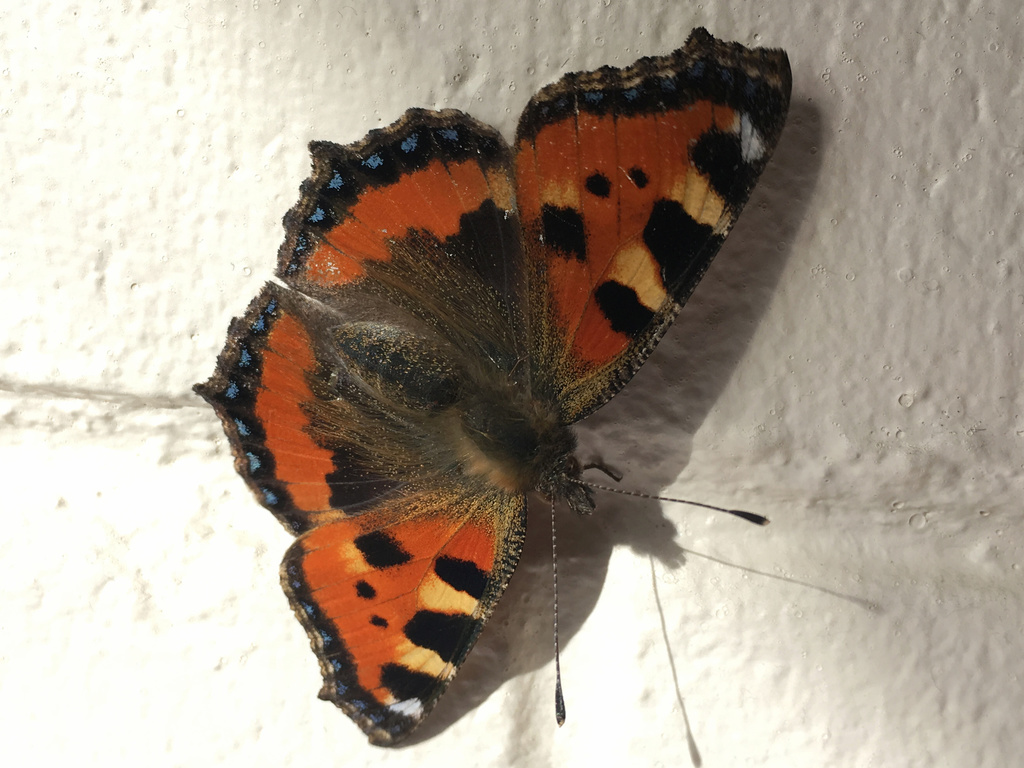
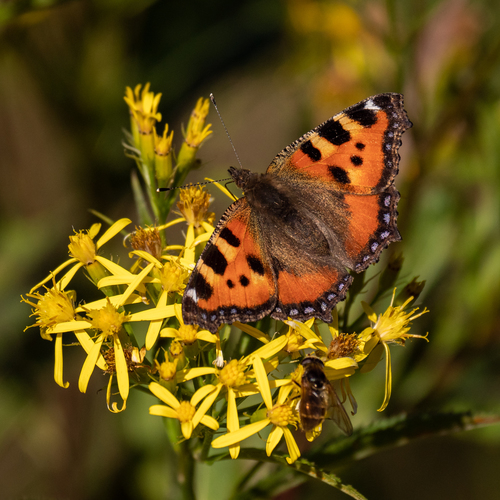
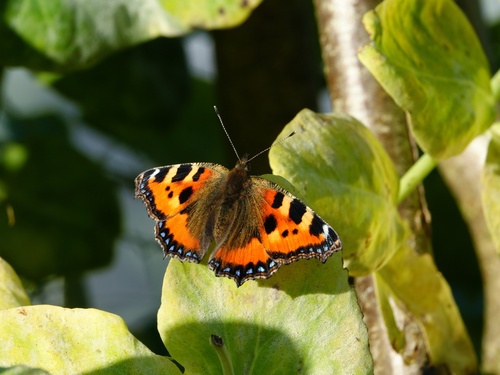
Wings are bright orange with black patches and a scalloped fringe. Forewings have large black blotches and several lighter yellow-orange areas; the margins are bordered with a dark band containing a row of blue lunules (small crescent spots). Underside of the wings is darker and cryptic, especially when closed — useful for camouflage while resting. Antennae are clubbed (typical of butterflies) and forelegs are reduced (brush-footed).
- Bright orange wings with large black patches on the forewings and a dark marginal band containing blue lunules.
- Scalloped wing margins and a wingspan of about 45-62 mm.
- Underside of wings duller and cryptic—closed wings show a mottled brown pattern for camouflage.
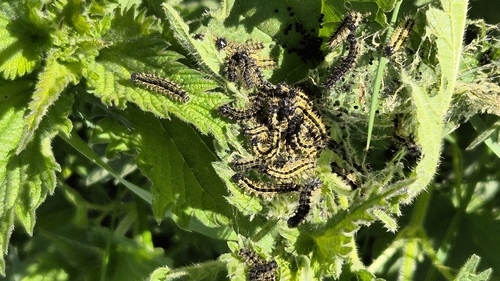
- If seen on nettles, look for clustered black spiny caterpillars on the undersides of leaves.
Lookalikes
Peacock Aglais io
Has large distinctive eye-spots on the upper wings; Small tortoiseshell lacks these eye-spots and has a more evenly patterned orange and black upper surface.
Painted lady Vanessa cardui
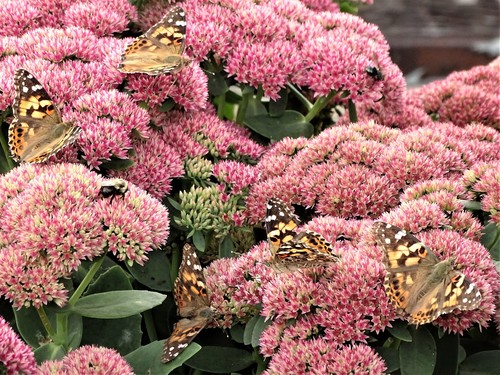
Painted lady has a more mottled orange and brown pattern with smaller black patches and different arrangement of white spots on the forewing tips.
Comma Polygonia c-album
Comma has angular, more triangular wings with a small white 'comma' mark on the underside; small tortoiseshell has rounder scalloped margins and blue lunules on the margin.
↻Life cycle
Egg
Females lay eggs in clusters on the underside of nettle leaves; eggs hatch in about 1-2 weeks depending on temperature.
Larva (caterpillar)
Blackish, spiny caterpillars that feed gregariously on nettle leaves; they grow through several instars over 2-6 weeks.
Pupa (chrysalis)
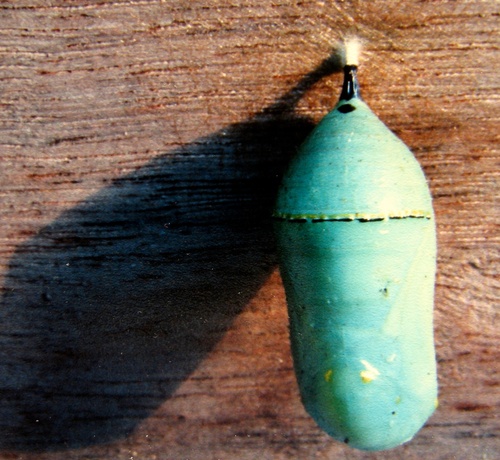
Pupae are suspended from vegetation and are well camouflaged; pupation lasts about 10-20 days depending on weather and season.
Adult (butterfly)
Winged adults emerge and feed on nectar; adults may mate and produce further broods or, in autumn, enter overwintering shelter as adults.
🍃Diet and predators
Young eat
Leaves of stinging nettles (Urtica species), occasionally other Urticaceae.
Adults eat
Nectar from a wide variety of flowering plants; also feed on honeydew and occasionally tree sap.
Predators of the young
Wasps, predatory bugs, spiders and parasitic wasps and flies.
Predators of adults
Insectivorous birds, spiders, mantids and some small mammals; adults can evade predators by rapid flight and warning coloration.
🌱Effect on plants and gardens
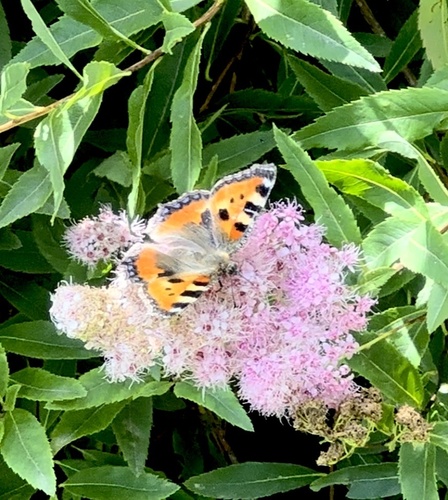
Larvae feed mainly on stinging nettle (Urtica dioica and related species). Adults visit a wide range of nectar sources including thistles, knapweeds, buddleia, and ivy.
📍Where and when to find it
Adults on nectar flowers in gardens, meadows, hedgerows and parkland; eggs and larvae on the undersides of stinging nettle leaves; pupae on nearby vegetation.
Best time
Best observed spring to autumn on warm, sunny days; overwintered adults may appear on sunny winter days in milder areas.
Observation tips
Look for clusters of black caterpillars on nettle patches. For photos, approach slowly and photograph from a low angle when the butterfly is sunning with wings open.
✨Fun facts
- Small tortoiseshell adults commonly overwinter and can be among the first butterflies seen on warm winter days.
- Young caterpillars are gregarious and feed together in dense groups on nettle patches.
- The species has benefited from garden planting of nectar sources such as buddleia and ivy.
?Frequently asked questions
Are small tortoiseshell butterflies poisonous?
No. They are not poisonous or dangerous to people or pets.
Do small tortoiseshell caterpillars eat garden plants?
They feed mainly on stinging nettles and are not usually a problem for garden plants; encouraging nettle patches supports the species.
Why is a small tortoiseshell in my house?
Adults sometimes enter buildings to find warm, sheltered places to roost or overwinter, especially in autumn or during warm winter spells.
How can I attract small tortoiseshells to my garden?
Grow nectar plants such as buddleia, thistles, and ivy, and leave some nettles for caterpillars to feed on.
How do I get rid of small tortoiseshell caterpillars?
They are not harmful and control is usually unnecessary. If needed, relocate nettle patches away from areas you wish to keep clear or hand-remove caterpillars into a bucket rather than using pesticides.
When can I see small tortoiseshell butterflies?
They are most commonly seen from early spring (after overwintering) through late summer and autumn; exact timing depends on local climate.
📷Photos of the small tortoiseshell
More butterflies & moths
This guide was written with AI assistance and fact-checked, last updated 2026-10-10. Identification from photos is never certain: don't handle insects you can't identify, and get medical advice for bites, stings or allergic reactions. More about the small tortoiseshell: iNaturalist, Wikipedia.