
Comma butterfly
Polygonia c-album · Anglewing butterflies
A ragged-edged orange-brown butterfly with a distinctive white C-shaped mark on the underside; common in woodland edges and gardens across much of Europe and temperate Asia.
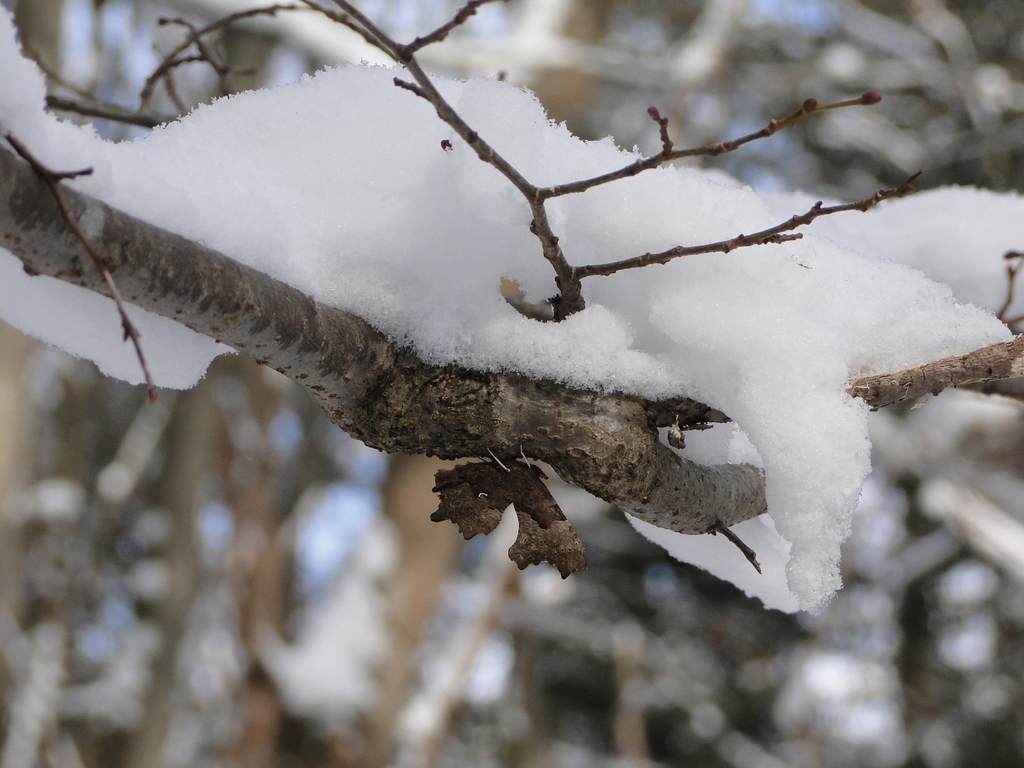
!Is the comma butterfly dangerous?
No. Harmless to people. Adults do not bite or sting. Handle gently if necessary; wash hands after handling caterpillars only as a general hygiene measure.
Pets
Harmless to pets. Caterpillars may be unpalatable and pets rarely eat them; not known to be toxic to cats or dogs.
📖Overview
Polygonia c-album (the Comma) is a medium-sized anglewing butterfly known for its deeply scalloped wing margins and cryptic underside that resembles a dead leaf. Adults are often seen sunning on warm days at woodland edges, hedgerows and gardens. The species typically has two or more broods per year in temperate regions and overwinters as an adult, sheltered in leaf litter, bark crevices or buildings.
Females lay eggs singly on the leaves of several common host plants. Caterpillars feed on the undersides of leaves until pupating; older caterpillars have a white patch on the back that makes them look like a bird dropping; adults feed on nectar, sap runs and overripe fruit. The Comma is not dangerous to people and is valued by gardeners as a pollinator and as part of local biodiversity.
🔍How to identify a comma butterfly
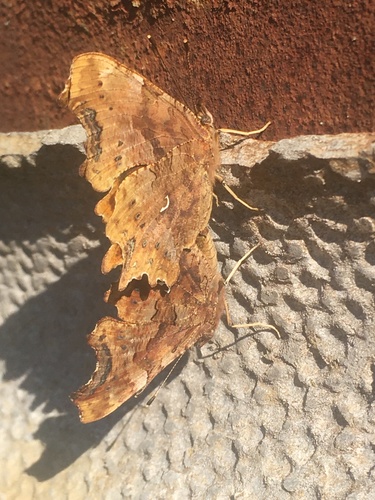
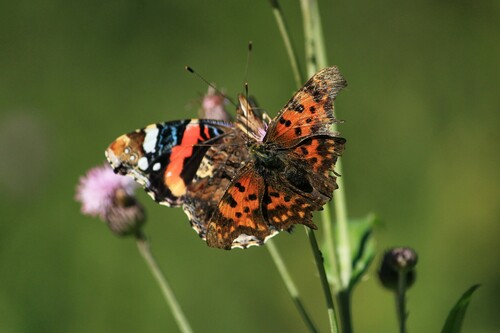
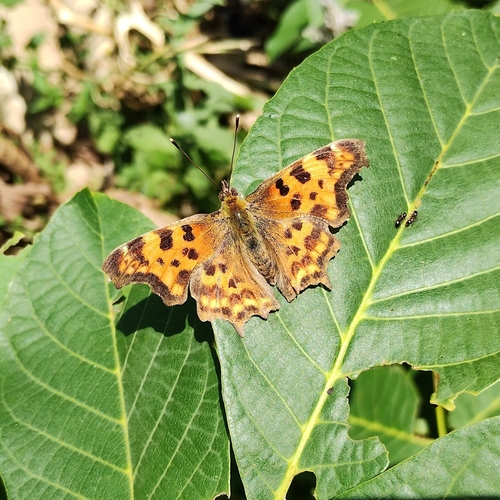
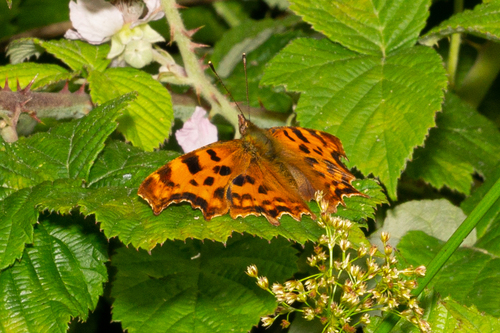
Wings are irregularly scalloped with a 'torn' outline. Upperwings are orange-brown with darker mottling and small dark spots; forewing and hindwing margins often have dark borders. The underside is mottled brown to dark brown and highly cryptic, closely resembling a dead leaf; the hindwing underside bears a small, distinct white mark shaped like a 'C' or a short curved line, which gives the species its common name. Size and contrast of markings vary regionally and between seasonal forms (a paler, brighter early-summer form called hutchinsoni develops quickly and breeds the same year, while the darker form overwinters).
- Look for the small white C-shaped mark on the underside of the hindwing - the key field mark.
- Deeply scalloped, ragged wing margins giving an 'anglewing' outline.
- Upperwings orange-brown with darker mottling; underside cryptic brown resembling a dead leaf.
- When at rest with wings closed, silhouette and leaf-like underside help separate it from more rounded butterflies.
Lookalikes
Question mark Polygonia interrogationis
Very similar in shape and habits but the underside mark is shaped like a question mark rather than a simple 'C'; ranges differ (Question mark is native to North America).
Eastern comma Polygonia comma
Also similar; differences are subtle and usually separated by geography (Eastern comma is mainly North American) and specific shape of the white mark and wing pattern.
Small tortoiseshell Aglais urticae
Upperwing color is more vividly patterned with black and blue spots; wing margins are less deeply scalloped and underside is less leaf-like.
↻Life cycle
Egg
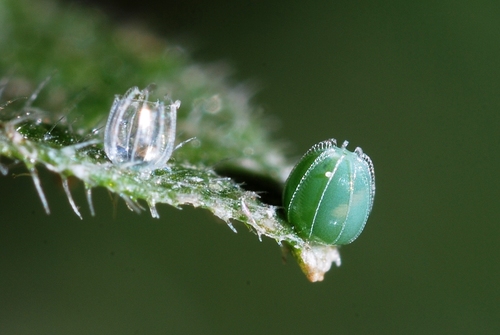
Females lay eggs singly on the upper surface or edges of host plant leaves. Eggs hatch in about 1-2 weeks depending on temperature.
Larva (caterpillar)
Spiny caterpillars, orange-brown to black with a large white patch on the rear half that makes them resemble a bird dropping, feed on the undersides of host leaves; they go through several instars over 2-6 weeks.
Pupa (chrysalis)
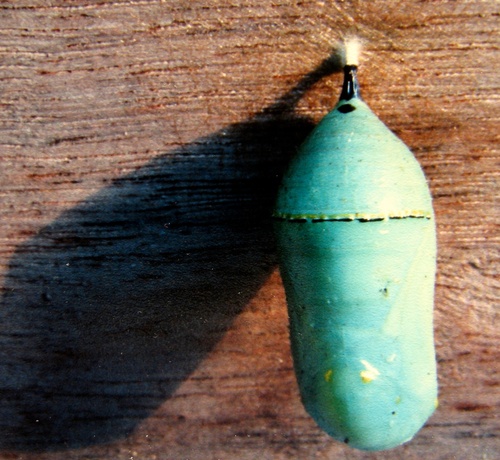
Pupation usually occurs attached to stems or leaves; the chrysalis stage lasts about 1-3 weeks before the adult emerges.
Adult
Winged adults feed on nectar, tree sap, dung and overripe fruit; they may produce two or more broods per year and adults of the final brood enter hibernation.
🍃Diet and predators
Young eat
Leaves of host plants such as stinging nettle (Urtica), Ribes (currants/gooseberries), hops (Humulus), elm and related shrubs.
Adults eat
Nectar from flowers, tree sap, aphid honeydew, decaying fruit and occasionally dung or carrion juices for minerals.
Predators of the young
Parasitoid wasps, birds, predatory bugs and spiders.
Predators of adults
Birds, bats and insectivorous mammals; adults escape predators using camouflage and rapid flight.
🌱Effect on plants and gardens
Caterpillars feed on a range of host plants including stinging nettle (Urtica dioica), currants and gooseberries (Ribes species), hops (Humulus lupulus), elm (Ulmus) and other local shrubs; feeding is usually localised and rarely causes serious damage.
📍Where and when to find it
Adults: sunny perches, woodland rides, hedgerows, garden fences and tree trunks. Eggs and larvae: undersides of host plant leaves (nettles, Ribes, hops). Pupae: attached to stems or leaf underside.
Best time
Best observed from spring through autumn on warm, sunny days; overwintering adults may be visible on mild winter days. Peak activity in late spring and summer.
Observation tips
Look for them basking with wings open on sunny days or feeding on overripe fruit and sap runs. Photograph closed-wing views to show the underside 'C' mark for reliable ID.
✨Fun facts
- The Comma's cryptic underside makes it one of the best-camouflaged butterflies; it often looks exactly like a curled dead leaf.
- Adults hibernate over winter and can be among the first butterflies seen on warm days in late winter or early spring.
- The species has two forms: a paler early-summer form (hutchinsoni) that breeds the same year, and a darker form that hibernates through winter.
?Frequently asked questions
Do Comma butterflies bite?
No. Adults do not bite or sting and are harmless to people.
Why is a Comma butterfly in my house?
Overwintering adults sometimes enter houses, sheds or garages in autumn seeking sheltered sites; they may become active on warm winter days.
How do I get rid of a Comma in my house?
Gently capture it in a jar or on a cup and release outside on a sunny day. Avoid killing overwintering adults; they are harmless and valuable pollinators.
Where does the Comma live?
In temperate woodlands, hedgerows, gardens and parks across much of Europe and parts of temperate Asia; it prefers areas with host plants and sunny perches.
Are Comma caterpillars harmful to garden plants?
They feed on leaves of nettles, currants, hops and similar plants but rarely cause serious damage; they are not considered major garden pests.
📷Photos of the comma butterfly
More butterflies & moths
This guide was written with AI assistance and fact-checked, last updated 2026-10-10. Identification from photos is never certain: don't handle insects you can't identify, and get medical advice for bites, stings or allergic reactions. More about the comma butterfly: iNaturalist, Wikipedia.