
American lady
Vanessa virginiensis · Brush-footed butterflies
A medium-sized North American butterfly with orange-and-black wings and two distinctive eyespots on the hindwing; larvae feed on plants in the aster family.
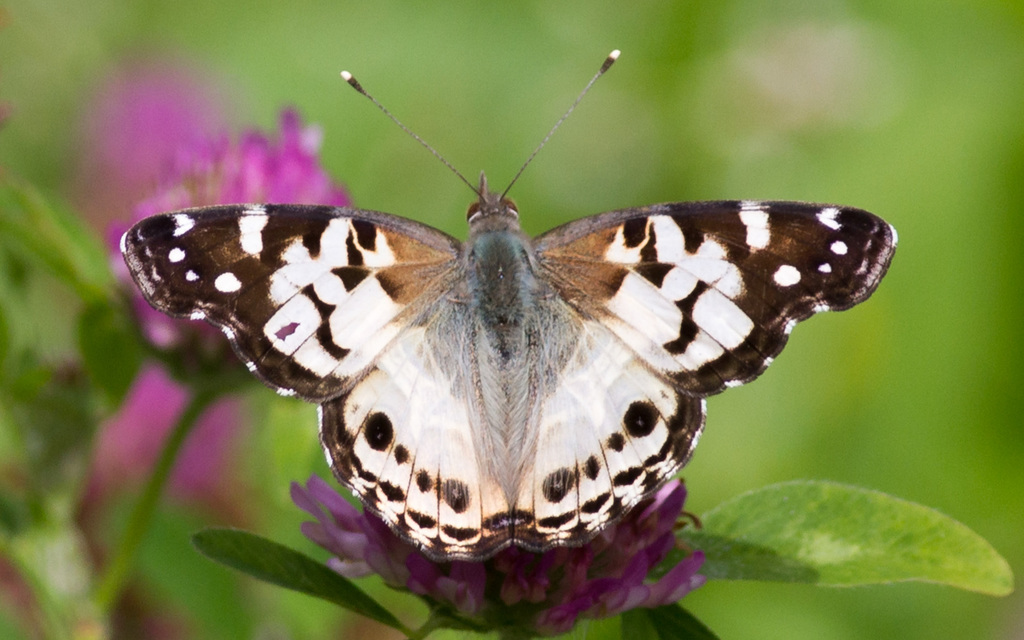
!Is the American lady dangerous?
No. Harmless. Adults do not bite or sting. Handle butterflies gently if needed; avoid touching wings because scales rub off easily.
Pets
Harmless. Not poisonous to pets. Small chance a curious pet could catch and damage a butterfly but there is no toxic threat.
📖Overview
The American lady is a widespread, familiar butterfly across much of North America. Adults are strong fliers that visit flowers for nectar and are frequently seen in gardens, meadows and roadsides. Females lay eggs on host plants in the aster family; the caterpillars feed on leaves and pupate in a chrysalis attached to vegetation or other structures. The species is not rare and is not considered threatened.
🔍How to identify an American lady
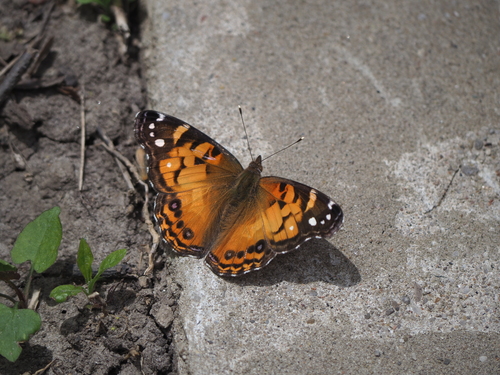
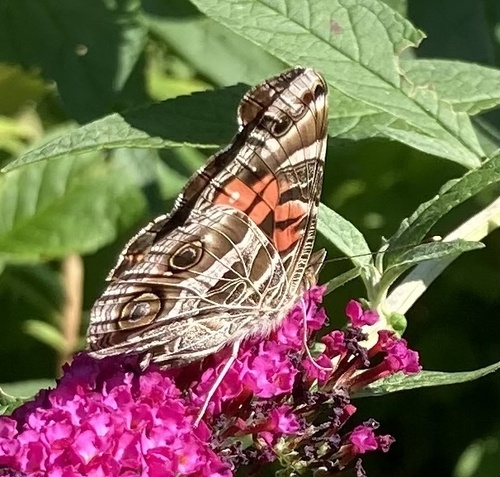
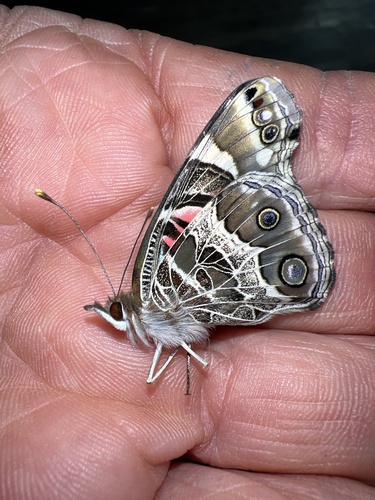
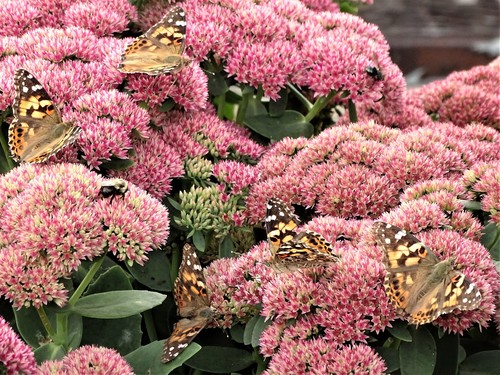
Wings are orange-brown with bold black markings and a black forewing tip with pale spots. A key field mark is the underside of the hindwing, which bears two prominent rounded eyespots (one typically larger than the other). The wing margins are scalloped and the underside of the wings shows mottled browns and grays that provide good camouflage when the butterfly rests with wings closed.
- Look for two prominent rounded eyespots on the underside of the hindwing (one usually larger).
- Orange-brown upperwings with a black forewing tip that bears pale spots.
- Wingspan about 45-60 mm; underside mottled browns and grays when wings are closed for camouflage.
- Compare with painted lady: American lady usually has two prominent hindwing eyespots while painted lady (Vanessa cardui) has smaller and more numerous spots on the underside.
Lookalikes
Painted lady Vanessa cardui
Painted lady has four or five small eyespots on the hindwing underside instead of two large ones, and usually lacks the small white spot in the orange area of the upper forewing that American lady shows.
Red admiral Vanessa atalanta
Red admiral has bold black wings with red bands across the forewing and hindwing and lacks the pair of rounded underside hindwing eyespots of the American lady.
↻Life cycle
Egg
Females lay eggs singly on the leaves of host plants in the aster family.
Larva (caterpillar)
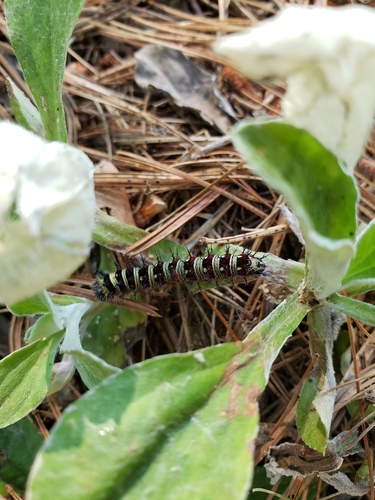
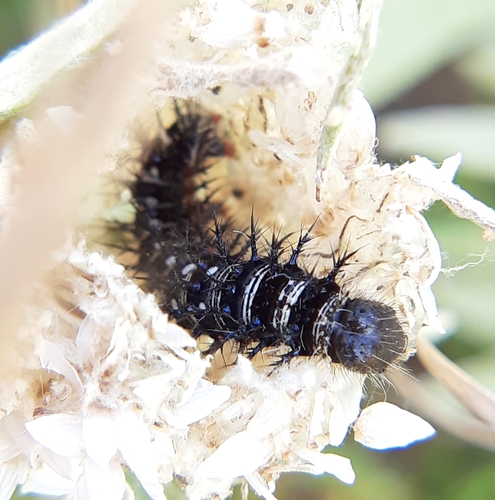
Spiny caterpillars, black with yellowish bands and red or white spots, feed on host plant foliage, usually inside a shelter of leaves tied with silk. They grow through several instars over a few weeks depending on temperature and food.
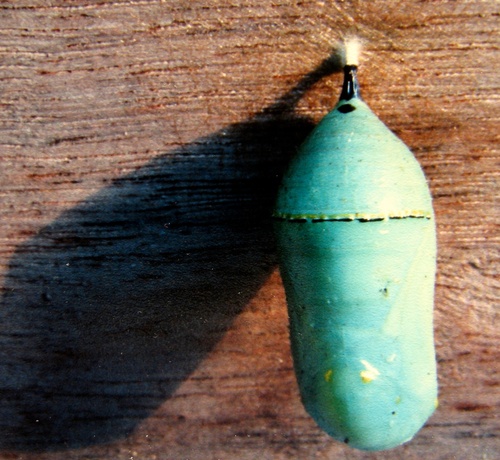
Pupa (chrysalis)
The caterpillar forms a chrysalis attached to stems, leaves or other surfaces; metamorphosis to the adult takes about 1-2 weeks in warm weather.
Adult (butterfly)
Winged adults feed on nectar, mate and disperse. They can have multiple broods per year in warm regions.
🍃Diet and predators
Young eat
Leaves of host plants mainly in the aster family (Antennaria, Gnaphalium, native asters and related species).
Adults eat
Nectar from a range of flowers: asters, thistles, goldenrod, milkweed, and many garden flowers.
Predators of the young
Parasitoid wasps and flies, predatory insects, birds and small mammals.
Predators of adults
Birds, spiders, dragonflies and other insectivores.
🌱Effect on plants and gardens
Caterpillars feed mainly on plants in the aster family (Asteraceae), especially pussytoes (Antennaria), cudweeds (Gnaphalium), and various native asters; adults are nectar feeders and pollinators of many flowering plants.
📍Where and when to find it
Adults: visiting nectar flowers in gardens, meadows, roadsides and parks. Eggs and larvae: on the undersides of leaves of host plants in the aster family (e.g., Antennaria, Gnaphalium, native asters). Pupae: attached to stems, leaves or man-made surfaces near host plants.
Best time
Best observed from spring through fall in warm daylight hours; peak sightings often mid-morning to mid-afternoon on sunny days.
Observation tips
Use a camera with a moderate zoom to photograph perched butterflies; approach slowly and avoid casting a shadow. To attract them, plant native asters and other nectar sources and provide sunny, sheltered spots.
✨Fun facts
- American ladies cannot survive harsh northern winters; northern areas are repopulated each year by butterflies moving north from the South.
- Caterpillars live alone in small shelters made of leaves and plant hairs tied together with silk.
- Adults are frequent garden visitors and help pollinate late-season flowers like asters and goldenrod.
?Frequently asked questions
Is the American lady harmful to people?
No. They do not bite or sting and pose no health threat to people.
Do American lady caterpillars eat garden plants?
They feed on certain wild asters and related plants. They rarely damage ornamental gardens unless those host plants are present in large numbers.
Why is this butterfly in my yard?
Adults visit yards to feed on nectar and to find sunny spots and host plants for egg-laying. Planting native asters and nectar flowers attracts them.
How can I get rid of American ladies in my garden?
They are beneficial pollinators and usually not pests. Removing their specific host plants will discourage breeding, or you can hand-remove caterpillars if necessary. Chemical controls are unnecessary for typical small numbers.
When is the best time to see American ladies?
During warm months from spring through fall (regional). They are active in daylight, especially on sunny days when flowers are blooming.
📷Photos of the American lady
More butterflies & moths
This guide was written with AI assistance and fact-checked, last updated 2026-10-10. Identification from photos is never certain: don't handle insects you can't identify, and get medical advice for bites, stings or allergic reactions. More about the American lady: iNaturalist, Wikipedia.