
Orange sulphur
Colias eurytheme · Sulphur butterflies
A widespread North American yellow-orange butterfly whose caterpillars feed on legumes and adults visit flowers for nectar.
!Is the orange sulphur dangerous?
No. Not dangerous. Neither adults nor caterpillars are venomous. Caterpillars may have fine hairs but do not cause significant irritation; wash hands after handling any caterpillar if concerned.
Pets
Generally harmless to pets. A dog or cat that eats many caterpillars could have mild digestive upset; seek veterinary advice if a pet consumes large numbers.
📖Overview
Colias eurytheme, the orange sulphur, is a common pierid butterfly found across much of North America. Males are typically brighter orange, females range from yellow to orange and sometimes show more white scaling. They are strong fliers and often seen in open habitats where host plants (legumes) grow.
Larvae feed mainly on plants in the pea family (Fabaceae), including alfalfa and clovers, so they can be noticed in agricultural fields as well as roadsides, meadows and gardens. Adults are frequent flower visitors and are active during warm, sunny days from spring through fall in multiple broods per year in much of their range.
🔍How to identify an orange sulphur
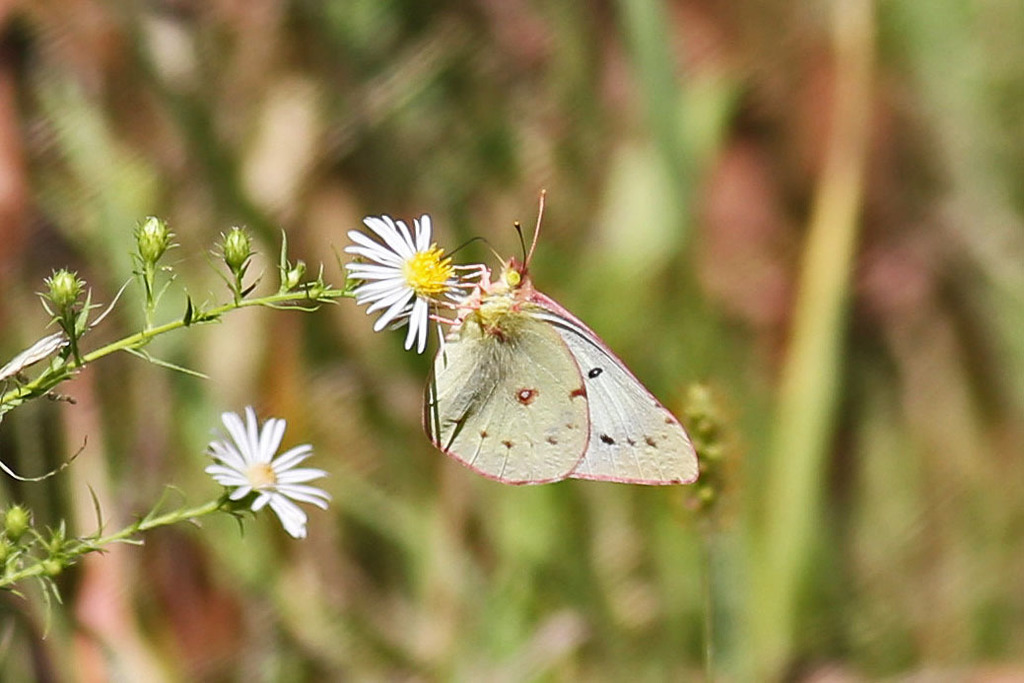
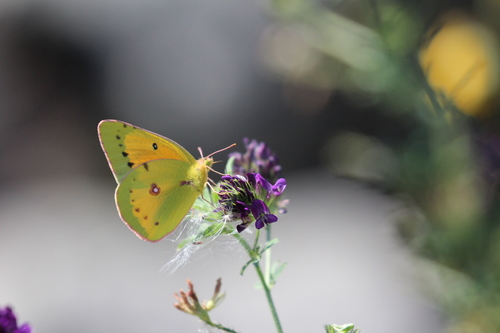
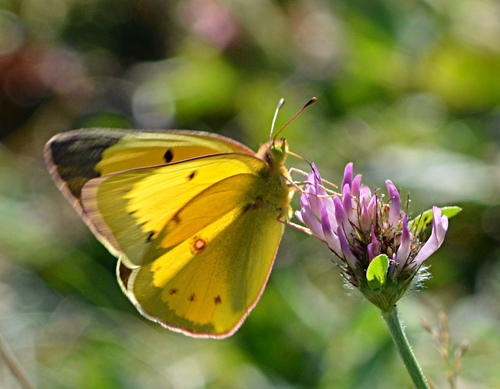
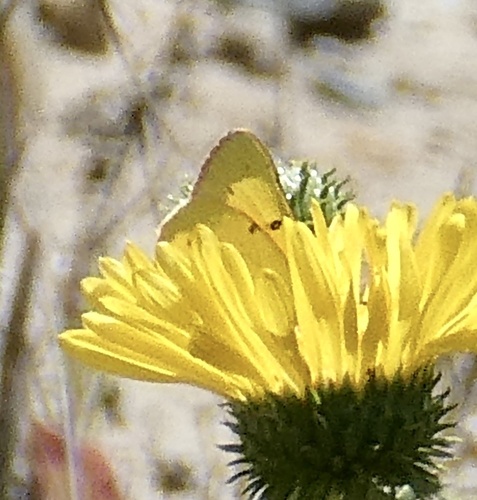
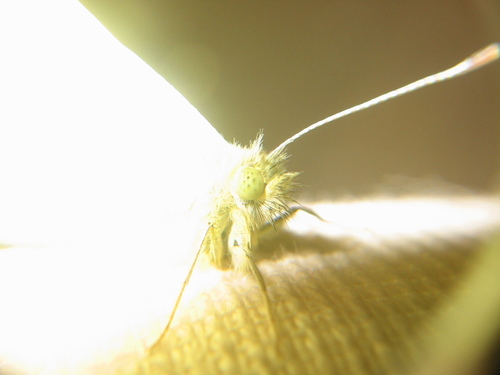
Wings rounded; males are orange above with a solid black border and a small black spot in the center of the forewing. Females are variable: yellow to orange with a black border containing yellow spots, and some belong to a pale whitish form ('alba'). Wing undersides are yellow with a silver, red-rimmed spot (often doubled) in the center of the hindwing and a row of small dark submarginal spots.
- Males: orange upperwings with a solid black border and a small black spot in the center of the forewing
- Females: variable yellow to orange (or whitish), with yellow spots inside the black border
- Underside: yellow with a silver, red-rimmed spot (often doubled) in the center of the hindwing
- Wingspan 32-61 mm; flight is fast and direct, often low over the vegetation
Lookalikes
Clouded sulphur Colias philodice
Clouded sulphur is generally paler yellow with less orange tint; males usually lack the strong orange of male C. eurytheme and wing borders are often thinner. Range overlaps, so check color intensity and wing markings.
Queen Alexandra's sulphur (female pale form) Colias alexandra
C. alexandra is similar where ranges meet but often has different underside markings and subtle differences in wing shape; specialist guides or genitalia examination used by experts.
Southern dogface Zerene cesonia
Has more pointed forewings and a black-bordered yellow 'poodle head' pattern on the forewing upperside, instead of the orange coloring and plain black border of the orange sulphur.
↻Life cycle
Egg
Female lays single pale-yellow eggs on leaves of host legumes. Eggs hatch in about 4-10 days depending on temperature.
Larva (caterpillar)
Green caterpillars with faint stripes feed on host plant leaves and grow through several instars over 2-4 weeks.
Pupa (chrysalis)
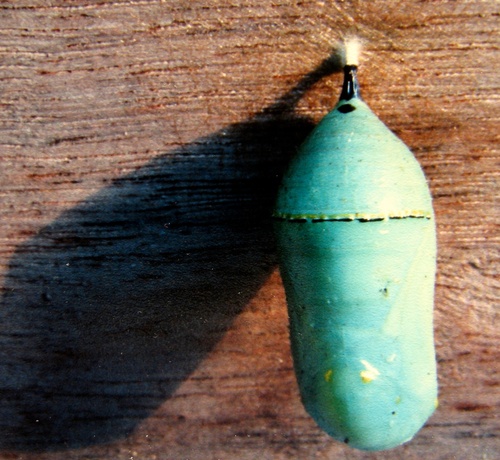
The chrysalis is attached upright to a stem by a silk girdle for about 7-14 days before the adult emerges; duration varies with temperature and season.
Adult (butterfly)
Winged adult seeks nectar sources, mates and the female lays eggs on host plants; multiple generations occur per year in warm areas.
🍃Diet and predators
Young eat
Leaves of legumes (Fabaceae) including alfalfa, clover, peas and vetch
Adults eat
Nectar from a wide variety of flowers such as asters, milkweed, thistles and other composites
Predators of the young
Parasitoid wasps and flies, predatory insects, spiders and birds
Predators of adults
Birds, dragonflies, spiders and other insectivores
🌱Effect on plants and gardens
Caterpillars feed on legumes such as alfalfa, clover, pea and vetch; in large numbers they can reduce forage quality in alfalfa but are usually not a major crop pest.
How to get rid of orange sulphurs
Monitor larval populations in alfalfa and clover. For minor outbreaks encourage natural enemies (birds, predatory insects and parasitic wasps). In agricultural settings insecticidal control is rare; use targeted, integrated pest management and consult local extension services. Bacillus thuringiensis var. kurstaki (Btk) controls caterpillars of many butterflies but should be used carefully to avoid harming non-target species.
📍Where and when to find it
Adults on nectar flowers and along field edges; eggs and caterpillars on leaves of legumes such as alfalfa, clover and vetch.
Best time
Spring through fall; mid-morning to mid-afternoon on sunny days are best for observing adults.
Observation tips
Photograph with the sun behind you to show upperwing color, approach slowly as they are fast fliers, and check underside of resting individuals for identification marks.
✨Fun facts
- Orange sulphurs are attracted to open, sunny habitats and often settle on bare ground to puddle and take up minerals.
- Females show genetic colour variation; pale whitish females (the 'alba' form) can be common in some populations.
- Because their caterpillars use crop plants like alfalfa, they are one of the few common butterfly species encountered by farmers.
?Frequently asked questions
Do orange sulphurs bite or sting?
No. Adults do not bite or sting and are harmless to people.
Are orange sulphurs harmful to gardens or crops?
Caterpillars feed on legumes and can reduce yield in alfalfa if present in very large numbers, but they are usually not a major pest in gardens.
Why is this butterfly in my yard?
Yards with flowers for nectar and host plants like clover or vetch attract adults for feeding and egg-laying.
How can I get rid of caterpillars on my alfalfa crop?
Use integrated pest management: monitor populations, encourage natural enemies, and consult local extension for thresholds. Chemical control is rarely needed; targeted biological controls like Btk are an option under guidance.
When will I see orange sulphurs?
They are active from spring to fall in most of their range, on warm sunny days; in warm areas there are several broods each year.
How can I attract orange sulphurs to my garden?
Plant nectar flowers such as asters and milkweeds and allow some legume plants (clover, vetch) for larvae; provide sunny spots and low vegetation.
📷Photos of the orange sulphur
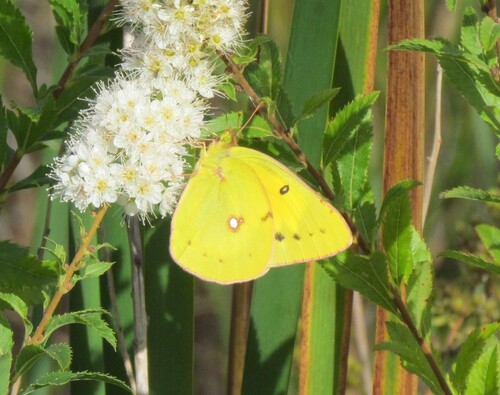
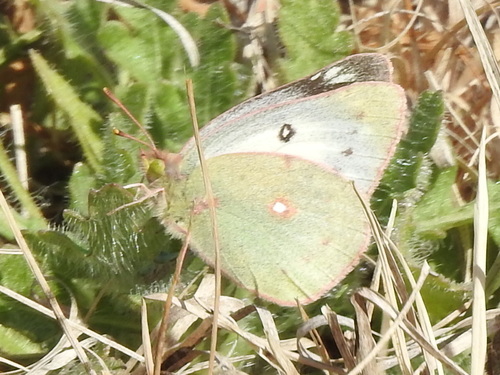
More butterflies & moths
This guide was written with AI assistance and fact-checked, last updated 2026-10-10. Identification from photos is never certain: don't handle insects you can't identify, and get medical advice for bites, stings or allergic reactions. More about the orange sulphur: iNaturalist, Wikipedia.