
Ailanthus webworm
Atteva aurea · Attevidae moths
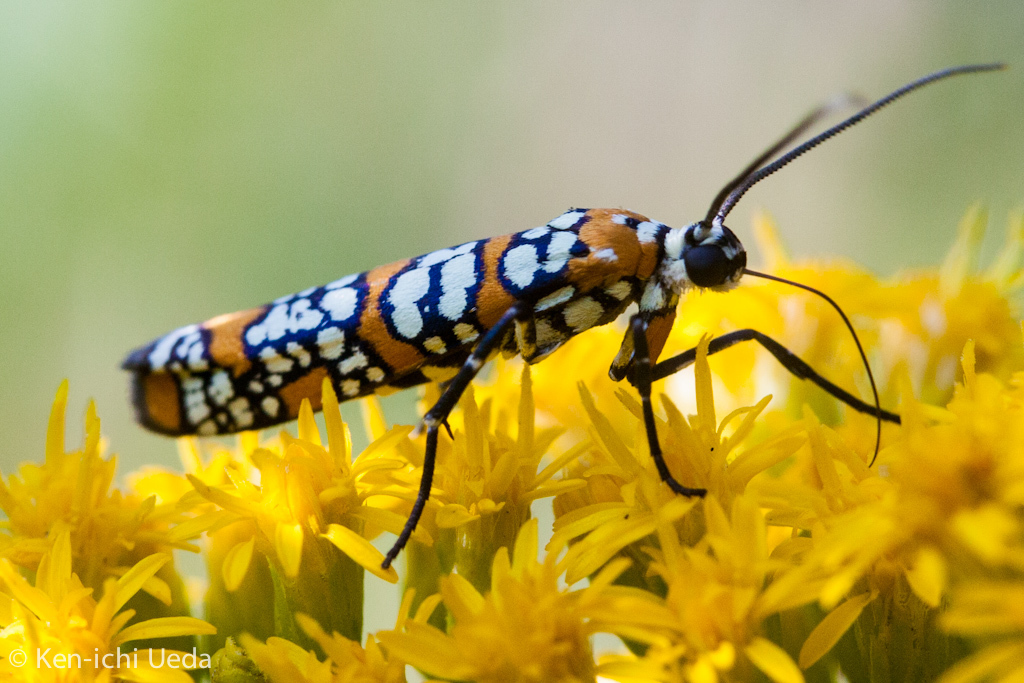
A small, brightly colored day-flying moth whose caterpillars feed in communal webbed nests on tree-of-heaven and related hosts.
!Is the Ailanthus webworm dangerous?
No. Adults and larvae are not venomous and do not bite or sting. The caterpillars have no stinging or irritating hairs. No disease transmission is associated with this species.
Pets
Not known to be toxic to pets. Larvae are not a common concern for cats or dogs.
📖Overview
Atteva aurea is a small, conspicuous moth native to the Americas and common in urban and suburban areas where its primary host, tree-of-heaven (Ailanthus altissima), grows. Larvae are gregarious, feeding together inside loose silk tents (webs) that gather leaves and flowers. Adults are active by day, often seen resting on foliage or visiting flowers; they are also attracted to lights at night. Populations are usually localized and rarely cause lasting damage to large trees.
🔍How to identify an Ailanthus webworm
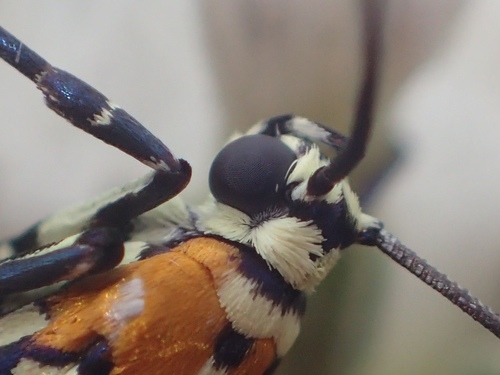
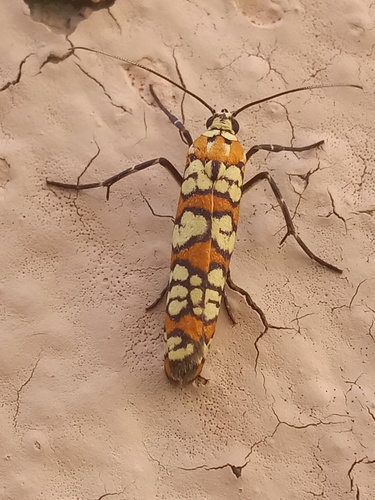
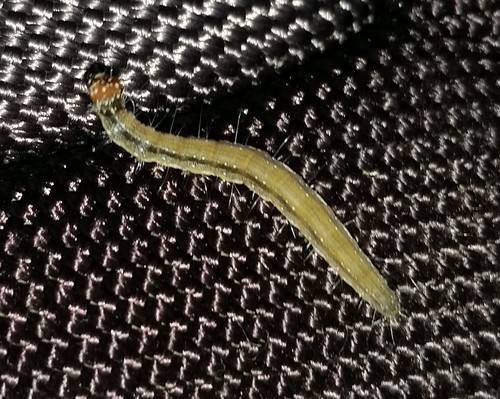
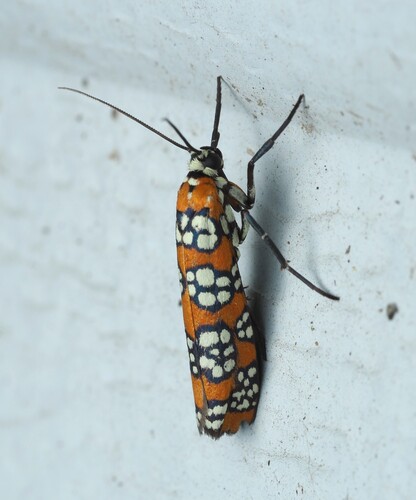
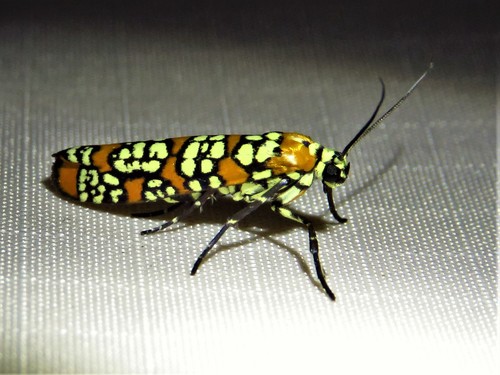
Adult Ailanthus webworm moths are bright orange with numerous irregular white spots and a few thin black streaks or markings across the wings and body. When at rest the wings are rolled tightly around the body, giving a slender, elongated shape. Caterpillars are slender, olive-green to brownish with several thin, pale longitudinal stripes and only sparse fine hairs; they live communally in silken webbing among leaves and flowers.
- Bright orange adults with numerous irregular white spots and thin black streaks across wings and body
- Adults are day-flying; often sit with narrow wings folded, showing the spotted pattern
- Larvae live in communal silk webbing on foliage and flowers of tree-of-heaven
Lookalikes
Ermine moths Yponomeuta spp.
Ermine moths are white with rows of small black dots and no orange; their caterpillars also live communally in silk webs but on hosts such as spindle, bird cherry and apple, not tree-of-heaven.
Other Atteva species Atteva sp.
Some Atteva species look similar but differ in spot pattern and geographic range; identification to species may require locality and pattern details.
↻Life cycle
Egg
Females lay clusters of small eggs on host leaves or flowers; timing depends on local climate and season.
Larva (caterpillar)
Gregarious caterpillars feed together inside communal silk webs that bind leaves and flowers; they go through several instars while protected by the webbing.
Pupa (cocoon)
Larvae pupate inside or near the webbed nests in loose silken cocoons, or sometimes in leaf litter or bark crevices.
Adult (moth)
Brightly colored day-flying moths that emerge to mate and lay eggs; adults also come to lights at night.
🍃Diet and predators
Young eat
Leaves and flower clusters of tree-of-heaven (Ailanthus altissima) and occasionally other related host plants
Adults eat
Adults visit flowers for nectar; they may also feed on sap or not feed much during their short adult life
Predators of the young
Birds, predatory insects, parasitic wasps and flies
Predators of adults
Birds, bats and predatory insects; adults are also taken by spiders
🌱Effect on plants and gardens
Larvae feed on foliage and flower clusters, primarily of tree-of-heaven (Ailanthus altissima). Heavy localized feeding can skeletonize leaves or reduce flowering on small trees or saplings, but established trees usually tolerate defoliation.
📍Where and when to find it
Look on tree-of-heaven leaves and flower clusters for silken webbing and groups of caterpillars; adults can be seen resting on foliage or visiting flowers during daytime and at lights at night.
Best time
Spring through fall (depending on region); daytime for adults and larvae, evenings for adults at lights.
Observation tips
To photograph adults, search sunny foliage of host trees during warm hours; to photograph larvae, check webbed nests and approach slowly to avoid disturbing them.
✨Fun facts
- Unlike many moths, the Ailanthus webworm is commonly seen during the day and is quite colorful.
- Its rise in many urban areas followed the spread of its preferred host, the non-native tree-of-heaven.
- The communal webs of larvae can be mistaken for the webs of social tent caterpillars, but Atteva webs are usually smaller and associated with Ailanthus foliage.
?Frequently asked questions
Do Ailanthus webworm moths bite?
No. Adults do not bite or sting, and the caterpillars do not bite people or have irritating hairs.
Are Ailanthus webworms harmful to trees?
They can defoliate branches locally, especially on small trees or saplings, but mature trees usually tolerate the feeding. Damage is normally cosmetic and short-lived.
Why are there webbed nests on my tree-of-heaven?
Those are communal feeding webs made by Ailanthus webworm caterpillars. The webs gather leaves and flowers and shelter the group while they feed.
How do I get rid of Ailanthus webworms?
Prune out and destroy small webbed sections early in the season. For larger infestations on small trees, consider targeted insecticidal controls labeled for caterpillars. Removing or reducing tree-of-heaven hosts will reduce local populations.
Where does the Ailanthus webworm live?
It occurs where its host trees grow — commonly in urban and suburban areas with tree-of-heaven, across much of eastern North America, parts of Mexico and the Caribbean.
📷Photos of the Ailanthus webworm
More butterflies & moths
This guide was written with AI assistance and fact-checked, last updated 2026-10-10. Identification from photos is never certain: don't handle insects you can't identify, and get medical advice for bites, stings or allergic reactions. More about the Ailanthus webworm: iNaturalist, Wikipedia.