
Common brimstone
Gonepteryx rhamni · Whites and yellows
A leaf-shaped yellow butterfly (Gonepteryx rhamni) known for its long-lived adults, early spring flight and caterpillars that feed on buckthorns.
!Is the common brimstone dangerous?
No. Harmless to people; does not bite or sting. Adults may be handled gently but their wings are delicate and can be damaged by rough handling.
Pets
Harmless; not toxic to pets. Caterpillars are not known to be poisonous to cats or dogs.
📖Overview
The common brimstone is a widespread temperate butterfly of the family Pieridae. Adults are distinctive for their leaf-like, scalloped wings and are among the earliest butterflies to appear in spring; males are bright yellow while females are paler, greenish-white. Caterpillars feed mainly on buckthorn species and the species overwinters as an adult, which contributes to a relatively long adult lifespan compared with many other butterflies.
Brimstones favour woodland edges, hedgerows, scrub and sunny clearings where their larval foodplants (Rhamnus and Frangula species) grow. They are good fliers but typically remain in or near suitable breeding habitat; some local seasonal movements occur but they are not strong long-distance migrants.
🔍How to identify a common brimstone
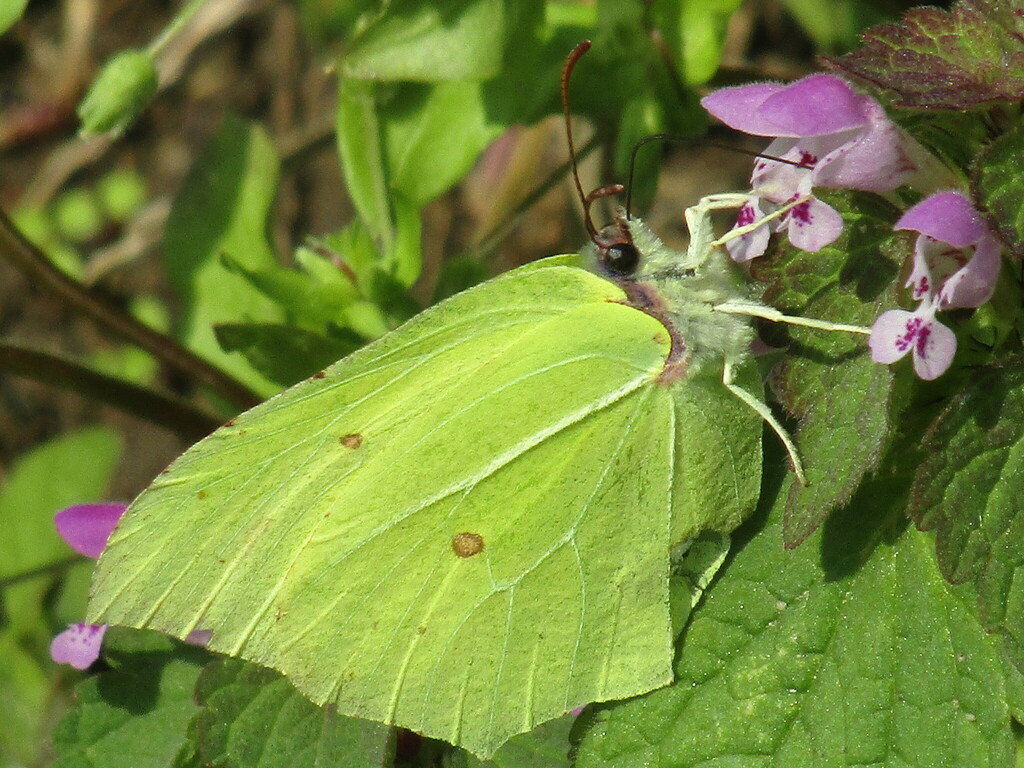
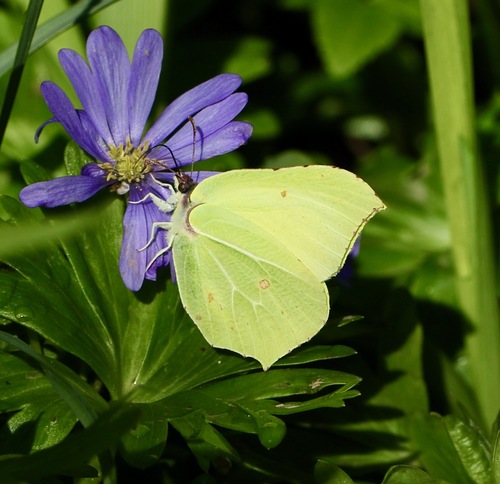
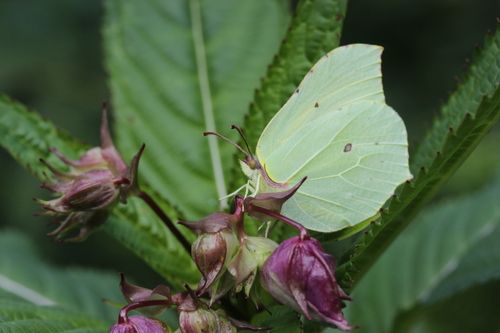
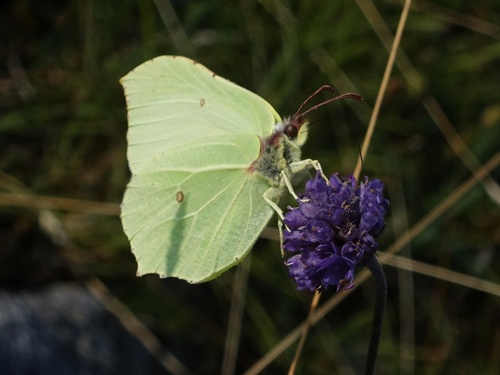
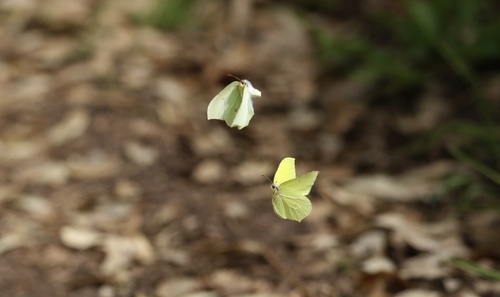
Wings are long, pointed and strongly scalloped, giving a leaf-like outline. Males have vivid lemon to sulphur yellow wings with small orange-brown spots; females are much paler, usually greenish-white to pale yellow, sometimes with a faint orange spot. Both sexes have a distinct central discal spot on each wing and venation visible against the wing colour. When at rest the wings are held closed over the back, enhancing the leaf resemblance.
- Male bright lemon or sulphur yellow, female pale greenish-white; both have a small discal spot on each wing
- Wings strongly scalloped and pointed at the tips, creating a leaf-like outline when closed
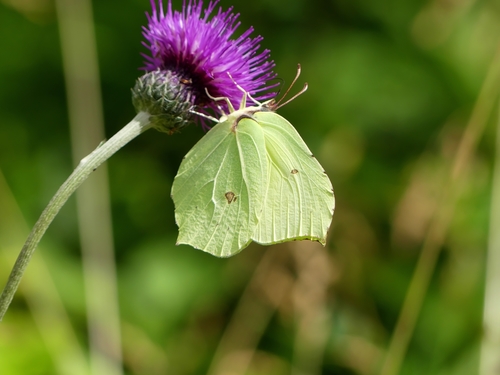
- At rest the wings are held closed over the back, appearing very leaf-like and often camouflaged
- Look for larvae on buckthorn (Rhamnus/Frangula) if searching for eggs or caterpillars
Lookalikes
Cleopatra Gonepteryx cleopatra
Cleopatra males have a distinct orange patch on the upper forewing; brimstone lacks this orange patch and is paler on the female.
Clouded yellow Colias croceus
Clouded yellows are rounder-winged and do not show the strong scalloped, leaf-like wing outline of brimstones; venation and wing shape differ.
↻Life cycle
Egg
Females lay single pale eggs on the leaves or stems of buckthorn species. Eggs hatch in about 1-2 weeks depending on temperature.
Larva (caterpillar)
Green caterpillars feed on buckthorn leaves. They develop through several instars over a few weeks before pupating.
Pupa (chrysalis)
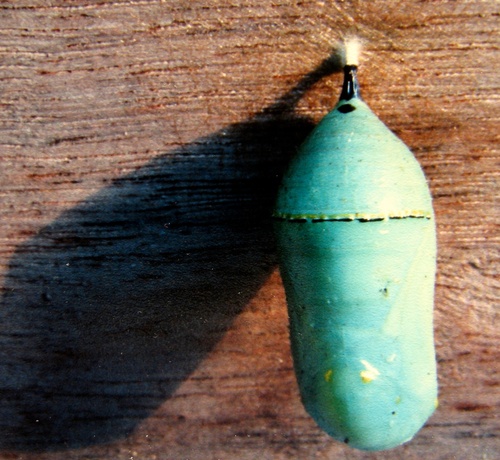
The chrysalis is attached to vegetation and camouflaged; pupation lasts around 2-3 weeks in summer (longer in cool conditions).
Adult
Adults emerge, feed on nectar, mate and females lay eggs. Many adults enter diapause and overwinter, reappearing and breeding the following spring.
🍃Diet and predators
Young eat
Leaves of buckthorn species (Rhamnus and Frangula)
Adults eat
Nectar from a variety of flowers such as thistles, bramble, and early spring nectar sources
Predators of the young
Wasps, predatory insects, birds and parasitic flies/wasps
Predators of adults
Birds, spiders, and other insectivores; adults rely on camouflage and early-season flight to reduce predation
🌱Effect on plants and gardens
Larvae feed mainly on alder buckthorn (Frangula alnus) and buckthorn (Rhamnus cathartica). Adults visit a range of nectar-bearing flowers and act as pollinators.
📍Where and when to find it
Adults: sunny woodland rides, hedgerows, parks and gardens. Eggs and larvae: on leaves and shoots of buckthorn (Rhamnus and Frangula).
Best time
Late winter to spring and again in summer depending on region; best observed on warm, sunny days in the morning and early afternoon.
Observation tips
Look for resting adults with wings closed on vegetation; early spring warm spells are prime times. To find immatures, inspect buckthorn shrubs carefully.
✨Fun facts
- Brimstones overwinter as adults, which is why they are among the first butterflies seen in spring.
- Their wing shape and colour help them resemble a dead or green leaf when at rest — excellent camouflage from predators.
- The common name 'brimstone' refers to the bright yellow colour of the male, historically likened to brimstone or sulfur.
?Frequently asked questions
Are common brimstone butterflies harmful?
No. They do not bite or sting and are harmless to people and pets.
Do brimstones eat garden plants?
Caterpillars feed mainly on buckthorn species, not typical garden ornamentals; adults feed on flower nectar and are beneficial pollinators.
Why do I see them early in spring?
They overwinter as adults and become active on warm spring days, often before many other butterfly species.
How do I attract brimstones to my garden?
Plant nectar-rich flowers and, importantly, buckthorn species (Rhamnus or Frangula) if you want to support their larvae.
Are brimstones endangered?
No. The common brimstone is widespread and not generally threatened; local populations depend on availability of buckthorn.
📷Photos of the common brimstone
More butterflies & moths
This guide was written with AI assistance and fact-checked, last updated 2026-10-10. Identification from photos is never certain: don't handle insects you can't identify, and get medical advice for bites, stings or allergic reactions. More about the common brimstone: iNaturalist, Wikipedia.