
Marbled white
Melanargia galathea · Browns (satyrines)
A distinctive black-and-white grassland butterfly common across much of Europe, known for its checkerboard wing pattern and slow, bouncing flight.
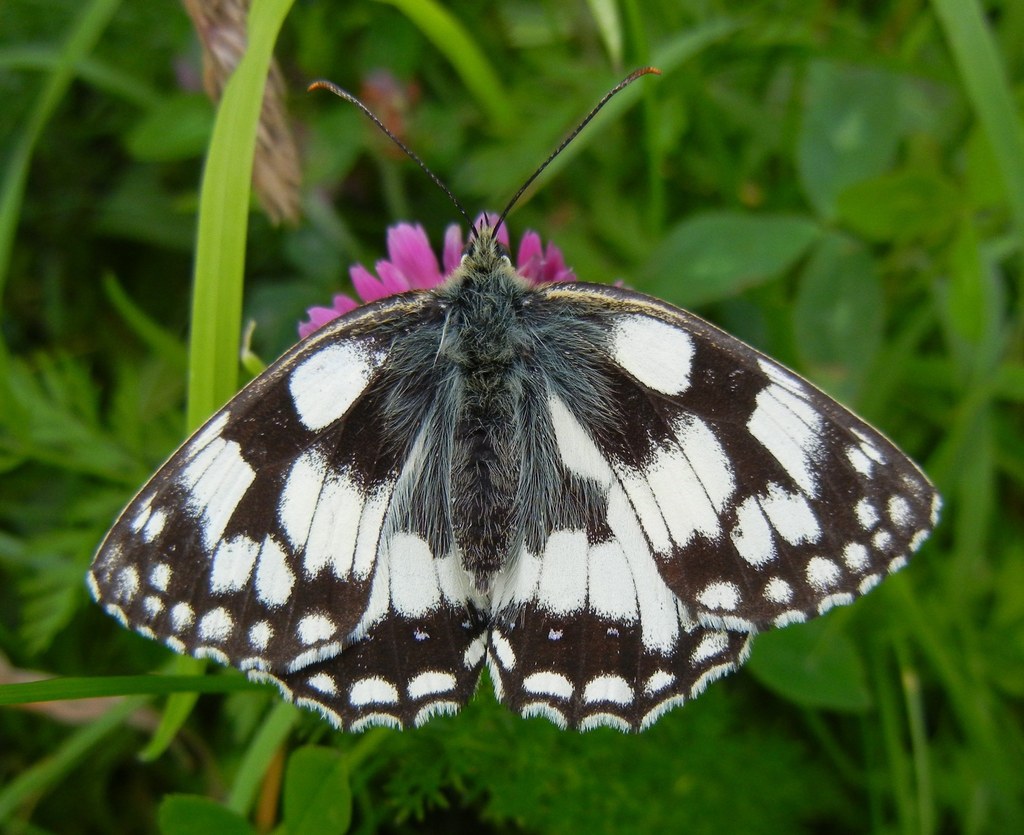
!Is the marbled white dangerous?
No. Harmless to people. Does not bite or sting and is not poisonous. Handle gently if necessary; adult wings and scales are delicate.
Pets
Not dangerous to cats or dogs. Unlikely to be of interest to pets and not toxic if ingested, though any small insect can cause mild stomach upset if eaten in quantity.
📖Overview
Melanargia galathea (marbled white) is a medium-sized butterfly of open grassy habitats across Europe and parts of western Asia. It is most often found in unimproved meadows, roadside verges and clearings in light woodland where its larval food grasses grow. Adults are active in summer and are commonly seen nectaring on a range of wildflowers. The species is typically univoltine (one generation per year) in most of its range.
🔍How to identify a marbled white
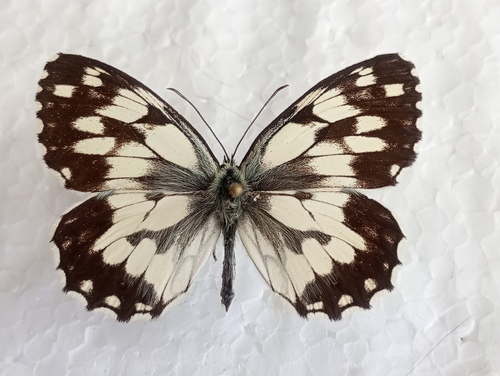
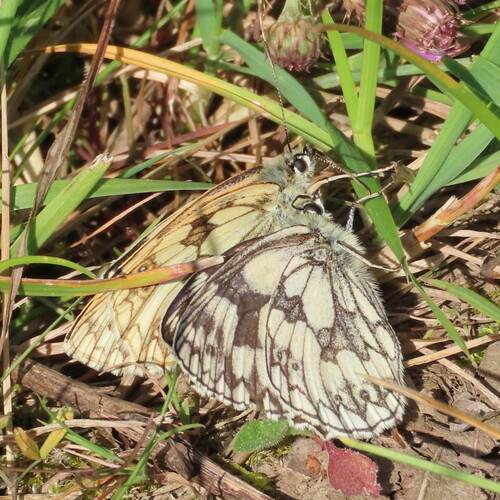
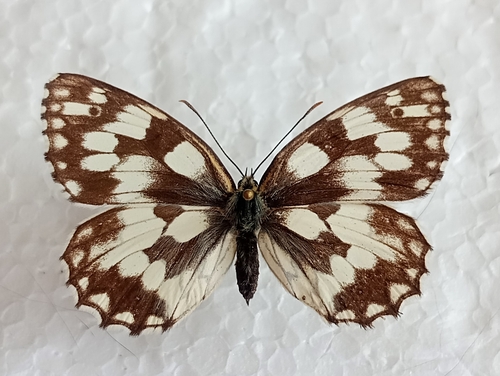
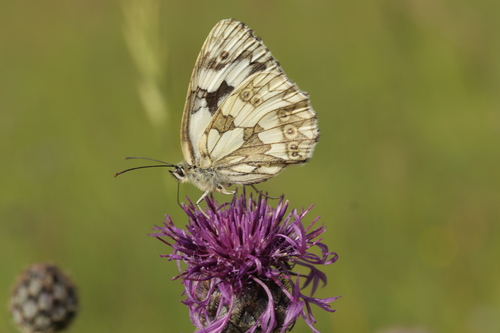
The marbled white is unmistakable by its black and white checkered pattern. Forewing and hindwing uppersides are white with bold black veins and black patches forming a marbled or checkerboard appearance. The underside is paler, with grey or greenish-grey markings (yellowish in females) and a row of small eyespots on the hindwing. The wings are rounded and the body is hairy and greyish. Males and females are similar; females are slightly larger.
- Bold black-and-white checkerboard pattern on the upper wings; no other British or northern European butterfly looks like it
- Rounded wings and a slow, bobbing flight often close to the ground
- Underside paler with similar marbled pattern and faint buff or grey tones
- Habitat: found in unimproved meadows and chalk grassland, rarely in tidy gardens
Lookalikes
Spanish marbled white Melanargia lachesis
Range limited to Iberian peninsula; wing pattern and size similar but local distribution separates them. Check location and local field guides.
Western marbled white Melanargia occitanica
Occurs in Iberia, southern France, Italy and North Africa; it has bluish centres to the hindwing underside eyespots and more brownish underside veining.
Large white (cabbage white) Pieris brassicae
Much plainer white wings with few black spots and different wing shape; not checkerboard patterned.
↻Life cycle
Egg
Unusually, females scatter their eggs loosely over grassland while perched or in flight, rather than attaching them to a plant.
Larva (caterpillar)
Caterpillars are hairy, green or straw-brown and feed on grasses. They hatch in late summer and go into hibernation almost at once, feeding little or not at all until the following spring.
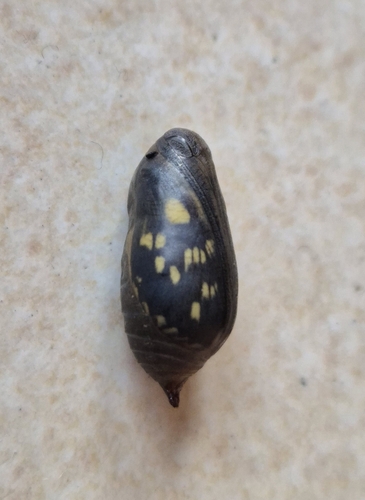
Pupa (chrysalis)
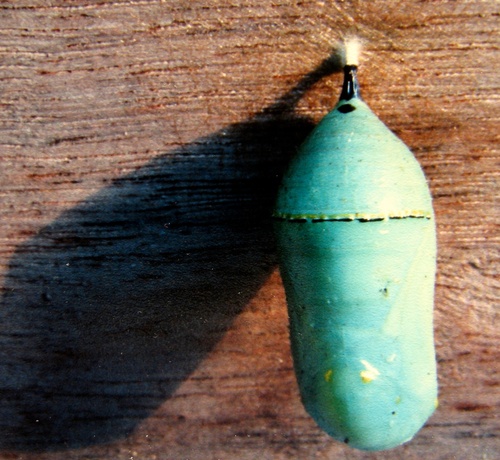
Pupation occurs at ground level in vegetation or grass litter; the chrysalis is compact and camouflaged, and development lasts a few weeks in late spring/early summer.
Adult (butterfly)
Adults emerge in summer, fly in warm weather, mate and the females lay eggs to complete the annual cycle.
🍃Diet and predators
Young eat
Grasses, especially red fescue (Festuca rubra), plus Yorkshire fog, tor-grass and cock's-foot
Adults eat
Nectar from flowering plants such as knapweed, thistles, scabious, and bramble
Predators of the young
Birds, small mammals, parasitic wasps and flies
Predators of adults
Insectivorous birds, dragonflies, spiders and predatory insects
🌱Effect on plants and gardens
Larvae feed on grasses, especially red fescue (Festuca rubra), as well as other grasses such as Yorkshire fog, tor-grass and cock's-foot. Adults visit nectar-rich flowers such as knapweed, thistles and scabious but do not cause damage to crops.
📍Where and when to find it
Adults: nectar-rich flowers in meadows, roadside verges and clearings. Larvae: low among grass tussocks. Pupae: in grass litter at ground level.
Best time
June-August, mid-morning to late afternoon on warm, sunny days
Observation tips
Walk slowly through flowery meadows, look for the distinctive checkerboard pattern when butterflies settle. Photograph with a moderate zoom to avoid disturbing them.
✨Fun facts
- Despite the name 'white', the marbled white is in the Nymphalidae family (brush-footed butterflies), not the whites family (Pieridae).
- Females scatter their eggs loosely over the grass instead of sticking them to plants, and the young caterpillars hibernate almost immediately after hatching.
- Their striking black-and-white pattern makes them easy to spot at rest, and they are often used as an indicator species for unimproved grassland quality.
?Frequently asked questions
Is the marbled white dangerous?
No. It does not bite or sting and is harmless to people and pets.
Do marbled white butterflies eat my garden plants?
No. Larvae feed on wild grasses, not ornamental flowers or vegetables, and adults only sip nectar from flowers.
Why is a marbled white in my yard?
If you have a patch of long grass, wildflowers or an unimproved lawn or meadow nearby, it may provide the grasses and nectar sources marbled whites need.
How can I attract marbled whites to my garden?
Leave or create areas of longer, mixed grasses and plant nectar-rich wildflowers such as knapweed, thistles and scabious. Avoid over-mowing and reduce pesticide use.
When can I see marbled whites?
Mainly from June to August (peak in July) on warm, sunny days in grassland and meadow habitats.
📷Photos of the marbled white
More butterflies & moths
This guide was written with AI assistance and fact-checked, last updated 2026-10-10. Identification from photos is never certain: don't handle insects you can't identify, and get medical advice for bites, stings or allergic reactions. More about the marbled white: iNaturalist, Wikipedia.