
Holly blue
Celastrina argiolus · Blues (Lycaenid butterflies)
A small pale blue butterfly common in gardens and woodland edges; spring brood is closely associated with holly, later broods use other shrubs such as ivy.
!Is the holly blue dangerous?
No. Holly blue butterflies are harmless to people. They do not bite or sting. No special first aid is needed beyond usual wound care if you handle them and damage a wing.
Pets
Harmless to pets. Cats or birds might catch butterflies but the insect is not toxic.
📖Overview
The holly blue is a small blues-family butterfly widespread through much of Europe, North Africa and temperate Asia. It typically produces two broods per year in many parts of its range: a spring brood (often using holly as the larval foodplant) and one or more summer broods that use a wider range of shrubs. Adults are active flyers near hedges, gardens and woodland rides and are often seen visiting garden flowers for nectar.
This species is not dangerous to people or pets. It is generally common and not considered a pest. Larvae feed on flower buds and young leaves of shrubs and have little economic impact on gardens or crops.
🔍How to identify a holly blue
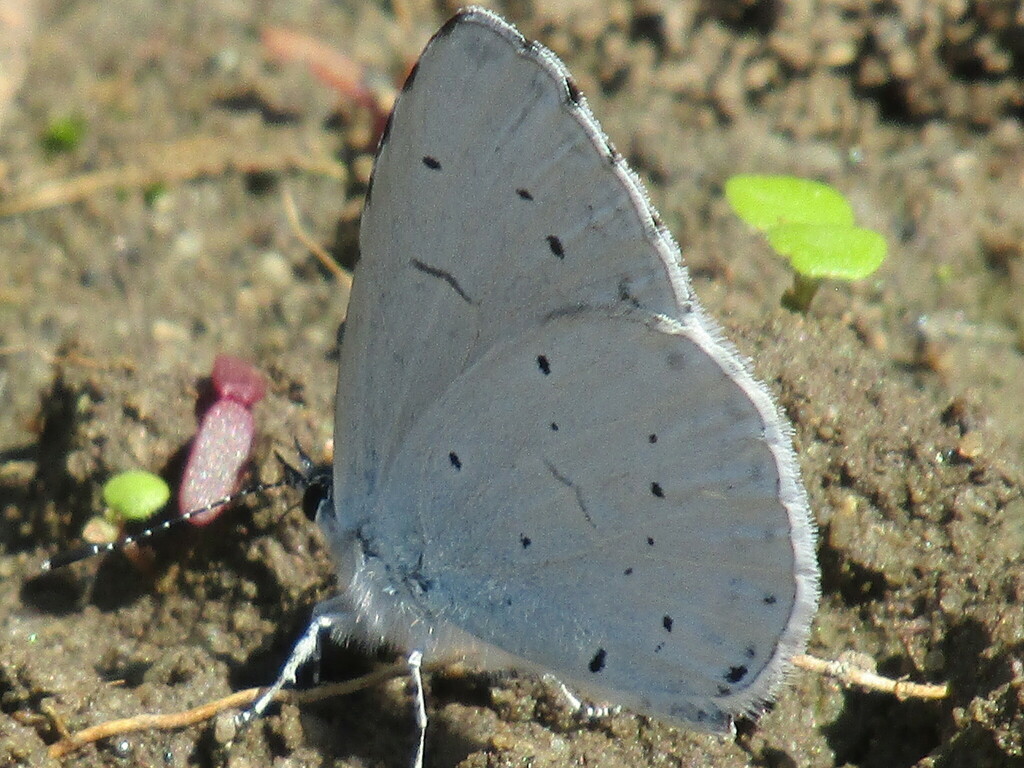
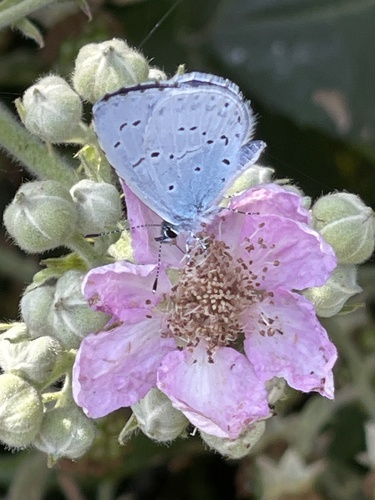
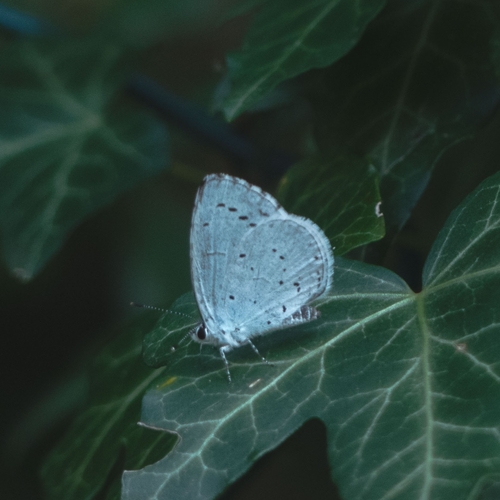
Wingspan about 26-34 mm. Males have a pale sky-blue upperside with a fine narrow dark edge on the forewing. Females are bluer to darker with a broader black margin and sometimes a row of dark scales across the forewing. The underside of both sexes is pale grey to off-white with a scattering of small, neat black spots. When at rest the wings are held closed, showing the pale, spotted underside.
- Small blue butterfly with 26-34 mm wingspan.
- Male upperside pale sky blue with narrow dark edge; female has broader black margin and darker scaling.
- Underside pale grey/whitish with small neat black spots; wings held closed at rest showing underside.
- Spring individuals often associated with holly; look for eggs or larvae on holly flower buds.
Lookalikes
Common blue Polyommatus icarus
Common blue males are a stronger blue and the underside pattern includes more pronounced orange spots; holly blue underside is paler with simpler spotting.
Azures (other Celastrina species) Celastrina spp.
In North America the similar azures (e.g. spring azure, Celastrina ladon) were once treated as the same species; holly blue is the Old World species and identification is mainly by location and subtle markings.
↻Life cycle
Egg
Single eggs are laid on flower buds, young flowers or leaves of host shrubs. Eggs are small and usually hard to spot.
Larva (caterpillar)
Greenish, smooth caterpillars that feed on flower buds and young leaves. Spring brood larvae are often found on holly; summer brood larvae use a wider range of shrubs.
Pupa (chrysalis)
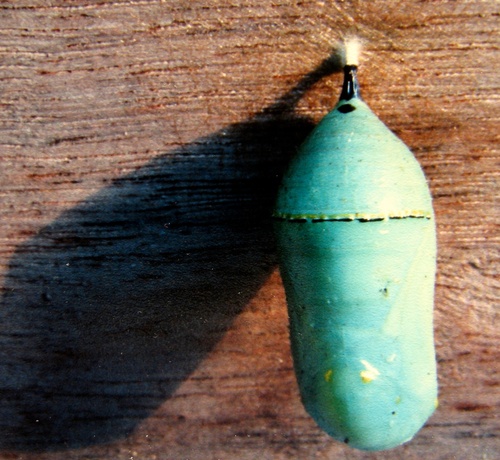
A compact, usually well-camouflaged chrysalis attached to stems or leaf litter where it develops into the adult.
Adult (butterfly)
Winged adult that flies, mates and visits flowers for nectar; males patrol for females and both sexes lay eggs on host plants.
🍃Diet and predators
Young eat
Flower buds and young leaves of host shrubs (holly in spring; ivy, privet, dogwood, bramble and others in summer).
Adults eat
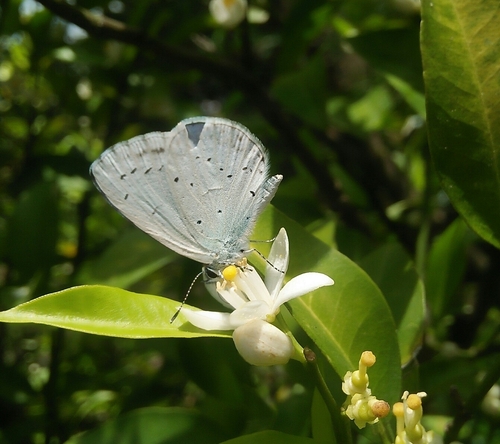
Nectar from a variety of flowers such as knapweed, thistles, bramble, and garden flowers.
Predators of the young
Small birds, parasitic wasps and predatory insects.
Predators of adults
Birds, spiders and insectivorous bats.
🌱Effect on plants and gardens
Larvae feed on flower buds and young leaves of hollies (Ilex) in the spring brood and on many other shrubs (for example ivy Hedera, privet, dogwood and bramble) in later broods. Damage is usually minor and rarely harmful to healthy plants.
📍Where and when to find it
Adults: visiting garden flowers, hedgerows and woodland edges. Eggs and larvae: on flower buds and young flowers of holly (spring brood) and on ivy and other shrubs (summer brood). Pupae: attached to stems or hidden in leaf litter.
Best time
Best seen April-May for the spring brood and June-August for summer broods; observe during warm, sunny daylight hours.
Observation tips
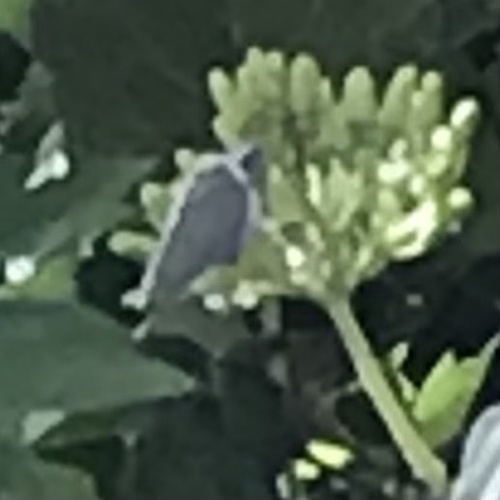
Look at holly flowers in spring for eggs and newly hatched caterpillars. Photograph adults with a telephoto or close-focusing lens to avoid disturbing them; resting individuals show the distinctive pale underside.
✨Fun facts
- The species gets its common name because the spring brood often uses holly (Ilex) flower buds for the caterpillars.
- Holly blue commonly has two separate broods per year that use different host plants: holly in spring and a wider range of shrubs in summer.
- Eggs are laid singly rather than in clusters, so caterpillars are usually found alone on buds or flowers.
?Frequently asked questions
Do holly blue butterflies bite?
No. They do not bite or sting and are harmless to people.
Why is a holly blue in my garden?
Gardens with holly, ivy or other common shrub hosts and nectar flowers attract holly blues. They use hedges and shrubs for egg-laying and nearby flowers for nectar.
Will holly blue caterpillars damage my holly or ivy?
They feed on buds and young leaves but usually cause only minor damage and rarely harm healthy shrubs.
How can I attract holly blue butterflies?
Provide host shrubs such as holly and ivy plus a variety of nectar flowers, avoid excessive pruning during their flight seasons, and reduce pesticide use.
Are holly blues rare or protected?
No, holly blues are generally common and widespread in their range and are not usually considered threatened.
📷Photos of the holly blue
More butterflies & moths
This guide was written with AI assistance and fact-checked, last updated 2026-10-10. Identification from photos is never certain: don't handle insects you can't identify, and get medical advice for bites, stings or allergic reactions. More about the holly blue: iNaturalist, Wikipedia.