
Common blue vs Holly blue
These two are easy to mix up. Here's how to tell a common blue from a holly blue, and whether either one bites or stings.
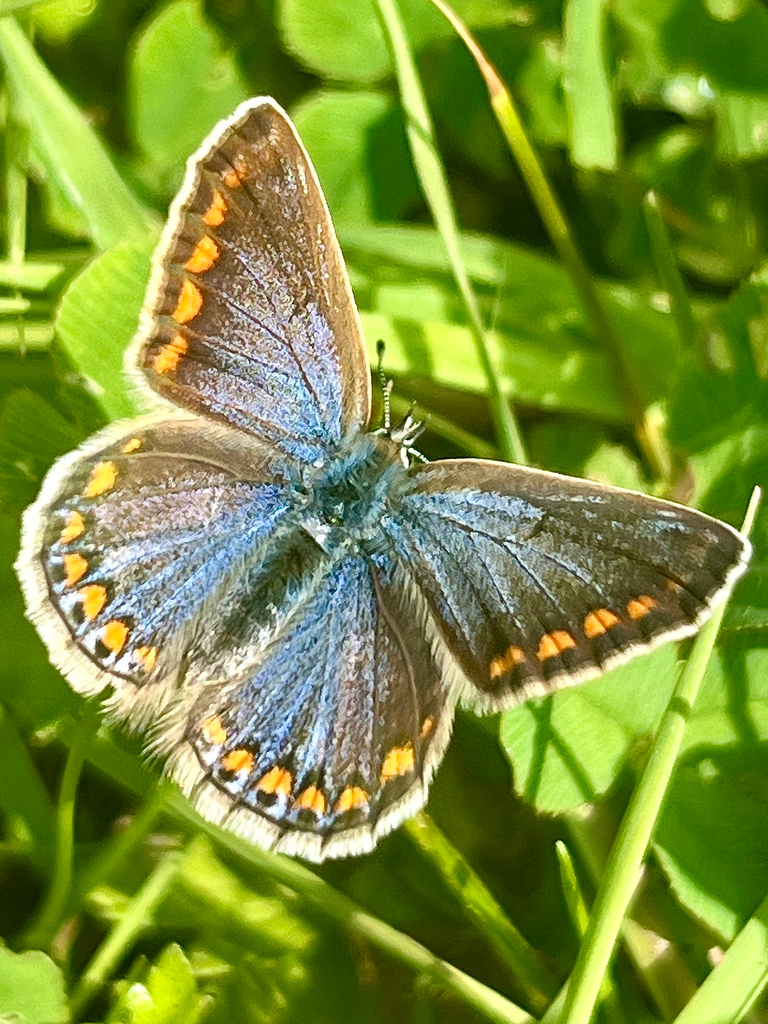
Common blue
Polyommatus icarus
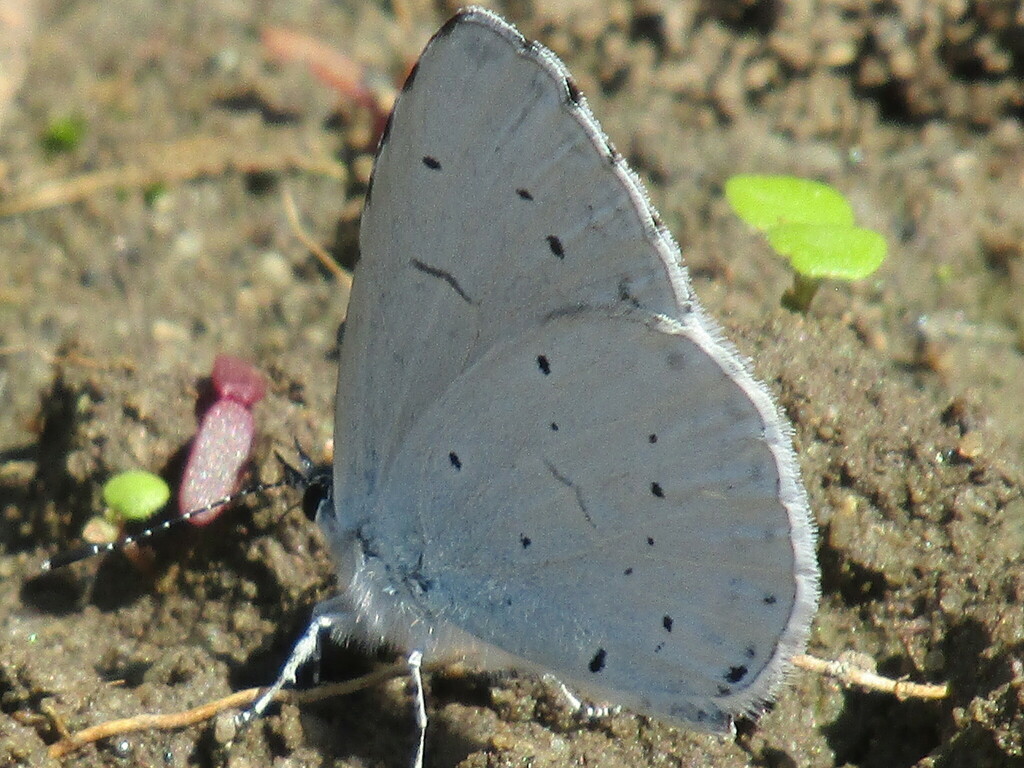
Holly blue
Celastrina argiolus
≠The key differences
Holly blue has a pale silvery-blue underside with small black dots and no orange spots; it usually flies higher, around hedges, shrubs and trees, rather than low over grassland.
Common blue males are a stronger blue and the underside pattern includes more pronounced orange spots; holly blue underside is paler with simpler spotting.
⚖︎Side by side
| Common blue | Holly blue | |
|---|---|---|
| To humans | Non-toxic | Non-toxic |
| Size | 28-36 mm wingspan | 26-34 mm wingspan |
| Colours | Sky blue, Brown, Pale grey-beige (underwing), Orange (submarginal spots) | Pale sky blue, Darker blue/steel, Pale grey underside, Black (wing margins and spots) |
| Family | Lycaenidae | Lycaenidae |
| Habitat | Flower-rich grasslands, meadows, road verges, coastal dunes, and gardens | Gardens, hedgerows, woodland edges, parks and scrubby open areas. |
| Range | Palearctic: widespread across Europe, North Africa and temperate Asia; introduced and established in eastern Canada since the early 2000s | Widespread across Europe, parts of North Africa and temperate Asia. |
| Active | Spring to autumn; typically April-September (one to three broods depending on latitude and climate); active in daylight, especially warm sunny periods | Two main flight periods in many regions: spring (April-May) and summer (June-August); flies during daylight hours. |
| Pest? | No | No |
🔍How to spot a common blue
- Males: bright sky-blue upperwings with narrow black margin and white fringe.
- Females: brown upperwings with orange submarginal spots on the hindwing; may show some blue scaling.
- Underside: pale grey-brown with small black spots surrounded by white and a row of orange lunules on the hindwing.
- Wingspan 28-36 mm; compare size and underwing pattern to similar local blues.
🔍How to spot a holly blue
- Small blue butterfly with 26-34 mm wingspan.
- Male upperside pale sky blue with narrow dark edge; female has broader black margin and darker scaling.
- Underside pale grey/whitish with small neat black spots; wings held closed at rest showing underside.
- Spring individuals often associated with holly; look for eggs or larvae on holly flower buds.
?Frequently asked questions
What is the difference between a common blue and a holly blue?
Holly blue has a pale silvery-blue underside with small black dots and no orange spots; it usually flies higher, around hedges, shrubs and trees, rather than low over grassland. Common blue males are a stronger blue and the underside pattern includes more pronounced orange spots; holly blue underside is paler with simpler spotting.
Is a common blue or a holly blue more dangerous?
Common blue: Non-toxic. Holly blue: Non-toxic. Not dangerous; does not bite or sting. Holly blue butterflies are harmless to people.
Identification from photos is never certain: don't handle insects you can't identify, and get medical advice for bites, stings or allergic reactions.