
Red-spotted purple vs Pipevine swallowtail
These two are easy to mix up. Here's how to tell a red-spotted purple from a pipevine swallowtail, and whether either one bites or stings.
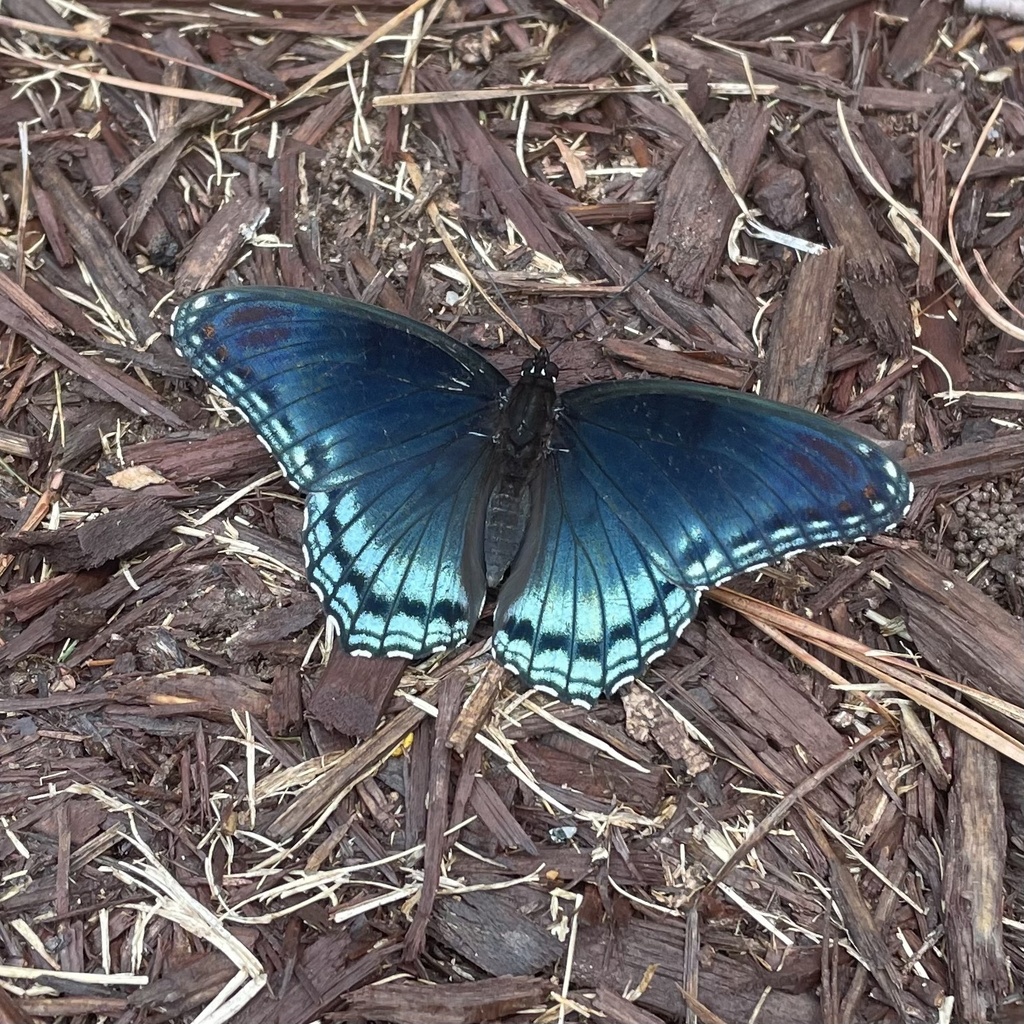
Red-spotted purple
Limenitis arthemis
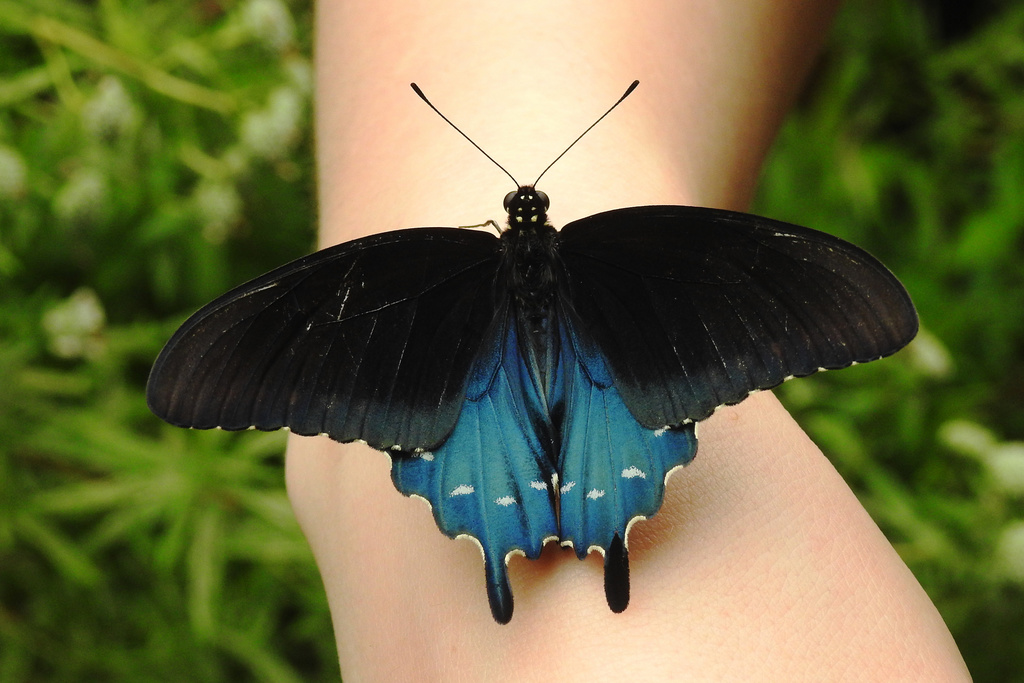
Pipevine swallowtail
Battus philenor
≠The key differences
Also dark and iridescent-blue from certain angles, but has distinctive tail-like hindwing extensions and different underside patterning; pipevine is a toxic model that red-spotted purple mimics.
A non-toxic mimic with similar iridescent blue-black upperwings and orange spots below, but it has no tails and its wings are more rounded; caterpillars feed on cherry, willow and poplar.
⚖︎Side by side
| Red-spotted purple | Pipevine swallowtail | |
|---|---|---|
| To humans | Non-toxic | Toxic if eaten |
| Size | 6-8 cm wingspan | Wingspan about 70-130 mm |
| Colours | Glossy blue, Black, Red-orange, Brown (underside), White (band, white admiral form) | Black, Iridescent blue, Orange, Red |
| Family | Nymphalidae | Papilionidae |
| Habitat | Deciduous and mixed woodlands, forest edges, parks, suburban gardens and riparian corridors. | Open woods, edges, meadows, gardens and areas where Aristolochia (pipevine) grows |
| Range | Eastern and central North America, from southern Canada through much of the eastern United States; distribution of forms varies geographically. | Eastern and western North America (throughout much of the United States), Mexico and parts of Central America; distribution follows availability of pipevine host plants |
| Active | Spring through early autumn (peak in summer); diurnal, most active during warm daylight hours. | Spring through autumn (multiple broods in warmer regions); active during daylight, especially late morning to afternoon |
| Pest? | No | No |
🔍How to spot a red-spotted purple
- Look for glossy blue-violet sheen on the upper wings with small red-orange marginal spots (red-spotted purple form).
- Note absence of tails (distinguishes from many swallowtails) and the overall dark, glossy ground colour.
- Compare the white-banded form (white admiral) which has a broad white band across both wings; both forms belong to the same species.
- Underside is mottled brown and camouflaged; check for reddish marginal spots on the underside in the red-spotted purple form.
🔍How to spot a pipevine swallowtail
- Large black swallowtail with a pronounced iridescent blue patch on the upper hindwing in males
- Row of bright red or orange spots along the underside of the hindwing
- Association with pipevine (Aristolochia) on which caterpillars feed
- Relatively small tail-like extensions on the hindwings (less pronounced than some other Papilionidae)
?Frequently asked questions
What is the difference between a red-spotted purple and a pipevine swallowtail?
Also dark and iridescent-blue from certain angles, but has distinctive tail-like hindwing extensions and different underside patterning; pipevine is a toxic model that red-spotted purple mimics. A non-toxic mimic with similar iridescent blue-black upperwings and orange spots below, but it has no tails and its wings are more rounded; caterpillars feed on cherry, willow and poplar.
Is a red-spotted purple or a pipevine swallowtail more dangerous?
Red-spotted purple: Non-toxic. Pipevine swallowtail: Toxic if eaten. Harmless to people. Pipevine swallowtail adults and caterpillars are not dangerous to touch.
Identification from photos is never certain: don't handle insects you can't identify, and get medical advice for bites, stings or allergic reactions.