
Meadow brown vs Gatekeeper
These two are easy to mix up. Here's how to tell a meadow brown from a gatekeeper, and whether either one bites or stings.
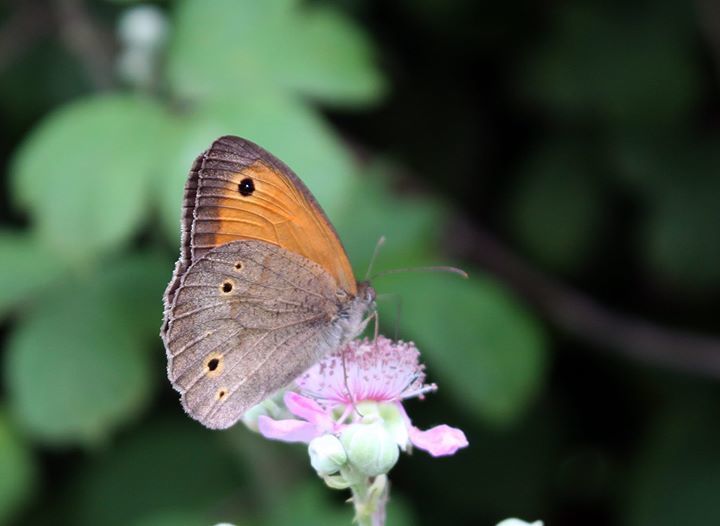
Meadow brown
Maniola jurtina
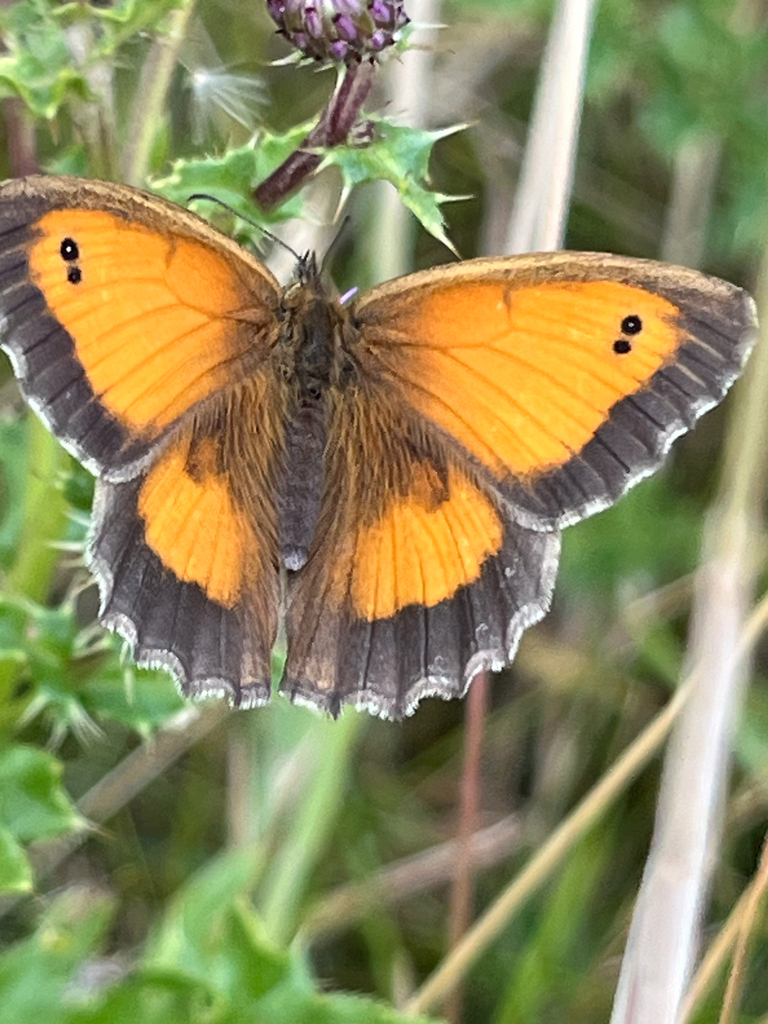
Gatekeeper
Pyronia tithonus
≠The key differences
Gatekeeper is smaller and brighter, with orange on both the forewing and hindwing, a forewing eyespot with two white pupils, and small white dots on the hindwing underside; usually found along hedgerows.
Meadow Brown is larger and browner with less orange, and its forewing eyespot has a single white pupil; the Gatekeeper's eyespot usually has two.
⚖︎Side by side
| Meadow brown | Gatekeeper | |
|---|---|---|
| To humans | Non-toxic | Non-toxic |
| Size | 45-50 mm wingspan | About 3.7-4.8 cm wingspan |
| Colours | Brown, Orange, Black, Cream | Orange-brown, Dark brown, Cream (underside markings), Black (eyespots) |
| Family | Nymphalidae | Nymphalidae |
| Habitat | Grassy habitats: meadows, pastures, roadside verges, rough grassland, dune slacks and urban parks. | Warm, sheltered grassy habitats: hedgerows, field margins, woodland clearings, rides and sunlit meadows |
| Range | Widespread across Europe, including the British Isles, into northwest Africa and parts of western Asia. | Widespread across much of Europe (including southern Britain and Ireland), extending to Anatolia and the Caucasus |
| Active | Main flight from late spring to early autumn (roughly May-September); one generation per year with a long flight period, and in hot southern areas females may rest through midsummer before laying eggs. Active during daylight, even in dull weather. | Mainly July-August, from late June in warmer areas; one brood per year |
| Pest? | No | No |
🔍How to spot a meadow brown
- Look for a brown butterfly with an orange patch on each forewing that usually contains one black eyespot with a white pupil.
- Wings closed: check the undersides of the hindwing for mottled brown and pale patterns that blend with dry grass.
- Note sex differences: females often have a larger orange patch and can appear darker than males.
- Compare size: meadow brown is medium-sized, larger than Small Heath but similar to some gatekeepers.
🔍How to spot a gatekeeper
- Look for orange wings with broad brown borders and a black forewing eyespot that usually has two white pupils
- Underside of the hindwing brownish with small white dots
- Males show a broad dark scent brand across the middle of the forewing
- Habitat: sitting near hedgerows and grassy edges, often perched on grass stalks or fluttering low
?Frequently asked questions
What is the difference between a meadow brown and a gatekeeper?
Gatekeeper is smaller and brighter, with orange on both the forewing and hindwing, a forewing eyespot with two white pupils, and small white dots on the hindwing underside; usually found along hedgerows. Meadow Brown is larger and browner with less orange, and its forewing eyespot has a single white pupil; the Gatekeeper's eyespot usually has two.
Is a meadow brown or a gatekeeper more dangerous?
Meadow brown: Non-toxic. Gatekeeper: Non-toxic. Meadow browns are harmless to people. Harmless to people.
Identification from photos is never certain: don't handle insects you can't identify, and get medical advice for bites, stings or allergic reactions.