
Small heath vs Gatekeeper
These two are easy to mix up. Here's how to tell a small heath from a gatekeeper, and whether either one bites or stings.
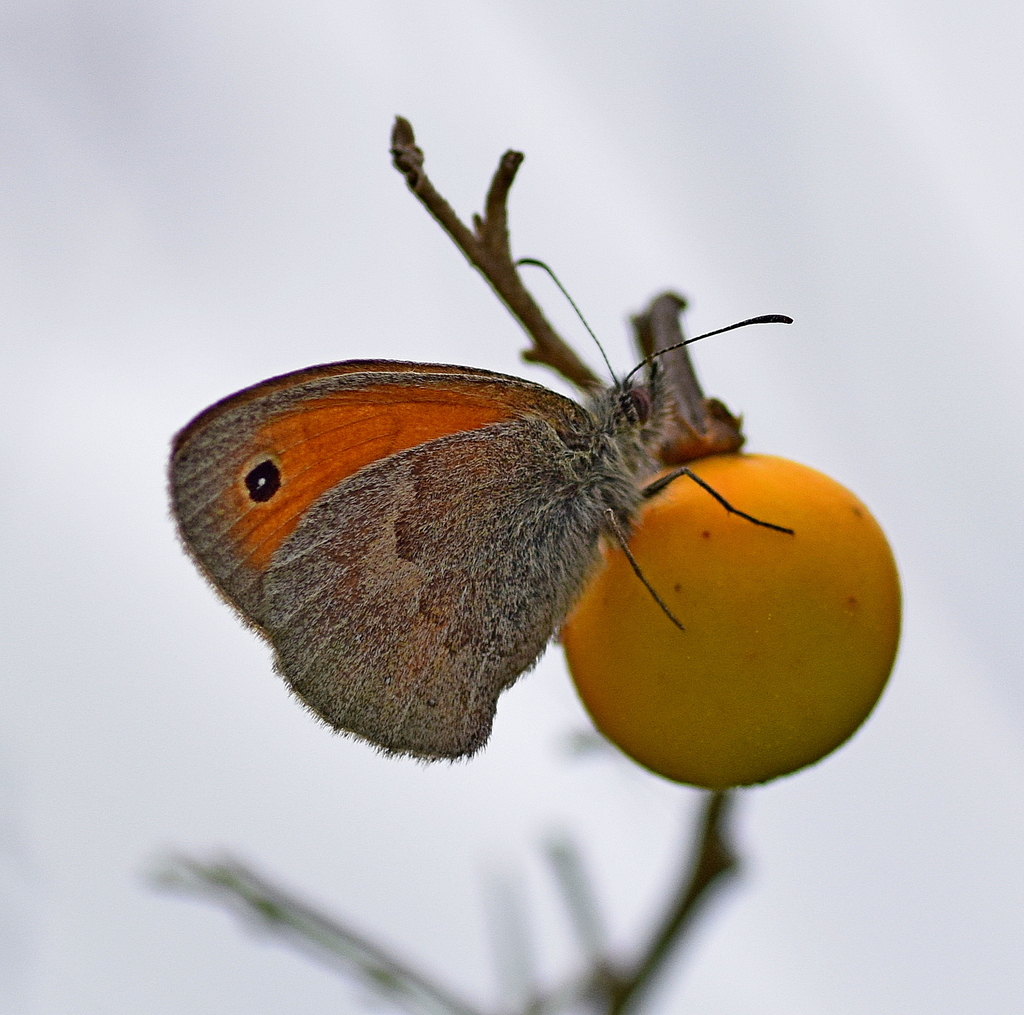
Small heath
Coenonympha pamphilus
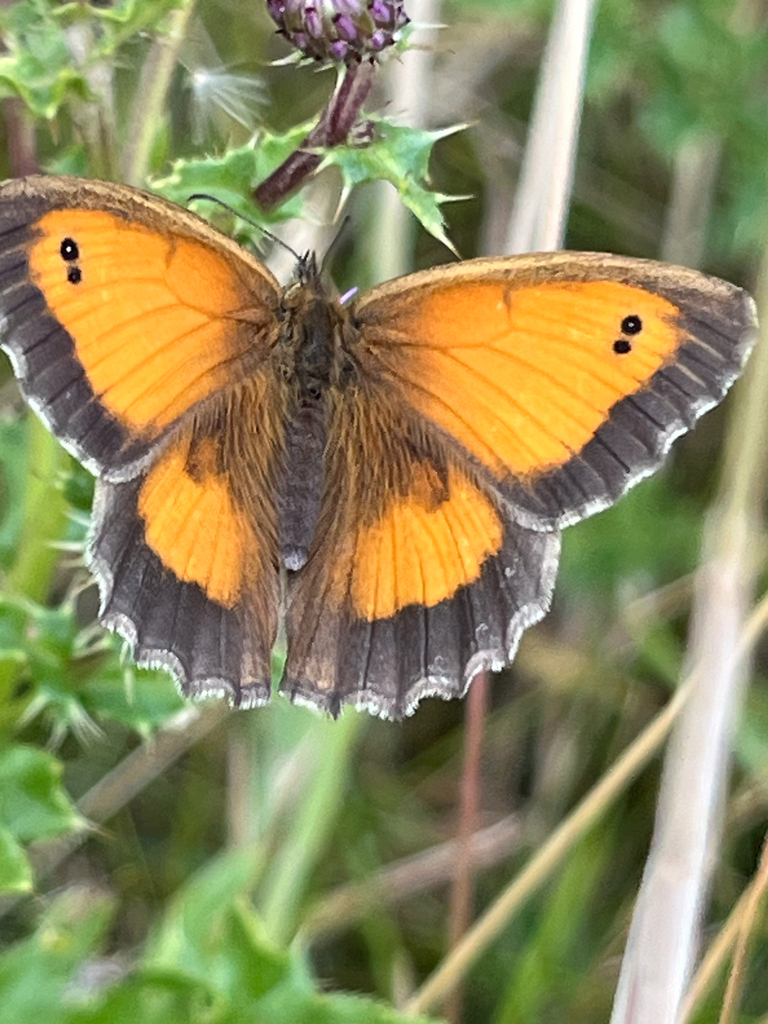
Gatekeeper
Pyronia tithonus
≠The key differences
Small Heath is smaller and paler, usually rests with wings closed and shows a single small eyespot on the forewing underside; Gatekeeper is larger with bold orange and brown uppersides.
⚖︎Side by side
| Small heath | Gatekeeper | |
|---|---|---|
| To humans | Non-toxic | Non-toxic |
| Size | Wingspan 32-38 mm | About 3.7-4.8 cm wingspan |
| Colours | Orange-brown, Warm brown, Cream, Grey-brown, Black | Orange-brown, Dark brown, Cream (underside markings), Black (eyespots) |
| Family | Nymphalidae | Nymphalidae |
| Habitat | Open grassy places: meadows, dune slacks, heathland, road verges, rough pasture and brownfield sites. | Warm, sheltered grassy habitats: hedgerows, field margins, woodland clearings, rides and sunlit meadows |
| Range | Widespread across Europe, parts of temperate Asia, and North Africa; common in many regions but locally variable. | Widespread across much of Europe (including southern Britain and Ireland), extending to Anatolia and the Caucasus |
| Active | Spring to autumn (commonly May-September); adults fly in warm, sunny weather and are most active in daylight, flying low over vegetation. | Mainly July-August, from late June in warmer areas; one brood per year |
| Pest? | No | No |
🔍How to spot a small heath
- Small size with wingspan about 32-38 mm and rounded wing shape.
- Single small black eyespot on the underside of the forewing, ringed pale yellow.
- Upper side plain orange-brown without strong markings; underside hindwing greyish-brown with subtle bands.
- Flies low and fast close to the ground in short bursts; often seen settling with wings closed.
🔍How to spot a gatekeeper
- Look for orange wings with broad brown borders and a black forewing eyespot that usually has two white pupils
- Underside of the hindwing brownish with small white dots
- Males show a broad dark scent brand across the middle of the forewing
- Habitat: sitting near hedgerows and grassy edges, often perched on grass stalks or fluttering low
?Frequently asked questions
What is the difference between a small heath and a gatekeeper?
Small Heath is smaller and paler, usually rests with wings closed and shows a single small eyespot on the forewing underside; Gatekeeper is larger with bold orange and brown uppersides.
Is a small heath or a gatekeeper more dangerous?
Small heath: Non-toxic. Gatekeeper: Non-toxic. Harmless to people — does not bite or sting. Harmless to people.
Identification from photos is never certain: don't handle insects you can't identify, and get medical advice for bites, stings or allergic reactions.