
Gatekeeper
Pyronia tithonus · Brush-footed butterflies
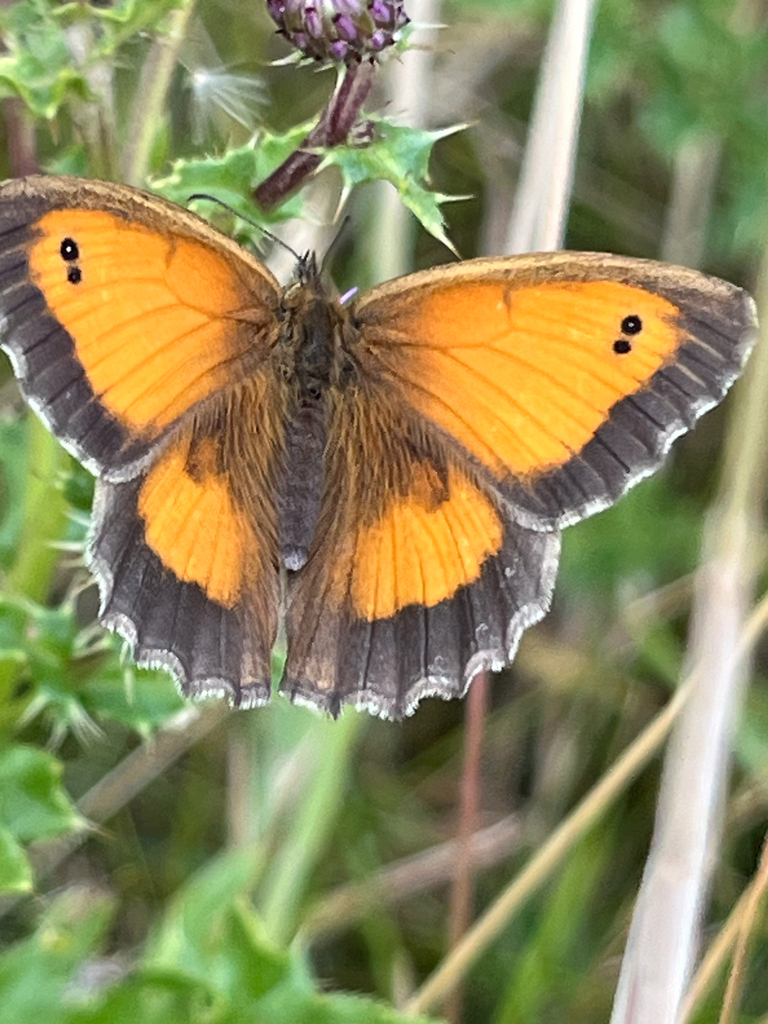
A small, common brown-and-orange butterfly of grassy hedgerows and sunny clearings, recognizable by orange patches and black eyespots on the forewings.
!Is the gatekeeper dangerous?
No. Harmless to people. Does not bite or sting. Handle gently if you must; like all butterflies their wings and scales are delicate.
Pets
Harmless to pets. Not known to be poisonous or to transmit disease.
📖Overview
The Gatekeeper (Pyronia tithonus) is a small, common nymphalid butterfly found across much of Europe, Anatolia and the Caucasus. It prefers warm, sheltered habitats such as hedgerows, field margins, woodland edges and rides where grasses and nectar flowers are abundant. Males are territorial and often perch in sunny spots near hedges; females are more widely wandering while seeking places to lay eggs.
This species has one brood per year, with adults flying in high summer. Larvae feed on various grasses; adults visit a wide range of nectar flowers. It is not harmful to people, pets or crops, and is generally welcomed in gardens as a pollinator and part of local biodiversity.
🔍How to identify a gatekeeper
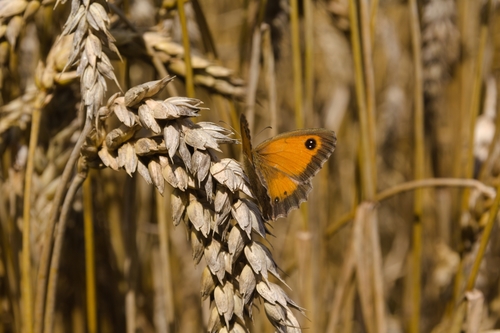
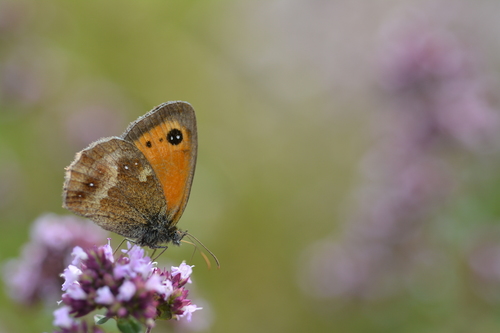
Wings are warm orange with broad brown borders on the upperside. Each forewing has a black eyespot near the tip that usually contains two small white pupils, a key feature. The hindwing underside is brownish with small white-centred dots. Forelegs are reduced (typical of brush-footed butterflies). Males are smaller and brighter and have a broad dark scent-scale patch (brand) across the middle of the forewing.
- Look for orange wings with broad brown borders and a black forewing eyespot that usually has two white pupils
- Underside of the hindwing brownish with small white dots
- Males show a broad dark scent brand across the middle of the forewing
- Habitat: sitting near hedgerows and grassy edges, often perched on grass stalks or fluttering low
Lookalikes
Meadow Brown Maniola jurtina
Meadow Brown is larger and browner with less orange, and its forewing eyespot has a single white pupil; the Gatekeeper's eyespot usually has two.
Ringlet Aphantopus hyperantus
Ringlet is dark chocolate brown overall with rows of ringed eyespots on the undersides and no orange; the Gatekeeper is bright orange and brown.
Small Heath Coenonympha pamphilus
Small Heath is smaller and paler, usually rests with wings closed and shows a single small eyespot on the forewing underside; Gatekeeper is larger with bold orange and brown uppersides.
↻Life cycle
Egg
Females lay single eggs on or near grasses, often dropping them among vegetation in shady spots; eggs hatch after about 2-3 weeks.
Larva (caterpillar)
Green-brown caterpillars feed on grasses, mainly at night. They overwinter as small caterpillars and complete growth in spring, hidden in grass tussocks.
Pupa (chrysalis)
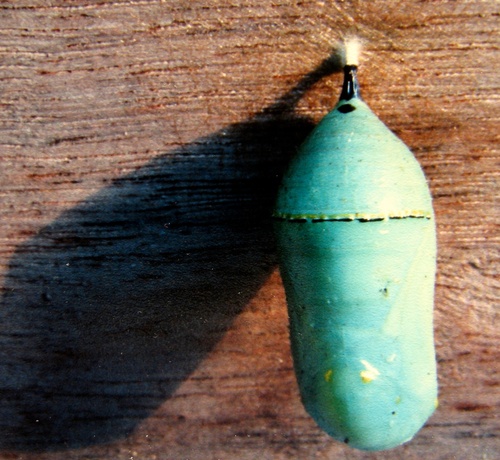
Pupation occurs low in vegetation or attached to grass stems; the chrysalis is cryptic and blends with dead grass.
Adult (butterfly)
Adults emerge in summer, feed on nectar, mate and the females lay eggs to start the next generation.
🍃Diet and predators
Young eat
Grasses (various species such as Brachypodium, fescues and other meadow grasses)
Adults eat
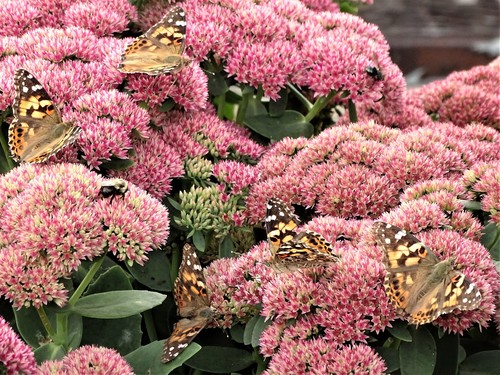
Nectar from a variety of flowers (brambles, thistles, knapweeds, and other meadow plants)
Predators of the young
Parasitic wasps, spiders, ground beetles and small insectivorous birds
Predators of adults
Birds, dragonflies and predatory insects; adults may also be taken by spiders and mantids
🌱Effect on plants and gardens
Larvae feed on several grasses (for example Brachypodium species, fescues and meadow grasses). Adults visit nectar sources such as brambles, thistles, knapweeds and other meadow flowers and act as pollinators.
📍Where and when to find it
Adults: sunny hedgerows, field margins, woodland edges and flower-rich rides; often perch on grass stems. Larvae: in grass tussocks at the base of stems.
Best time
July-August (main flight period); warm sunny days and mid-morning to afternoon are best for observing adults.
Observation tips
Look along sunny hedgerows and field edges where brambles and wildflowers grow. Approach slowly and photograph with a zoom lens as they perch low on grasses and are easily disturbed.
✨Fun facts
- Male Gatekeepers are territorial and often perch repeatedly on the same grass stems to watch for females.
- The double white pupil in the forewing eyespot is one of the easiest ways to recognise a Gatekeeper.
- In Britain the Gatekeeper has spread northwards in recent decades, a change linked to a warming climate.
?Frequently asked questions
Is the Gatekeeper butterfly harmful?
No. Gatekeepers are harmless to people, pets and crops. They do not bite or sting.
Do Gatekeepers visit gardens?
Yes. They often visit gardens with flower borders, brambles or other nectar sources, especially if there are sunny sheltered spots and grassy edges.
How can I attract Gatekeepers to my garden?
Provide native nectar flowers (brambles, thistles, knapweeds), sunny sheltered spots and leave some long grass or grass tussocks for caterpillars to feed and pupate.
When can I see Gatekeeper butterflies?
Typically in summer. In much of Europe adults are most common in July and August; in warmer regions or years they can appear from late June.
How do I tell a Gatekeeper from a Meadow Brown?
Gatekeepers are smaller and more orange, and their forewing eyespot usually has two white pupils; Meadow Browns are larger and browner, with a single white pupil in the eyespot.
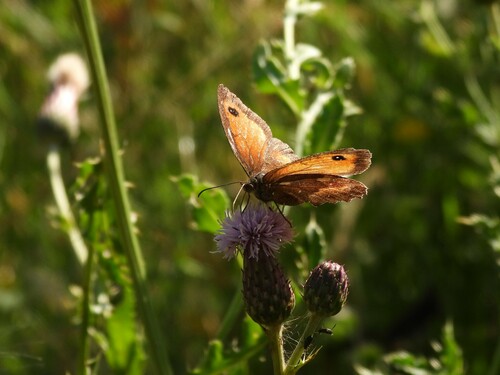
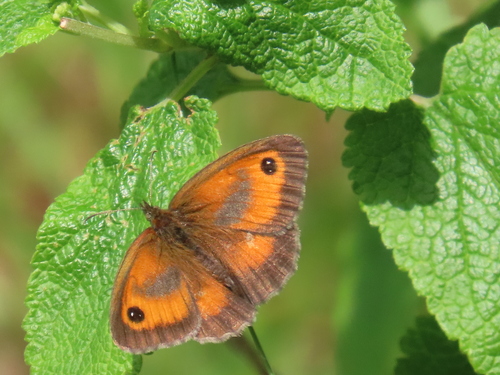
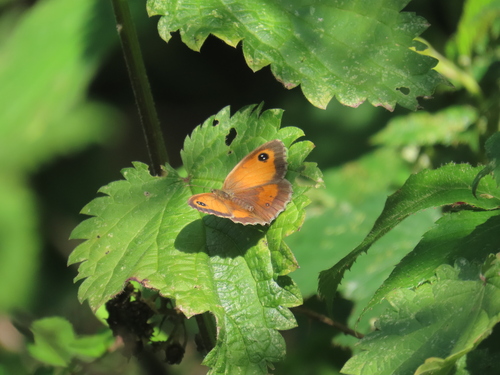
📷Photos of the gatekeeper
More butterflies & moths
This guide was written with AI assistance and fact-checked, last updated 2026-10-10. Identification from photos is never certain: don't handle insects you can't identify, and get medical advice for bites, stings or allergic reactions. More about the gatekeeper: iNaturalist, Wikipedia.