
Ringlet
Aphantopus hyperantus · Brush-footed butterflies
A medium brown, woodland-and-grassland butterfly with multiple black eye-spots on each wing; common in damp grassy places across much of Europe and temperate Asia.
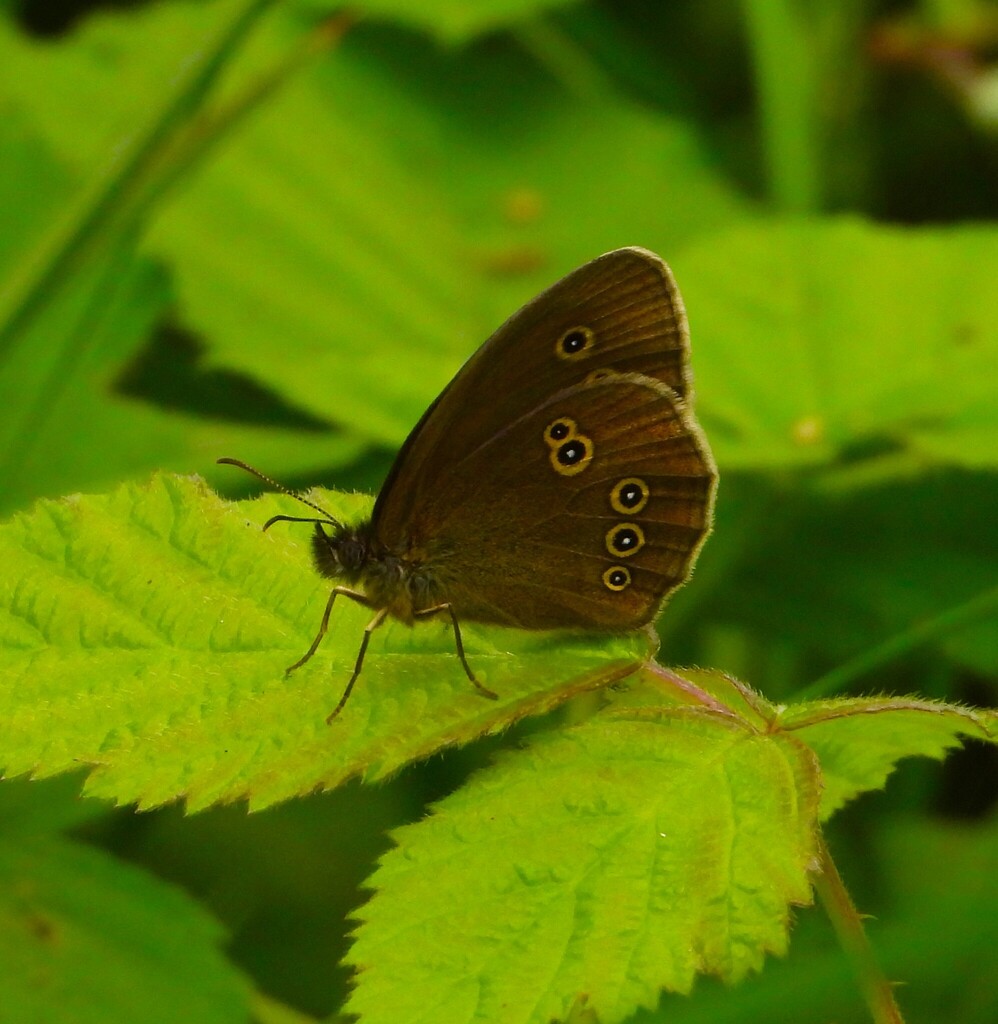
!Is the ringlet dangerous?
No. Ringlets do not bite or sting and are harmless to people. No medical treatment is required after handling a live specimen beyond normal hygiene (wash hands).
Pets
Harmless to pets. Not known to carry diseases transmissible to cats or dogs.
📖Overview
The Ringlet is a medium-sized butterfly found across much of Europe and parts of temperate Asia. It prefers shady, damp grasslands, hedgerows, woodland rides and meadows. Adults are most often seen in mid to late summer, flying slowly close to vegetation. Females lay eggs on grasses; the caterpillars feed on a range of grasses and overwinter as larvae before pupating in spring.
Ringlets are not harmful to people or pets. They are non-toxic and do not bite or sting. Populations are generally stable in suitable habitats, though local declines occur where grassland habitats become too intensively managed or dried out.
🔍How to identify a ringlet
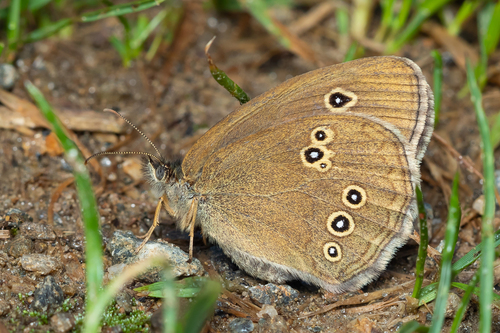
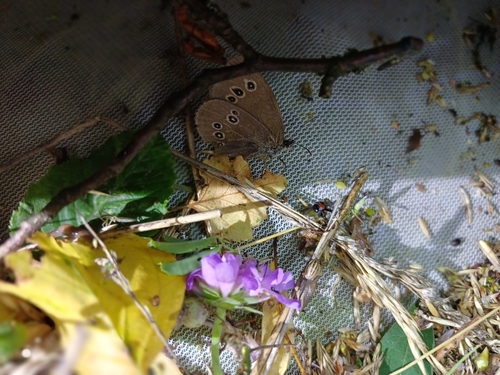
Adults are uniformly dark brown on the upper surface with a velvety appearance. The underside of both fore- and hindwings has a slightly paler, more reddish-brown tone and shows a series of rounded black eye-spots, each often surrounded by a pale ring. The number of eye-spots varies but there are usually several on each wing (commonly four to six on the hindwing underside). Wing edges are not strongly scalloped. Males are often a slightly darker brown than females; females may show faint bronze or reddish sheen and slightly larger or more distinct eye-spots.
- Uniform dark brown upper wings with velvety appearance (no bold bands or bright markings).
- Multiple black eye-spots with pale rings on the underside of wings, commonly 4-6 on the hindwing.
- Slow, low flight among tall grasses and along woodland edges.
- Lack of the central pale band that distinguishes Meadow Brown (Maniola jurtina).
Lookalikes
Meadow Brown Maniola jurtina
Meadow Brown usually has a single prominent eye-spot on the forewing upper surface and a paler central band on the upper wings; Ringlet is more uniformly dark with multiple hindwing spots visible on the underside.
Scotch Argus Erebia aethiops
Scotch Argus has a more orange-brown tone and differently arranged eye-spots; its range and habitat preferences differ, often in upland areas.
Small Heath Coenonympha pamphilus
Small Heath is smaller with a more rounded wing shape and usually only one or two small eye-spots; Ringlet is larger with multiple spots on the hindwing underside.
↻Life cycle
Egg
Females scatter their pale eggs over grassy vegetation, often dropping them while in flight or perched, in summer. Eggs hatch after two or three weeks depending on temperature.
Larva (caterpillar)
Green-brown caterpillars feed on grasses and grow through several instars. They overwinter as partially-grown larvae among grass tussocks.
Pupa (chrysalis)
In late spring the larva pupates near the base of grasses or low vegetation; pupal stage lasts a couple of weeks before the adult emerges.
Adult (butterfly)
Adults fly in summer, mate, and females lay eggs on grasses to start the next generation.
🍃Diet and predators
Young eat
Grasses (Poa, Deschampsia, Festuca, Molinia and others)
Adults eat
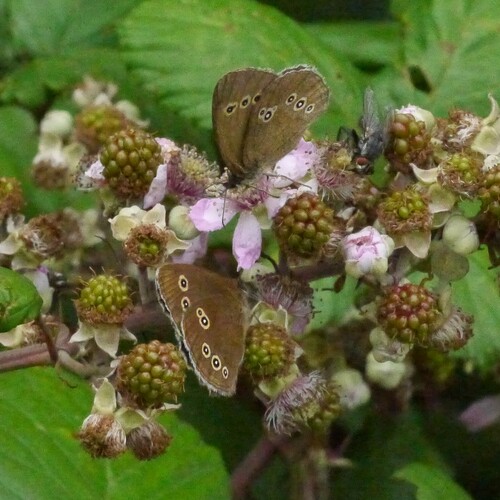
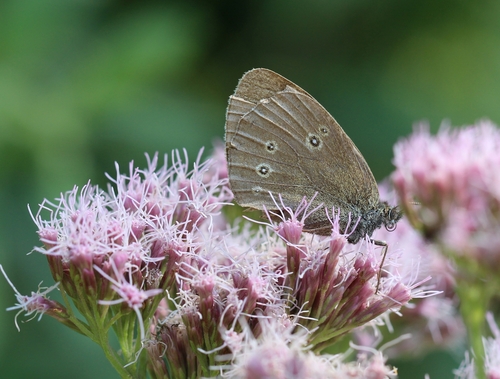
Nectar from bramble, thistle, knapweed and various woodland and meadow flowers; also sap and honeydew on occasion
Predators of the young
Small mammals, ground beetles and parasitic wasps
Predators of adults
Insectivorous birds, dragonflies and spiders
🌱Effect on plants and gardens
Larvae feed on a variety of common grasses (for example Poa, Deschampsia, Festuca and Molinia); adults feed on nectar from brambles, thistles and other flowering plants but are not major pollinators of crops.
📍Where and when to find it
Look in damp meadows, woodland rides, hedgerows and grassy clearings. Adults patrol low through grass; eggs are on grass stems and caterpillars are found among grass tussocks.
Best time
June to August, daytime (often in the afternoon or on dull days).
Observation tips
Walk slowly along field edges and woodland rides; photograph from low angles to show underside eye-spots. Leave some areas unmown to increase chances of finding larvae.
✨Fun facts
- Ringlet caterpillars overwinter and resume feeding in spring, so a single summer brood can span parts of two calendar years for the larvae.
- The name 'ringlet' refers to the small pale rings around the black eye-spots on the wings.
- Ringlets often fly in dull or misty weather when many other butterflies are inactive.
?Frequently asked questions
Are Ringlet butterflies dangerous?
No. Ringlets are harmless to people and pets; they do not sting or bite.
Do Ringlets bite or sting?
No. They are non-aggressive butterflies and do not have biting or stinging structures.
Why do I have Ringlets in my garden?
If your garden has tussocky grasses, native wildflowers and sheltered, damp spots or hedgerows, it provides suitable habitat and food plants for Ringlets.
How can I encourage Ringlets into my garden?
Leave areas of long grass or create a wildflower meadow, tolerate some bramble and provide nectar plants such as thistles and brambles. Avoid mowing the entire area during summer and protect grass tussocks for overwintering larvae.
How do I get rid of Ringlets?
Ringlets are not pests and do not require control. If you must reduce numbers, the only reliable method is habitat alteration (removing long grasses and nectar sources), but this also reduces biodiversity and is not recommended.
When are Ringlets active?
Adults are typically seen from June through August, with peak activity in July, flying during daylight including cooler or cloudy conditions.
📷Photos of the ringlet
More butterflies & moths
This guide was written with AI assistance and fact-checked, last updated 2026-10-10. Identification from photos is never certain: don't handle insects you can't identify, and get medical advice for bites, stings or allergic reactions. More about the ringlet: iNaturalist, Wikipedia.