
Jersey tiger
Euplagia quadripunctaria · Tiger moths
A striking day-flying tiger moth with black-and-cream striped forewings and bright red-orange hindwings; common in parts of Europe and active in daylight.
!Is the jersey tiger dangerous?
No. Jersey tiger moths are not dangerous. Adults do not bite or sting. The caterpillars are hairy but not known to cause significant skin irritation; however, people with sensitive skin or allergies should avoid prolonged handling.
Pets
Not poisonous to pets. Curious pets may try to eat caterpillars or adults; ingestion of large numbers of any insect can cause mild digestive upset but there is no known specific toxin in this species that harms dogs or cats.
📖Overview
The Jersey tiger is a large, showy tiger moth found across much of Europe, parts of western Asia and North Africa. Unlike many moths, adults are often active by day and are conspicuous when flying because of their bright hindwing colours. Larvae are hairy, polyphagous caterpillars that feed on low-growing plants. In cooler parts of its range it is usually single-brooded, while warmer areas may support an extended flight period.
🔍How to identify a jersey tiger
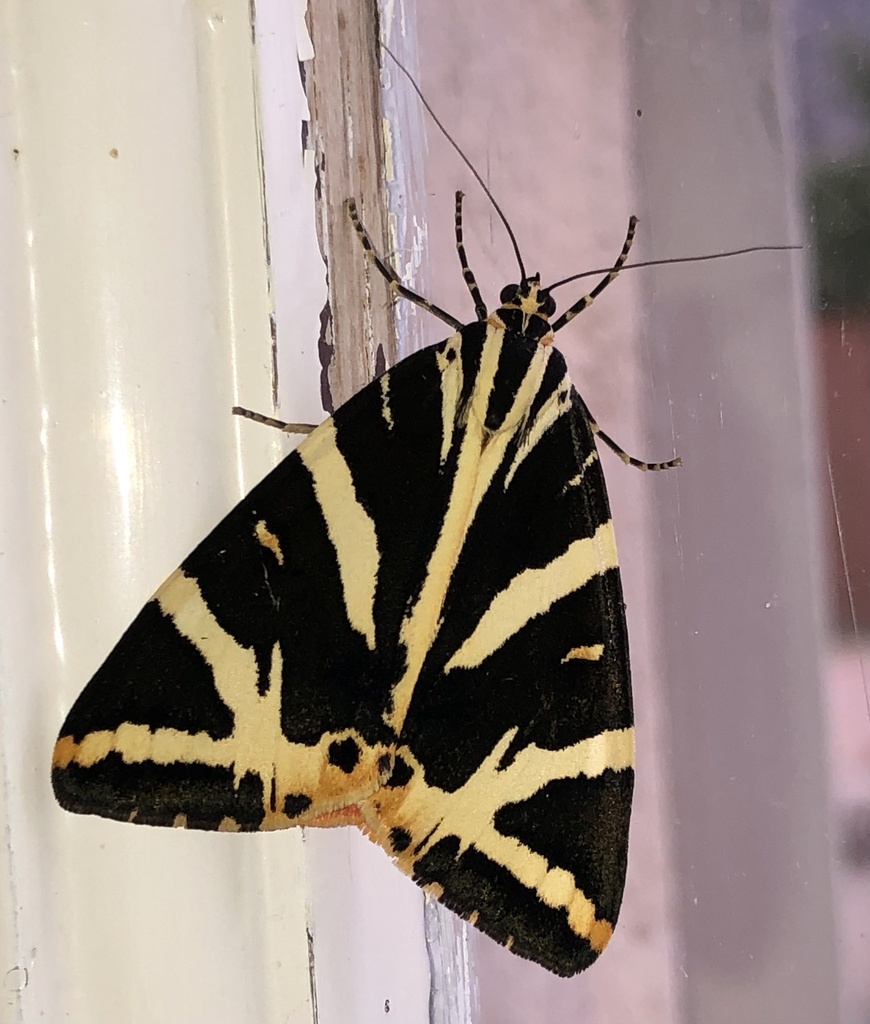
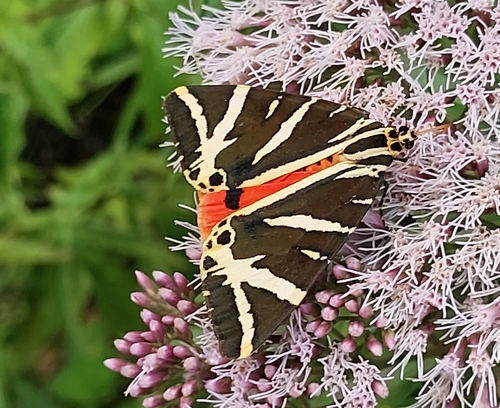
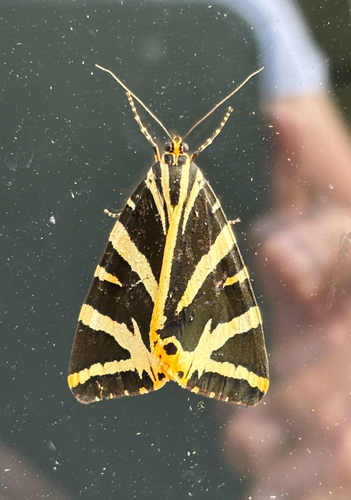
Adults have dark brown to black forewings marked with bold cream or white diagonal stripes and spots; the hindwings are vivid red-orange (occasionally yellow) with several black spots. When at rest the forewings conceal the bright hindwings, making the moth appear cryptic until disturbed. The body is robust and hairy; antennae are filiform (threadlike) in both sexes.
- Black or dark brown forewings with bold cream/white diagonal stripes and spots.
- Bright red-orange hindwings with one or more dark spots, visible in flight or when wings are opened.
- Relatively large moth (wingspan about 45-65 mm) and day-flying; often seen resting on sunlit walls or vegetation.
Lookalikes
Scarlet tiger Callimorpha dominula
Scarlet tiger has glossy black-green forewings with cream and yellow spots rather than diagonal cream stripes, and red hindwings with black blotches; it flies earlier, in June-July.
Cinnabar moth Tyria jacobaeae
Cinnabar is smaller with charcoal-grey forewings marked by a red stripe and two red spots, and red hindwings edged in black; it has no cream stripes.
↻Life cycle
Egg
Females lay small clusters of eggs on low vegetation. Eggs hatch after a few days to a few weeks depending on temperature.
Larva (caterpillar)
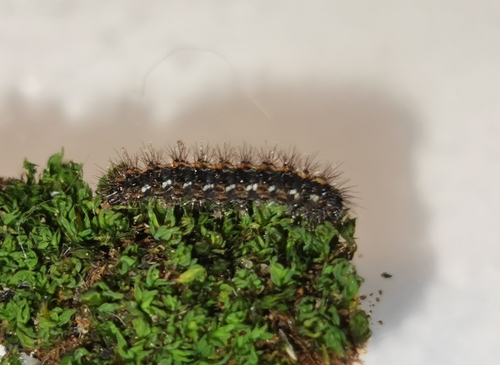
A hairy, dark caterpillar with a pale line along the back, feeding on various low-growing plants. Larvae hatch in late summer, overwinter while small and complete growth the following spring.
Pupa
Pupation occurs in a loose cocoon among leaf litter or low vegetation in early summer; the pupal stage lasts a few weeks.
Adult (moth)
Day-active, colourful moth that flies in summer, visits flowers for nectar, and is visible on walls and vegetation.
🍃Diet and predators
Young eat
Generalist: feeds on a variety of low herbaceous plants such as nettles, dandelion, ground-ivy and other common weeds.
Adults eat
Mainly nectar from flowers; adults also sip moisture and possibly honeydew.
Predators of the young
Birds, predatory insects and parasitoid wasps; small mammals may also eat caterpillars.
Predators of adults
Birds and bats; bright hindwing colours act as a warning (aposematism) and can reduce predation.
🌱Effect on plants and gardens
Caterpillars feed on a wide range of low plants and herbs (including nettles, dandelion, ground ivy and other common species). They rarely cause significant damage to gardens or crops.
📍Where and when to find it
Adults: sunny walls, hedgerows, flower-rich margins and coastal cliffs. Caterpillars: on low-growing herbs and weeds, often among nettles and dandelions.
Best time
Best seen from July to September (peak in August) in northern Europe, during daylight on warm, sunny days.
Observation tips
Look for a dark striped moth at rest; if it flies, watch for the red-orange flash of the hindwings. Photograph from a short distance to avoid disturbing it and use a telephoto or macro lens for close-ups.
✨Fun facts
- Unlike many moths, Jersey tiger is often active in daylight and is a familiar sight on sunny walls and hedgerows.
- Its bright hindwings act as a flash of warning colour to startle predators when the moth takes off.
- The species has been expanding northwards in recent decades, and a famous mass summer gathering occurs in the 'Valley of the Butterflies' on Rhodes, Greece.
?Frequently asked questions
Is the Jersey tiger moth dangerous?
No. Adults are harmless and do not bite or sting. The caterpillars are hairy but are not known to cause serious harm; avoid handling if you have sensitive skin or allergies.
Do Jersey tiger caterpillars damage gardens?
Not usually. Caterpillars feed on common weeds and low plants but rarely occur in numbers high enough to cause serious garden damage.
Why is a Jersey tiger in my house?
Adults are day-active and may be attracted to bright windows, lights or flowers near buildings. They may also rest on warm walls and accidentally enter houses.
How can I get rid of Jersey tiger moths in my house?
They are harmless — gently catch and release them outside using a jar or a sheet. Avoid killing them; sealing entry points and turning off unnecessary lights can reduce indoor visits.
Where does the Jersey tiger live?
It occurs across southern and central Europe, parts of western Asia and North Africa. In the UK it is best known from Jersey and southern coastal areas but is spreading northwards.
📷Photos of the jersey tiger
More butterflies & moths
This guide was written with AI assistance and fact-checked, last updated 2026-10-10. Identification from photos is never certain: don't handle insects you can't identify, and get medical advice for bites, stings or allergic reactions. More about the jersey tiger: iNaturalist, Wikipedia.