
Diamondback moth
Plutella xylostella · Diamondback moths
A tiny global pest of cabbage-family crops whose larvae skeletonize leaves and are famous for rapid insecticide resistance.
!Is the diamondback moth dangerous?
No. Diamondback moths are harmless to people — they do not bite or sting and are not poisonous. Handling larvae or adults may cause minor annoyance only. No special first aid is needed.
Pets
Not toxic to pets. Heavy infestations on edible plants could reduce available food but the insect itself poses no direct threat to cats or dogs.
📖Overview
Plutella xylostella is a small moth that feeds as a larva on plants in the Brassicaceae (cabbage) family. It is one of the most widely distributed and economically important crop pests worldwide, able to produce many generations per year and to colonize temperate and tropical regions. Adults are weak fliers but can be carried long distances on the wind; damage is caused by the green, smooth caterpillars that chew irregular holes and leave translucent patches on leaves. Control is challenging because populations readily evolve resistance to chemical insecticides.
🔍How to identify a diamondback moth
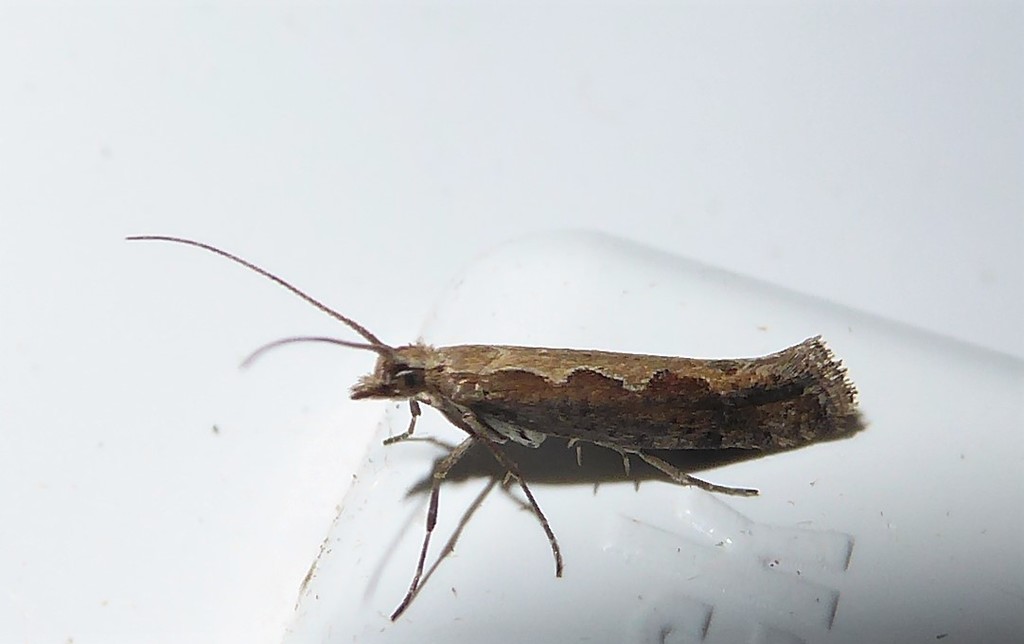
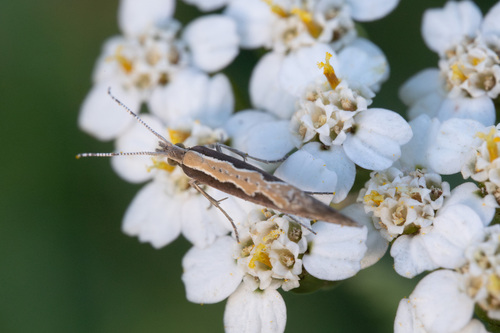
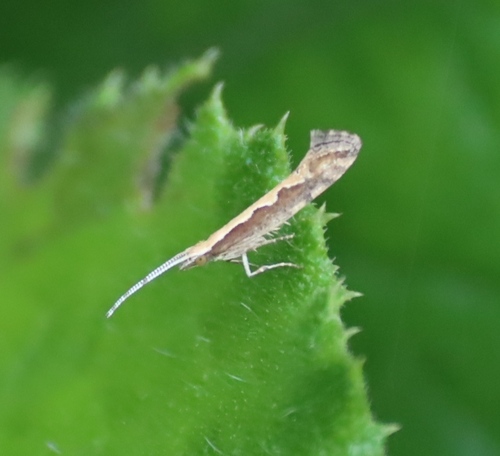
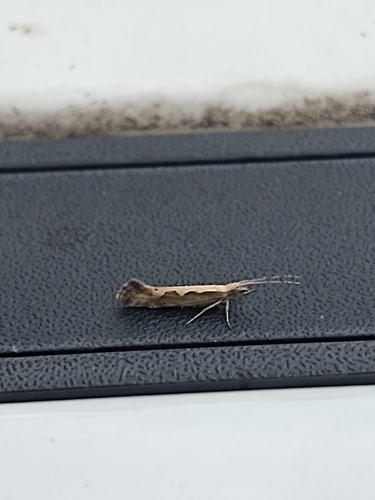
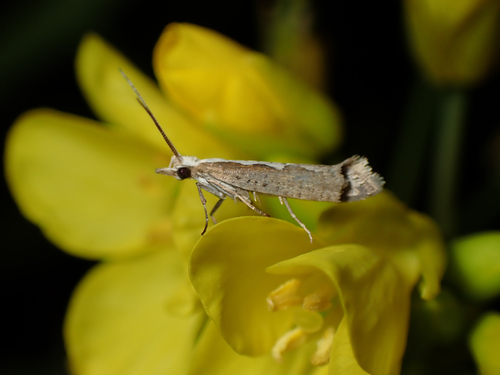
Adults are small, slender moths with a wingspan roughly 12-15 mm. When at rest the forewings are folded roof-like over the body and often show pale, longitudinal markings that can form a row of diamond-shaped marks along the back — the feature giving the species its common name. Forewings are generally light brown to grey with subtle lighter streaks; hindwings are paler and fringed. Larvae are smooth, green, tapered caterpillars about 8-12 mm long when mature. Pupae are green to brown and usually formed in loose silken cocoons on leaves or stems.
- Small moth with 12-15 mm wingspan; forewings folded roof-like and showing pale longitudinal streaks that can form diamond-shaped markings.
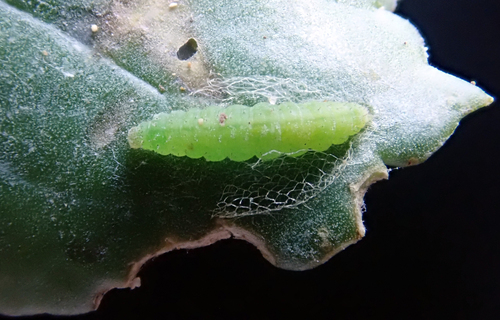
- Larvae are smooth bright green caterpillars about 8-12 mm long, usually on undersides of brassica leaves.
- Feeding damage: small holes, windowing (translucent patches) and skeletonized leaves on cabbage-family plants.
- Pupae in loose silk cocoons attached to leaves or stems, often visible on infested plants.
Lookalikes
Cabbage moth Mamestra brassicae
Much larger moth; larvae are thicker and the adult wing pattern and size are different (Mamestra about 30-40 mm wingspan).
Cabbage looper Trichoplusia ni
Looper caterpillars move by looping and are white-striped; adults are larger with distinctive wing markings unlike the small diamondback moth.
Other Plutella species Plutella spp.
Closely related small moths; identification to species may require examination of genitalia or DNA in regions where multiple Plutella species occur.
↻Life cycle
Egg
Tiny, pale yellow to whitish eggs are laid singly or in small groups on undersides of leaves, hatching in 3-7 days depending on temperature.
Larva (caterpillar)
There are usually four larval instars; larvae are smooth, green and feed openly on leaves, causing most crop damage over 7-14 days.
Pupa
Pupation occurs in a loose silk cocoon attached to leaves, stems or debris; pupal stage lasts about 5-15 days.
Adult (moth)
Moths are small, nocturnal, mate soon after emergence and females start laying eggs within a few days.
🍃Diet and predators
Young eat
Leaves of Brassicaceae (cabbage, broccoli, kale, mustard, canola/rapeseed) and related wild crucifers.
Adults eat
Adults feed little; may take nectar or not feed much while focusing on reproduction.
Predators of the young
Parasitoid wasps (e.g. Cotesia spp.), predatory bugs, lacewings, spiders and birds.
Predators of adults
Bats, night-flying predatory insects and spiders.
🌱Effect on plants and gardens
Larvae feed on leaves of Brassicaceae (cabbage, broccoli, cauliflower, kale, Brussels sprouts, mustard, canola/rapeseed) and some wild crucifers. Feeding creates small holes, windowing, and skeletonized leaves; heavy infestations reduce yield and marketability.
How to get rid of diamondback moths
Combine cultural, biological and chemical methods: remove crop residues and weed brassicas to reduce breeding sites; use floating row covers or insect-proof netting on small plots; encourage or introduce natural enemies (parasitoid wasps such as Cotesia plutellae, predatory bugs, spiders); apply Bacillus thuringiensis (Bt) products against young larvae; practice crop rotation and stagger planting to avoid continuous host availability; where chemical control is used, rotate insecticide classes and follow resistance-management guidelines because this species develops resistance quickly.
📍Where and when to find it
Look on the undersides of brassica leaves for eggs and larvae; adults fly at night and may be found resting on foliage by day.
Best time
Spring to autumn in temperate regions; year-round in the tropics. Early morning or evening can reveal resting adults; inspect plants regularly for larvae.
Observation tips
Check under leaves for small green larvae and loose silk cocoons. Use a hand lens to see eggs. For monitoring, simple yellow sticky traps or pheromone traps (for males) can detect presence and population trends.
✨Fun facts
- Named for the faint diamond-shaped pattern formed by pale streaks on the forewings.
- It was the first insect documented to evolve resistance to Bt (Bacillus thuringiensis) sprays in the field, and resists many chemical insecticides; resistance management is a major part of control.
- A single female can lay several hundred eggs in her short life, enabling rapid population build-up under favorable conditions.
?Frequently asked questions
Do diamondback moths bite?
No. They do not bite or sting people.
Will diamondback moths damage my garden cabbages?
Yes — the caterpillars feed on brassica leaves and can reduce yield and appearance, especially if infestations are heavy.
How do I get rid of diamondback moths?
Use integrated methods: remove crop residues and wild brassicas, use row covers to exclude adults, apply Bt sprays against young larvae, conserve or release natural enemies, and rotate insecticides to delay resistance.
Are they found worldwide?
Yes. Diamondback moth is found on all continents where brassica crops are grown and can be present year-round in warm regions.
Why are they so hard to control with insecticides?
This species evolves resistance rapidly to many chemical classes; improper or repeated use of the same insecticide encourages resistant populations.
📷Photos of the diamondback moth
More butterflies & moths
This guide was written with AI assistance and fact-checked, last updated 2026-10-10. Identification from photos is never certain: don't handle insects you can't identify, and get medical advice for bites, stings or allergic reactions. More about the diamondback moth: iNaturalist, Wikipedia.