
Scarce swallowtail
Iphiclides podalirius · Swallowtails
A pale yellow-and-black swallowtail butterfly with long tail-like hindwing projections, found across much of Europe and temperate Asia.
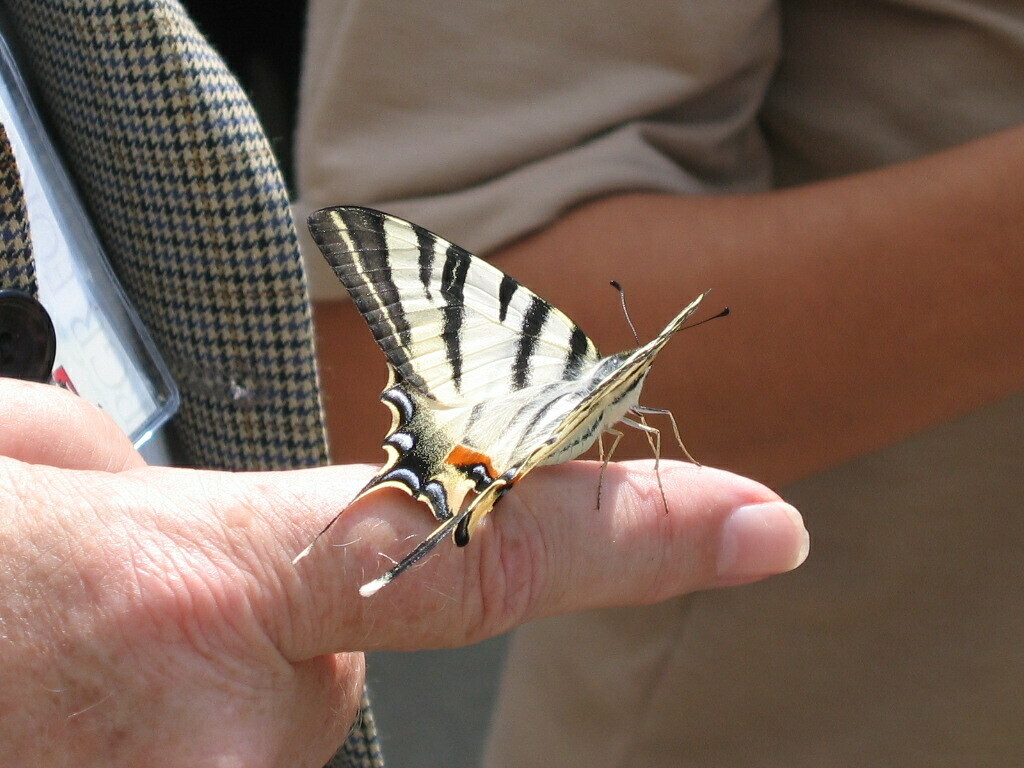
!Is the scarce swallowtail dangerous?
No. Harmless to people. Does not bite or sting. Handle gently if necessary; scales rub off easily and delicate wings can be damaged.
Pets
Not harmful to pets. Adult butterflies are not toxic and are not a threat to cats or dogs.
📖Overview
Iphiclides podalirius is a medium-large swallowtail butterfly notable for its long, pointed hindwing 'tails' and bold black tiger-like stripes on a pale yellow or cream background. Adults are strong fliers that frequent sunny, open habitats with flowering shrubs and fruit trees. The caterpillars feed mainly on trees and shrubs in the rose family (especially Prunus species). The species has one or two broods per year depending on climate and is locally common in suitable habitat but has declined in places where hedgerows, orchards and warm open sites have been lost.
🔍How to identify a scarce swallowtail
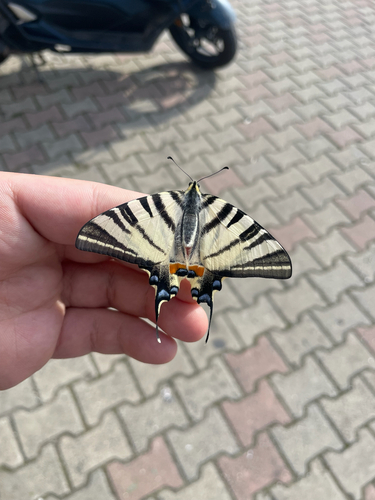
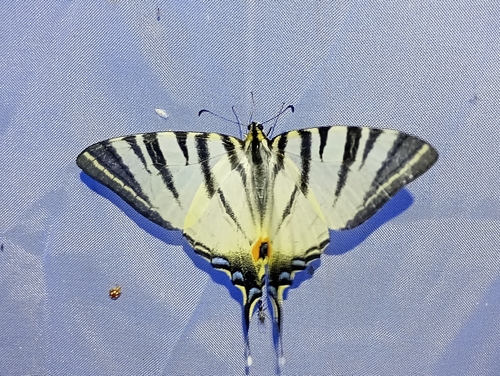
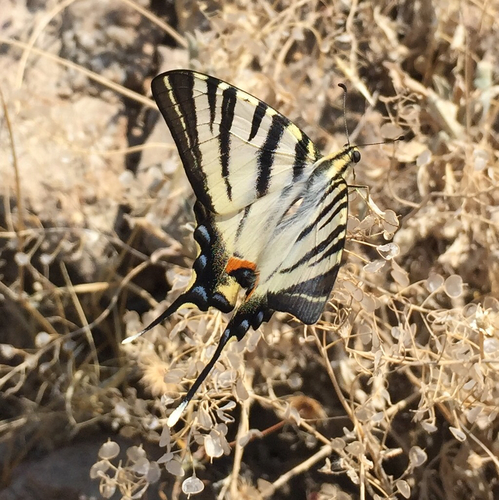
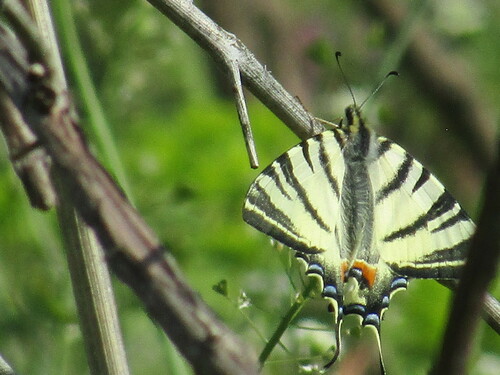
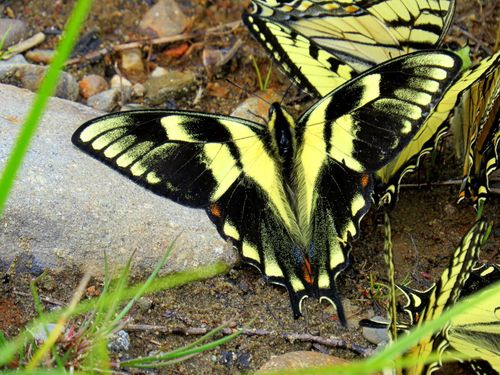
Wings are pale yellow to cream with 6-8 oblique black stripes on each forewing and broad black margins on hindwings; each hindwing bears a long tail-like projection. Near the tails there are bluish crescents and an orange-red eyespot on each hindwing. The body is striped black and yellow. Wingspan typically 60-90 mm. Males and females look similar; females may be slightly larger and paler.
- Pale yellow/cream wings with 6-8 oblique black tiger stripes on the forewing
- Long, pointed tail-like projections on each hindwing with blue crescents and an orange eyespot near the tail
- Broad black hindwing margin and black-striped body
- Wingspan 60-90 mm; strong, fast, fluttering flight
Lookalikes
Old World swallowtail Papilio machaon
Papilio machaon has broader yellow panels, different black banding, and shorter hindwing tails; overall pattern differs and the hindwing eyespots are arranged differently.
Southern scarce swallowtail Iphiclides feisthamelii
Iphiclides feisthamelii (Iberia, southwestern France and North Africa) is very similar but paler, almost white; separation often relies on range, subtle wing-mark differences or genetic study.
Zebra swallowtail (superficially similar stripes) Eurytides marcellus
This New World species differs in range (North America), wing shape and pattern details; not sympatric with Iphiclides podalirius in Europe.
↻Life cycle
Egg
Single eggs or small numbers are laid on leaves of host plants (especially Prunus).
Larva (caterpillar)
Green-striped caterpillars feed on host leaves and grow through several instars; they are the feeding stage that can defoliate small branches but rarely cause major damage.
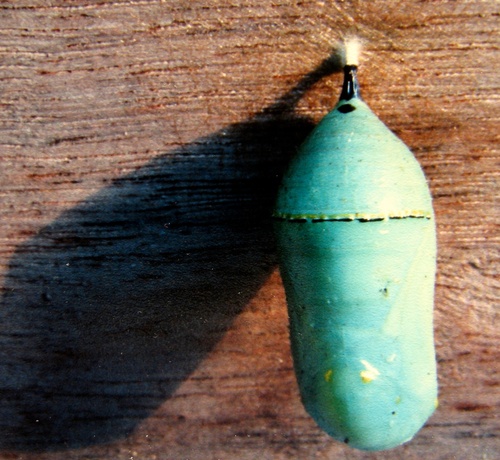
Pupa (chrysalis)
Chrysalis is attached to stems or bark and overwinters in some parts of the range; pupation lasts days to weeks depending on season.
Adult (butterfly)
Adults emerge to feed on nectar, mate and lay eggs; they are strong fliers and may visit gardens and orchards.
🍃Diet and predators
Young eat
Leaves of Prunus species (blackthorn, plum, cherry) and other Rosaceae shrubs and trees
Adults eat
Nectar from a wide variety of flowers such as thistles, buddleia, lavender and other garden and wildflowers
Predators of the young
Birds, predatory insects (wasps, ants), and parasitic wasps
Predators of adults
Birds, dragonflies and spiders; adults also suffer mortality from bad weather
🌱Effect on plants and gardens
Caterpillars feed mainly on leaves of Prunus species (blackthorn Prunus spinosa, plum, cherry), and sometimes other Rosaceae such as Crataegus and Pyrus. Adults visit a wide range of flowering plants for nectar and can be good pollinators.
📍Where and when to find it
Look on flowers, along hedgerows, orchard edges and sunny scrub. Eggs and larvae are found on leaves of Prunus spp.; chrysalises on stems or bark.
Best time
Best seen from April to September depending on latitude; warm, sunny midday hours are most productive.
Observation tips
Use a long lens for photos to avoid disturbing them; look for the distinctive long hindwing tails and blue-orange markings when they are perched with wings open.
✨Fun facts
- The 'tails' on the hindwings probably help divert predator attacks away from the body by mimicking antennae and eyespots.
- Despite the English name 'scarce swallowtail', the species is common in many parts of its range where suitable habitat survives.
?Frequently asked questions
Is the scarce swallowtail dangerous?
No. It is harmless to people and pets; it does not bite or sting.
Do scarce swallowtail caterpillars eat fruit trees?
They feed primarily on leaves of Prunus species (blackthorn, cherry, plum). On mature trees they rarely cause serious harm; on young trees or nursery stock they can be more noticeable.
Why is a scarce swallowtail in my garden?
You may have nectar plants (buddleia, thistles, lavender) and nearby host shrubs or trees (blackthorn, cherry) which attract adults for feeding and egg-laying.
How can I attract scarce swallowtails to my garden?
Plant nectar-rich flowers and keep or plant host shrubs such as Prunus spinosa (blackthorn) or other native fruiting Prunus species; provide sunny, sheltered spots.
How do I get rid of them if they are eating my young fruit trees?
Physical removal of small numbers of caterpillars by hand is effective. For larger problems, protect young trees with fine mesh, encourage natural predators, or consult local integrated pest management advice; chemical control is rarely needed and harms beneficial insects.
What time of year will I see them?
Adults fly from spring to early autumn; in warm areas there can be two generations (spring and mid-summer). They are most active on warm, sunny days.
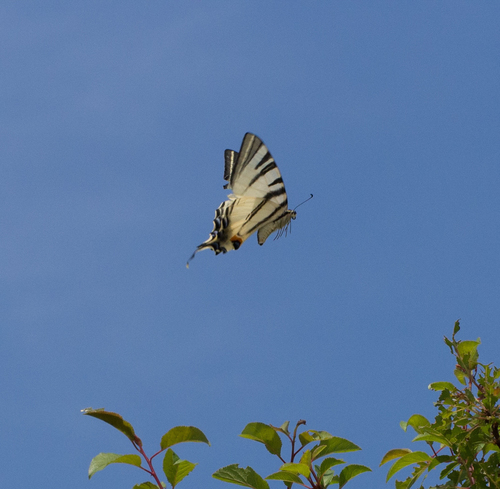
📷Photos of the scarce swallowtail
More butterflies & moths
This guide was written with AI assistance and fact-checked, last updated 2026-10-10. Identification from photos is never certain: don't handle insects you can't identify, and get medical advice for bites, stings or allergic reactions. More about the scarce swallowtail: iNaturalist, Wikipedia.